Author: Tank & Field Editorial

  • Septic Maintenance Calendar: What to Do Monthly, Yearly and Every Few Years

    Septic Maintenance Calendar: What to Do Monthly, Yearly and Every Few Years

    You walk past the septic tank lids, and for a few days all is normal. Then the kitchen sink drains slow, and you wonder if the tank needs work. A steady septic tank maintenance calendar can catch many issues before they become repairs.

    This calendar covers monthly checks, yearly inspections, pumping every 3 to 5 years, filter cleaning and service visits for ATU systems, an aerobic treatment unit. It fits conventional tanks, mound systems and many small aerobic systems, but your local permit, tank size and soil will set the final schedule.

    Start by writing down what you have. A tank holding 1,000 gallons for a three bedroom house will not behave like a tank holding 1,500 gallons, and a busy rental will use water differently than a cabin used part time.

    At a glance

    • What it covers: a practical septic tank maintenance calendar for monthly checks, yearly inspections, filter care, ATU service and pumping.
    • Systems: conventional tank and drain field, mound system, aerobic treatment unit.
    • Typical cost range: pumping, inspection and repair prices vary by state, tank size, access and disposal fees, so get written quotes before work.
    • Urgency: low when drains work and yard is dry, high when sewage backs up, odors appear inside, or the drain field stays wet.
    • Homeowner jobs: visual checks, water use habits, keeping lids clear, logging services.
    • Pro jobs: tank inspection, pumping, filter cleaning beyond easy access, ATU service, drain field repair.

    Monthly checks you can do near the tank lids

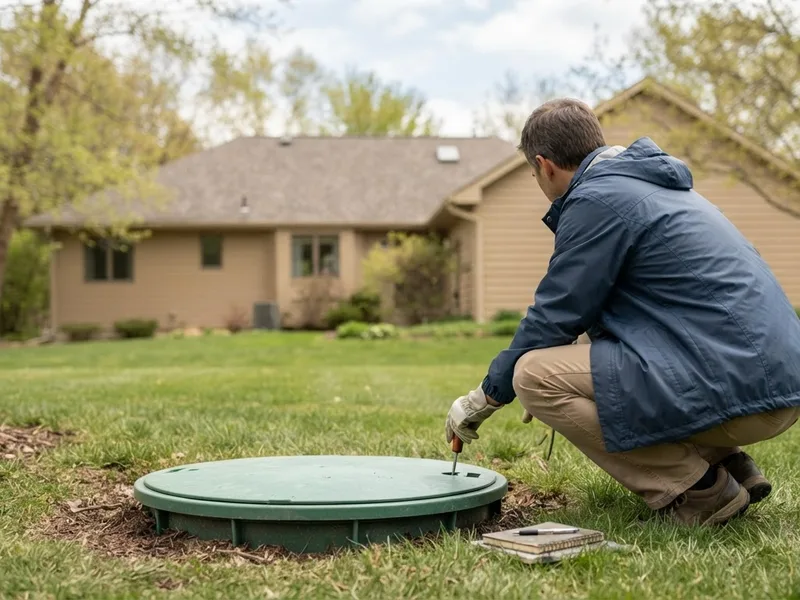
    Walk the yard once a month. Look for wet spots, standing water, unusually green grass or an odor over the drain field. In a working system, soil and plants absorb water slowly and evenly. A soggy strip may mean water is not moving through the soil as it should.

    Run each fixture briefly. Check the kitchen sink, bathroom sinks, tub and toilet. If the toilet takes long to refill or drains gurgle in another fixture, note the date and what you ran. A small change can be laundry habits, a clogged vent or a tank issue.

    Watch how you use water. Spread heavy water use over the day. A large laundry load at 6 a.m. can push more water through the tank than the drain field can take, especially in a conventional system. Fix dripping faucets, leaky valves and running toilets.

    Keep the wrong things out of the tank. Do not flush wipes, paper towels, feminine products, grease, paint, solvent or medicines. Grease can thicken the scum layer, the floating fat and oil layer at the top of the tank.

    Keep the area over the tank and drain field clear. Do not park cars, compactors or heavy equipment there. Plant only shallow grass or approved ground cover near lids. Roots can damage pipes, baffles and tank seams.

    TaskDo itWho does itWhat to write down
    Yard and drain field checkMonthlyHomeownerWet spots, odor, unusually green grass, date
    Slow drains checkMonthlyHomeownerFixtures, time of day, recent heavy use
    Water use habitsMonthlyHomeownerLoads of laundry, long showers, leaks fixed
    Tank condition checkYearlyPro inspectorSludge and scum depths, filter condition, baffle condition
    Effluent filter careYearly or as neededHomeowner or pro, depending on setupDate cleaned, material removed, any damage
    ATU service visitAs required by manufacturer, local permit or service agreementProBlower, pump, alarm, disinfection check, parts changed
    PumpingEvery 3 to 5 years, or sooner after inspectionPro pump companyTank size, date, gallons removed, sludge and scum readings
    Access lids and risersYearlyHomeowner or proLid secure, riser clear, soil grade not covering lid
    Drain field performanceEvery few years, or when symptoms appearProDistribution box level, pipe flow, soil wetness
    Use this calendar as your printable checklist.
    Monthly checks you can do near the tank lids

    Yearly inspection and every few years pumping

    A yearly professional check is the best way to see inside. The inspector measures the sludge, the settled solids at the bottom, and the scum layer at the top. A baffle, a barrier at the inlet or outlet, should keep solids from leaving the tank too early.

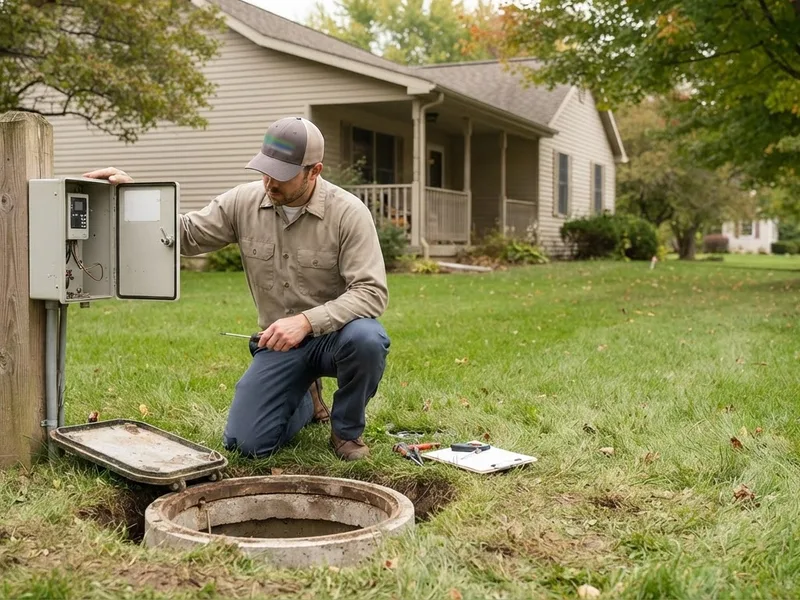
    If the tank has an effluent filter, clean it when the manual says to or when slow drains return. An effluent filter is a mesh-like screen at the tank outlet that catches fine solids before water enters the drain field. Some filters are easy to rinse with a garden hose while the outlet cover is open, but do not climb into or enter a tank under any circumstances.

    For aerobic systems, do not skip the service visit. An ATU, an aerobic treatment unit, depends on air pumps, blowers, water level sensors and sometimes disinfection equipment. A failed blower can push untreated water toward the drain field and harm the biomat, the normal slim layer that forms in the soil under the drain field and helps treat liquid.

    Pumping every 3 to 5 years is a common rule of thumb, not a promise. A smaller tank, a large household, a garbage disposal, old tank sludge or heavy water use can pull the date closer. If a tank holding 1,000 gallons is serving a busy three bedroom house, an inspector may find it needs service sooner than a tank holding 1,500 gallons serving two people.

    If your property has a mound system, the rules tighten. A mound system is a shallow drain field built over prepared fill, used when native soil drains poorly or the water table is high. Wet soil on the mound surface, odor or alarm activity should prompt a call, not a wait until next year.

    If you are building on rural land and a new drain field is planned, a perc test, a soil absorption test, may set the system type. A maintenance calendar cannot replace that design decision.

    Turn the calendar into a printable checklist and log

    Choose your print day

    Print the table or copy it into a paper log. Put the date in a corner and mark your state or county, because local health rules can change inspection and pumping requirements.

    Fill in the system facts

    Write tank size in gallons, estimated age, type, conventional mound or ATU, location of lids and drain field. If a perc test was required at install, note the result and permit number.

    Do the monthly checks before the next service

    Use the first Saturday of each month for a quick yard and fixture walk. Check boxes when you notice nothing wrong, and write a short note when you do.

    Schedule pro work in the same log

    Enter the date for yearly inspection, ATU service and pumping. Include the company name, invoice number, sludge and scum readings, and what was cleaned.

    Keep receipts with the log

    Store paper copies in one folder and digital copies in one cloud folder. A seller, buyer or new pumper will ask what has been done, and a clear record is better than memory.

    When a maintenance task should move up

    Some tasks start monthly. If drains gurgle in another fixture after you run water, move the yearly tank inspection to now. A gurgle can be a vent problem, but it can also mean the tank is holding more solids than usual.

    If the house has sewage backup, stop normal use. A backup into a basement shower or lowest drain is a do this now signal. Close the fixture, stop water use and call a septic professional.

    If the drain field stays wet for days, pump first and inspect second. Wet grass can mean a full tank, a blocked outlet, a failed distribution box or soil overload. Do not treat it as a cosmetic issue and do not add chemicals to chase the smell.

    If you use a garbage disposal, check your pump interval sooner. A disposal does not ruin a septic tank by itself, but it adds solids and can shorten the time between pumpings.

    If an ATU alarm beeps, do not reset it and forget it. An alarm is your early warning for a pump, blower or float issue. Call the service company listed on the equipment tag.

    Additives do not replace pumping. Many enzyme, yeast or bacterial products will not undo years of grease and solids, and no additive should be counted as a way to delay a pro service.

    Frequently asked questions

    How often should I pump my septic tank?

    Plan a professional check yearly and pump every 3 to 5 years, or sooner if inspection shows thick sludge or scum. Smaller tanks, heavy water use and disposals can pull that date closer.

    Is septic tank maintenance a homeowner job?

    Partly. Homeowners can do visual checks, water use adjustments and records. Pro work is needed for tank inspection, pumping and ATU service.

    What should I ask before hiring a pumper or inspector?

    Ask tank size, what they measure, whether they clean the effluent filter, and what the written report includes. Get the price, disposal fee, tank access charge and repair quote in writing.

    What does a marginal or failed septic report mean?

    A marginal report may mean the system is working, but not well enough to leave alone. A failed report means the system is not treating or dispersing wastewater as required. Use the report to get a repair estimate and a second opinion if repair cost seems high.

    Can I add a garbage disposal on septic?

    You can, but know it adds solids. If your tank is smaller and the household is busy, ask your pro how often to pump.

    Are septic additives worth the money?

    Usually not. The bacteria already in the tank do most work. Limit grease and solids, use water evenly and pump on schedule instead of treating additives as a fix.
    When a maintenance task should move up

    Make this month the start of your log

    Print the calendar, note your tank size and last service date, then schedule the yearly inspection if it has not happened. A few minutes on paper now can prevent a wet yard next month.
  • New to Septic? Your First 90 Days in a Septic Home

    New to Septic? Your First 90 Days in a Septic Home

    You just unpacked the last box. The house is yours, the yard looks fine, and the city sewer is nowhere nearby. Moving into a house with septic means some habits need to change right away, because the system is already handling your daily water load.

    If you came from a sewer home, the main shift is not scary. It is slower and more local. Water leaves your pipes, settles in a buried tank, and soaks through soil. For your first 90 days, the goal is simple: learn where the parts are, use less water than usual, and know which signs need a pro.

    At a glance for a new septic home

    • Find records, locate the tank and drain field, learn the last pumping date, and note any wet spots or odors in week one.
    • This guide applies to homes on private septic systems, including conventional tanks, aerobic units, and mound systems. Aerobic and mound systems may have filters, pumps, or alarms that need a pro.
    • Typical cost range: most first-week tasks cost time, not money. If inspection, pumping, or repair is needed, local quotes will set the price after the pro checks access, tank size, system type, and condition.
    • Urgency: not an emergency unless wastewater is backing into the house, indoor sewage odor appears, or wet ground sits over the drain field.
    • Most tasks are homeowner jobs, but locating lids, reading a failed inspection, pumping, alarm faults, and repairs are pro work.

    First week checklist

    Find the records

    Ask the seller for the septic inspection report, pump receipts, as built sketch, permits, and any alarm or pump manuals. If anything is missing, request it from the county health department, local septic regulator, or the last service company.

    Locate the tank and field

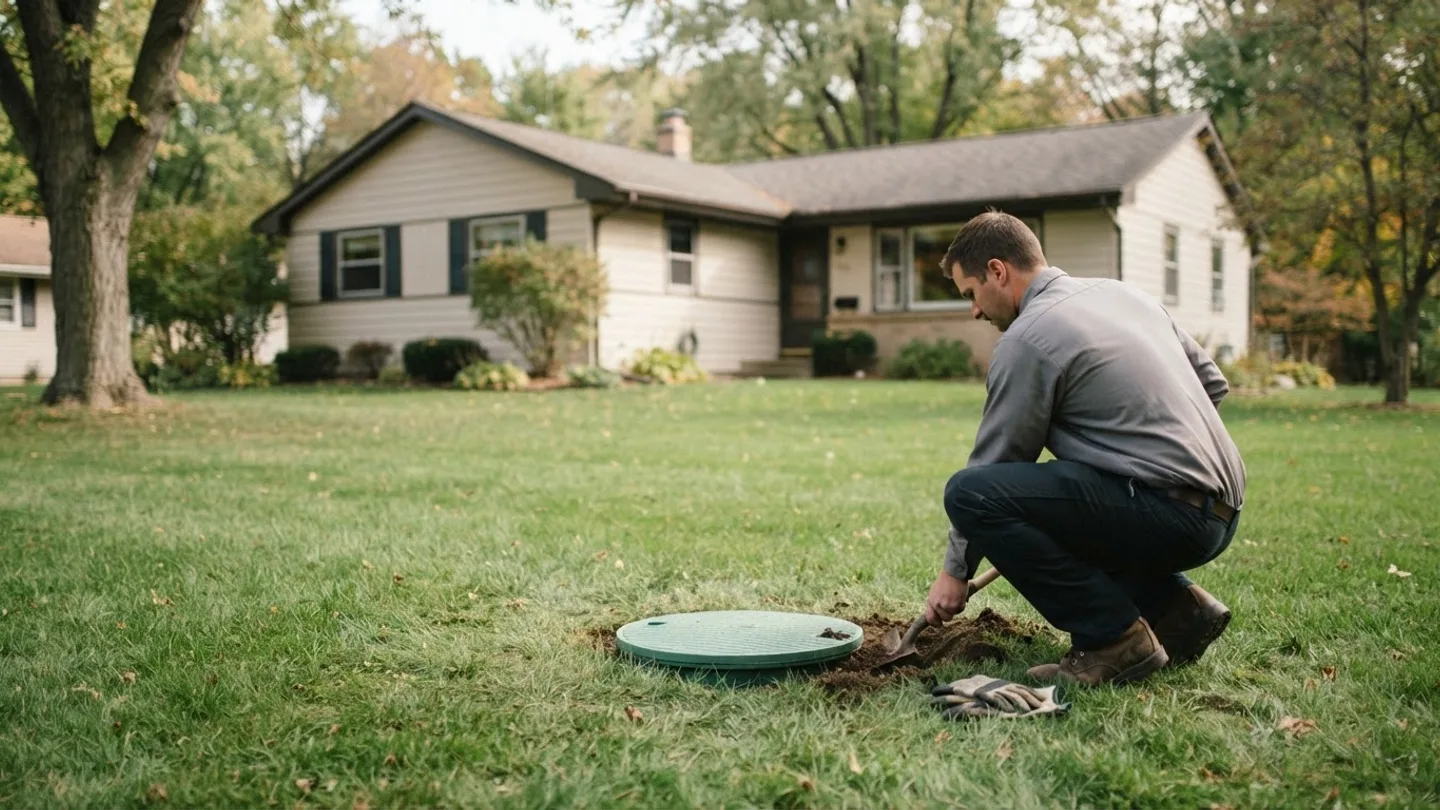
    Use the sketch or service record to find the tank and drain field. Mark lids with stakes, paint, or GPS. A pro can open lids and note lid depth in feet or inches. Do not enter a tank, even for a peek, without safe gear and training.

    Learn the last pumping date

    Check receipts and ask the pumper if they have a log. If the last date is missing, schedule an inspection before your first big water load arrives. A good pumper can also tell you if the tank level, baffles, or filters need attention.

    Walk the yard during normal use

    While the washing machine, showers, and dishwasher are running, walk from the house to the field. Look for soggy grass, low wet spots, odors, or dark water. If the field has plants, note access so a truck can get to the tank.

    Reduce water before you learn the capacity

    For the first weeks, use less than you did in a sewer home. Spread laundry over several days, fix running toilets, and avoid one huge load of towels after guests. The system will work better when water arrives in smaller groups.

    Start a home file

    Keep a folder with sketches, contacts, pump dates, inspection reports, and a simple log of symptoms. This file makes future calls easier and helps you get fair quotes.

    What is under your lawn

    Your septic system has two main jobs: hold solids in a tank and move liquid through soil. The tank is buried and has lids. A typical tank may be large enough for the household, but the exact size should come from records or an inspection. Inside, solids sink to the bottom as sludge, and grease rises as a scum layer. A baffle helps keep those solids from leaving through the outlet pipe.

    The liquid that leaves the tank is called effluent. It enters the drain field, the soil area that accepts and filters water. Some systems use a distribution box to spread effluent evenly to pipes or trenches. Some tanks include an effluent filter, a screen that traps solids before they reach the field. If your system has an aerobic unit, it uses air to help treat the liquid, and it may have a pump, blower, or alarm.

    If a contractor mentions a perc test, that means a percolation test. A hole is filled with water, and the soak rate is timed to show how fast the soil drains. A mound system is used where the soil drains slowly or the water table is high. It raises the drain field in imported soil and often has more parts to check.

    ItemWhat to doWhy
    Toilet paperFlush only normal amountsBreaks down in the tank and is what the system expects.
    WipesStop flushing even products labeled flushableMany do not break down fast enough and can clog pumps, filters, and the drain field.
    Paper towels and napkinsPut in trashThey are thicker than toilet paper and can add solids that take too long to settle.
    Cooking grease, oil, and food scrapsPut in trash or compostGrease adds scum, food adds solids, and both can overload the tank and clog later parts.
    Disposable gloves, cotton swabs, and dental flossPut in trashPlastic, small parts, and stringy items can wrap around pumps or baffles.
    Paint, solvents, gasoline, motor oil, and pesticidesUse a local hazardous waste siteThese can harm treatment parts, soil, and local water rules.
    MedicationsUse a drug take back programDrugs can affect bacteria and are not treated well by a small home system.
    Pet litter and cat poopPut in trashIt adds solids and can carry more waste than the tank is sized to handle.
    Flushable cat litterCheck the label and ask your proSome flushable litter still adds solids, and your system may not handle extra litter.
    Septic safe additivesSkip unless your pro recommends oneA normal tank usually has enough biology, and many additives do not solve pumping, overuse, or field failure.
    Drain cleanersUse sparingly and call for mechanical clearing if neededStrong chemicals can upset the system and are not a fix for a blocked field.
    Large amounts of toilet paper at onceUse normal rollsA little paper is fine, but large clumps can slow treatment and raise the need for service.
    What to flush and what not to flush
    Cleaning and laundry habits that help

    Cleaning and laundry habits that help

    A sewer home can swallow a full weekend of laundry quickly. A septic home does better when water moves through the system at a steadier rate. In the first 90 days, slow down before you test the system with guests, heavy cleaning, or a new sprinkler.

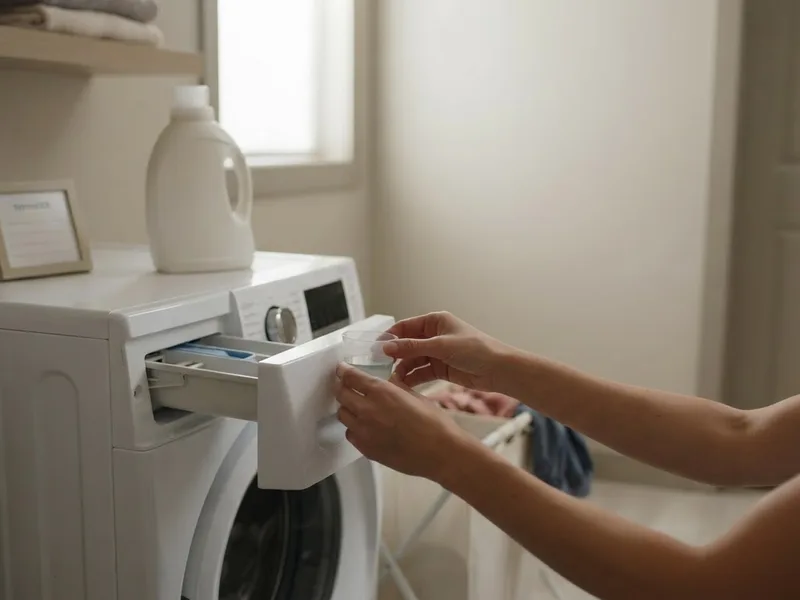
    For laundry, run only a small load at a time and leave a gap between loads. If you have a high efficiency washer, it may use less water per load, but it can still send a large amount of water at once. Spread loads across days, and wait if you see the first load still draining before starting the next.

    For cleaning, use the smallest amount of detergent, soap, and bleach that gets the job done. Do not dump oils, solvents, or strong drain cleaners down sinks. Most septic additives are not needed. If a product claims it will replace pumping or fix a wet field, treat it as a waste of money and ask a local septic pro before adding anything.

    A garbage disposal can add solids and grease. If your pro says a disposal is okay for your system, use it lightly, run cold water, and expect more frequent tank service. If the system is older, has a small field, or shows signs of slow drainage, consider trash and compost instead.

    First 90 day plan

    1. Days 1 to 3Collect what you already haveGather any septic papers, sketch, report, pump receipt, alarm manual, and seller notes. If the tank location is already marked, mark it on your sketch or use a mapping app with a house number or landmark.
    2. Days 4 to 7Complete the first week checklistLocate the tank and field if safe, note last pumping date, walk the yard during water use, and start a home file.
    3. Week 2Set water habitsUse less water than usual. Spread laundry over several days. Keep guests from doing a heavy wash marathon.
    4. Month 1Get expert eyes if neededSchedule an inspection or pump if records are missing, the last pump date is unknown, or the field looked wet. Ask the pro to explain tank size, lid depth, and the next service interval.
    5. Month 2Review what you foundCheck for symptoms after normal use. Update the home file with contacts, costs, and any warnings from the pro.
    6. Day 90Decide the next intervalConfirm your pumping and inspection plan with the service pro, not a guess. Set reminders for that interval, and keep the warning signs near the laundry room.
    When to call a pro, and what to say

    When to call a pro, and what to say

    Call today if wastewater backs up into a floor drain, toilet, or shower. Stop using that fixture and reduce water in the house until help arrives. Tell the pro what fixtures are involved, whether the backup appeared during laundry or showers, and whether you can smell it indoors.

    Call a septic pro when drains gurgle, the toilet water level swings without use, the yard over the field stays wet during normal water use, or you just bought the house and cannot find the pump date. If the system has an alarm, pump, blower, or disinfection part, treat a new alarm as a same day call and note which light or sound appeared.

    Call soon if a slow drain only happens after a heavy wash, if there is a small wet patch only after rain, or if the tank is due for service based on your pro's schedule. A septic issue often looks like a plumbing issue, but the field may be the real cause. Do not solve a field problem by pouring drain cleaner into the house.

    Questions new septic owners ask

    Can I still shower, do laundry, and run the dishwasher?

    Yes, but not all at once. A septic home rewards steady use. If you run multiple big appliances together, watch for slow drains, gurgles, or wet soil. Spread them out until you know the system's limits.

    How do I know if the drain field is working?

    Look for dry soil over the field during normal use, drains that go down without backing up, and no indoor odor. A failed report, wet spots, or backup are signs to call a pro.

    Do I need to find both tank lids?

    Many tanks have one or more access lids. Find what your sketch shows and mark the lids. If you cannot find them safely, a service company can locate them before pumping or inspection.

    What does a marginal inspection report mean?

    It can mean a part of the system needs attention before it is considered fully acceptable. Ask what was marginal: tank condition, field performance, access, paperwork, or an alarm part. Get a repair estimate from licensed pros before you agree to a sale fix.

    Should I accept the first drain field replacement quote?

    Not without checking. A second opinion is wise when the report does not prove the field is dead, when wet spots appeared only during extreme use, or when a contractor offers a large replacement without a clear field inspection. Ask about tank condition, distribution box, baffles, effluent filter, and soil limits.

    What should the seller provide?

    Any inspection, pump records, as built sketch, permits, alarm manuals, and system location. If records are missing, the inspection report or a septic pro's notes can fill many gaps.