
Cooking Grease and Your Septic Tank: Why It Clogs the Drain Field
You pour a pan of bacon grease down the kitchen sink because it is easier than scraping it into the trash. A week later the toilet backs up, or you notice a wet, smelly patch of grass over the drain field. That grease did not disappear. It traveled through your pipes, sat on top of the tank water, and eventually found its way into the soil where your system is supposed to filter wastewater.
This guide explains what fats, oils and grease (often called FOG) actually do inside a septic system, how they reach the drain field and seal the soil, what a repair costs, and the simple habits that keep your system working for years instead of months.
Key takeaways
- Grease floats to the top of your septic tank and forms a scum layer that thickens over time. If it gets past the outlet baffle, it coats the drain field soil and blocks water from soaking in.
- A grease-clogged drain field can cost $5,000 to $15,000 or more to replace, depending on your region and system type. That is far more than the cost of a habit change.
- Wipe greasy pans with a paper towel before washing them. Collect cooking oil in a container and take it to a local drop-off or recycling center.
- Keep grease out of the garbage disposal. Even a small amount adds up over months and years.
- If you suspect a grease clog, stop running water and call a pumper or septic contractor. Do not pour hot water or chemicals down the drain hoping to dissolve it.
The science
What grease does inside your septic tank
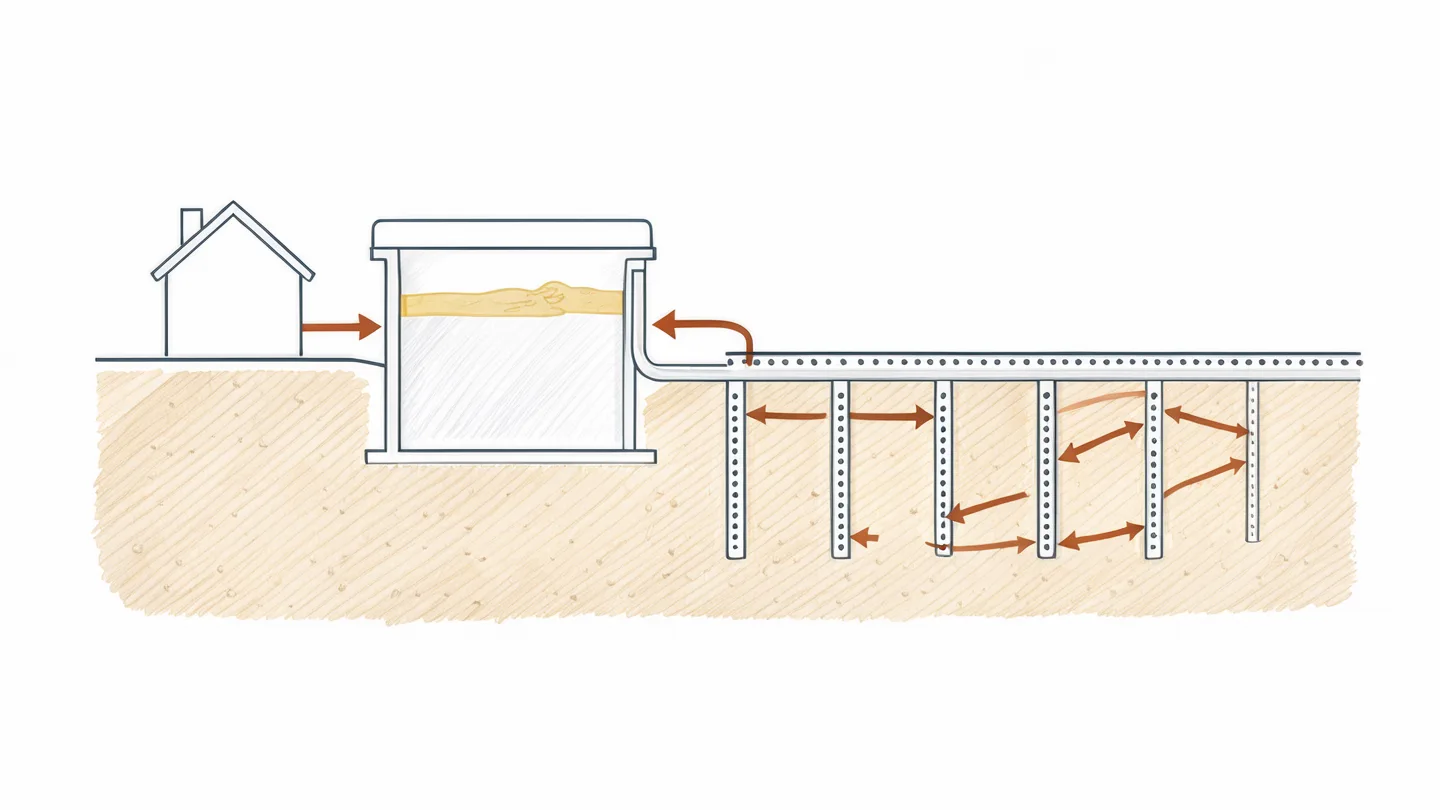
A septic tank is a buried box, usually 1,000 gallons for a three-bedroom house, where wastewater separates into three layers. Solids sink to the bottom and become sludge. Lighter materials, mostly fats and oils, float to the top and form a scum layer. The middle layer is relatively clear liquid called effluent, which flows out to the drain field.
When you pour grease down the sink, it travels through your pipes while still warm and liquid. By the time it reaches the tank, it has cooled and solidified. It joins the scum layer on top. A healthy tank has a scum layer a few inches thick. A tank that gets regular grease loads can build a scum layer a foot thick or more.
The tank has an outlet baffle, a short wall or pipe at the exit that is supposed to keep the scum layer from flowing out with the effluent. When the scum layer gets too thick, or when a large volume of grease enters at once, some of it escapes past the baffle. That escaped grease is the problem.
How grease seals your drain field
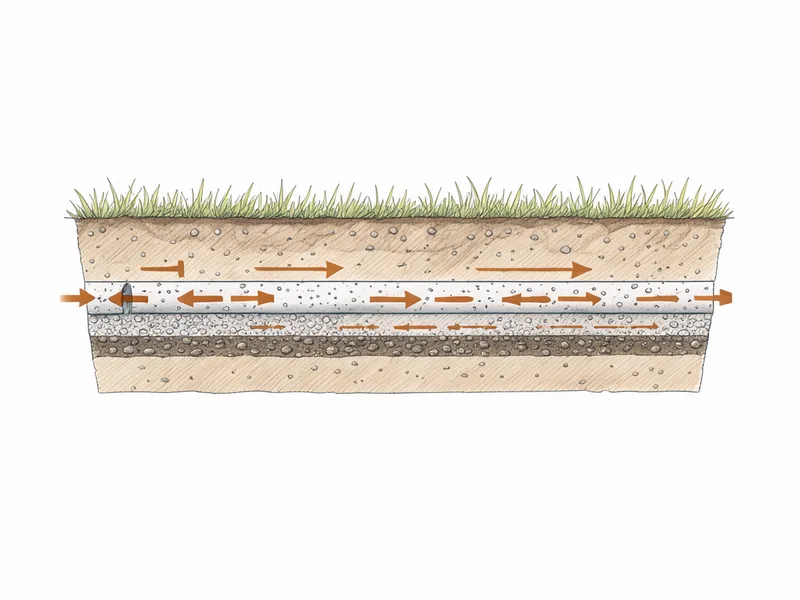
The drain field is a network of perforated pipes buried in shallow trenches, usually 12 to 36 inches deep, filled with gravel and covered with soil. Effluent trickles out of the pipes and soaks into the surrounding soil, where microbes break down contaminants. The soil needs to stay porous for this to work.
Grease that escapes the tank travels with the effluent into the drain field. As it cools, it coats the gravel and the soil around the pipes. Over time, that coating builds up and blocks water from soaking in. The soil becomes saturated. You start to see symptoms: slow drains inside the house, gurgling sounds in the pipes, a sewage smell near the drain field, or a soggy, green patch of grass over the trenches.
Once the soil is sealed by grease, no additive or enzyme will fix it. The biomat, the natural layer of microbes and solids that forms at the soil interface, becomes clogged with fat. The only real fix is to excavate the drain field, remove the contaminated gravel and soil, and rebuild or replace the field. In some cases the entire system needs to be replaced.
What a grease-clogged drain field costs to fix
Repair costs vary by region, system type and how much of the field is affected. A partial drain field repair, where a contractor excavates and replaces one or two failed trenches, typically runs $2,000 to $5,000. A full drain field replacement in a conventional gravity system often costs $5,000 to $15,000. Mound systems, aerobic systems and systems in tight lots can push that to $20,000 or more.
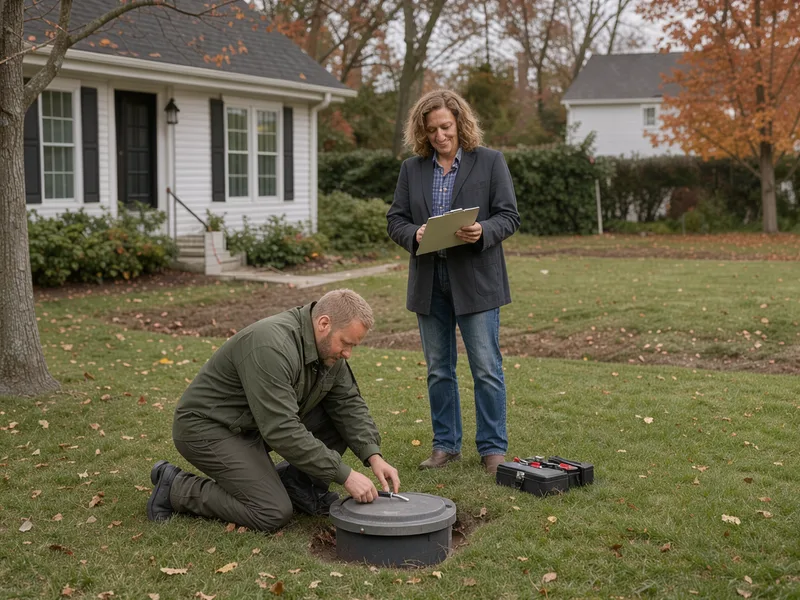
Before you accept a full replacement quote, get a second opinion. Sometimes the problem is a clogged inlet pipe or a failed distribution box, not the soil itself. A pumper can check the tank condition and a contractor can probe the field to see where water is actually pooling. If the soil is truly sealed, replacement is the only option. If it is a plumbing issue upstream, the fix is much cheaper.
The point is simple: a $500 pumping visit every three to five years is a fraction of a $10,000 drain field replacement. Keeping grease out of the system is the cheapest maintenance you can do.
Prevention
Habits that keep grease out of your septic system
Wipe pans and plates with a paper towel before you wash them. A paper towel with grease on it goes in the trash, not the toilet. This one habit removes most of the grease that would otherwise enter your plumbing.
Collect used cooking oil in a metal or plastic container with a lid. When it fills up, take it to a local drop-off point. Many municipalities, transfer stations and cooking oil recyclers accept household oil for free. Some areas have curbside pickup for cooking oil. Check with your county waste authority for the nearest location.
Keep grease out of the garbage disposal. Even a small amount of oil poured into the disposal each week adds up over months. The disposal grinds food into particles, but it does not break down fat. That fat still ends up in your tank and eventually in your drain field. If you have a garbage disposal with a septic tank, you are already adding extra solids. Grease makes the problem worse.
Run hot water when washing greasy dishes, but do not rely on it to carry the grease away. Hot water keeps grease liquid in the pipes, but it solidifies again in the tank. The grease still arrives. Hot water helps with soap and food particles, not with fat.
If you cook with a lot of oil or fat, consider a small grease trap under your kitchen sink. These are not common in residential septic setups, but they exist and can catch grease before it reaches the tank. They require regular cleaning, so they are only worth it if you will actually maintain them.
Disposal
How to dispose of used cooking oil safely
Never pour cooking oil down any drain, inside or outside the house. It will clog your pipes, your septic tank or your municipal sewer line depending on where you live.
Small amounts of oil, a tablespoon or two, can be mixed with cat litter, coffee grounds or paper towels in a sealed bag and placed in the regular trash. This works for the oil left in a pan after frying.
Larger amounts, like a quart or more of used frying oil, should go to a collection point. Many counties operate household hazardous waste facilities that accept cooking oil. Some restaurants and biodiesel companies accept small household quantities. Search for your county waste authority or a cooking oil recycler near you.
Do not put cooking oil in your compost bin. It attracts pests, slows decomposition and can contaminate finished compost.
Common questions about grease and septic systems
Can I pour a little grease down the drain if I run hot water after it?
No. Hot water keeps the grease liquid in the pipes, but it cools and solidifies in the tank. The grease still arrives and still adds to the scum layer. There is no safe amount to pour down the drain on a regular basis.
Do enzyme or bacterial additives break down grease in my tank?
Some additives claim to digest grease, but the evidence that they work well enough to prevent drain field damage is weak. A healthy septic tank already has bacteria that break down some organic matter. Adding more bacteria does not reliably remove a thick scum layer. Regular pumping is what removes accumulated solids and scum. See our guide on [septic tank additives](septic-tank-additives) for more detail.
My drain field is soggy. Is it definitely grease?
Not necessarily. A soggy drain field can mean a clogged pipe, a failed distribution box, a tank that has not been pumped in too long, or a system that is simply overloaded with water. Grease is one cause among several. Call a septic contractor to probe the field and check the tank before assuming the worst.
How often should I pump if I cook a lot of greasy food?
The standard interval is every three to five years for a typical household. If you cook with a lot of oil and fat, or if you have a garbage disposal, consider pumping every two to three years. A pumper can tell you how thick your scum layer is and adjust the interval. See [how often to pump your septic tank](how-often-pump-septic-tank) for the full breakdown.
What if I already have a grease problem?
Stop running water into the system immediately. Call a septic pumper to check the tank and remove accumulated scum and sludge. If the drain field is already failing, the pumper or contractor will tell you whether the field needs repair or replacement. Do not pour chemicals, hot water or additives down the drain hoping to dissolve the clog. That will not work and can damage the system further.