Texas Septic Rules: OSSF Permits and Aerobic Service Contracts
Texas septic regulations cover the buried parts of your house through an OSSF permit. An OSSF is an onsite sewage facility, meaning the septic tank and drain field under the yard. This guide applies to new installs, replacements, repairs that change the system, aerobic service requirements and home sales.
Do not treat septic paperwork as a detail after the truck arrives. The local authorized agent may want soil and setback information before an installer begins, and a home sale can require inspection records first.
Last checked: June 15, 2026. Rules and forms can change, so confirm with your local authorized agent before digging, pumping or selling.
Key takeaways
- TCEQ writes the statewide OSSF rules, and a local authorized agent usually administers permits and inspections.
- New, replacement and design-changing repairs generally need a permit; routine tank emptying may not, but the local rule controls.
- Aerobic systems often need a maintenance contract with a registered provider because mechanical parts and disinfection can fail quietly.
- An owner may be allowed to maintain an aerobic system only with the proper qualification path, records and emergency response duty, and only if the local agent accepts it.
- At sale, expect written inspection and maintenance information, and for aerobic systems, current service records or a contract transfer plan.
- Permit, design and installation costs vary by county, lot size and system type. Get a written local fee schedule before signing a repair bid.
Who regulates Texas septic systems
The Texas Commission on Environmental Quality, or TCEQ, sets the statewide rules for household septic systems in Texas.
A local authorized agent runs day to day enforcement. That may be a county, city, municipal utility district or another named agency. The agent issues permits, checks site information and records inspections.
State rules set the floor. Your county can have stricter forms, setbacks, soil limits or review steps, so a permit in one county is not interchangeable with a permit next door.
If you are buying rural land or a resale home on a well, ask the authorized agent for the OSSF checklist before a seller commits to a repair quote.
| Party | Typical job | What you should ask |
|---|---|---|
| TCEQ | Writes statewide OSSF rules and sets minimum treatment and permitting requirements. | Does this system type need an approved design or service contract? |
| Local authorized agent | Receives applications, reviews site and design documents, schedules inspections and keeps records. | What forms, fees and setbacks apply here, and when must you submit? |
| Site designer or engineer | Creates the permit design for soil, lot layout, wastewater flow and treatment unit. | What wastewater flow figure did you use for this home? |
| Installer | Builds or replaces the system under the approved permit. | Are you authorized to install this system type, and will you provide a final drawing? |
| Service provider | Maintains aerobic or mechanical systems under contract and checks alarms, equipment and records. | What visits are included, who responds to a failure and what is excluded? |
| Homeowner | Pays for pumping, keeps documents and avoids illegal waste down drains. | Where will I store the permit, pump receipts and final drawing? |
When you need an OSSF permit
You normally need a permit before you build a new OSSF, replace a tank or drain field, or change the approved size or design of the system.
Some simple jobs may not need a permit, such as emptying the tank or replacing a component that matches the approved plan. Still ask the local authorized agent before work begins.
If a repair quote changes the treatment unit, adds a blower, moves the drain field or changes tank capacity, treat it as a possible permit event, not a plumbing patch.
Missing permits can complicate a sale. A buyer may request proof of a permitted system, and a county may require testing, excavation or a new design before it will sign off.
How the OSSF permit process usually runs
Call the local authorized agent
Ask whether the planned work needs a permit, what forms are current, who can design the system, and what inspections are required.
Get a site evaluation
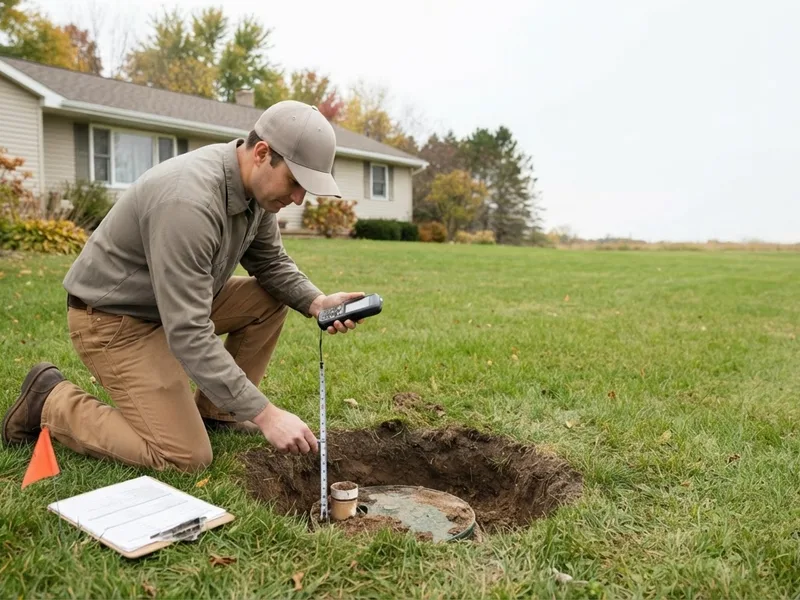
A designer looks at soil, slope, groundwater level, distances to wells and surface water, lot boundaries and expected wastewater flow. Define expected wastewater flow as the amount of water the home is approved to send to the system.
Submit the application
Provide maps, design documents, system capacity, owner information and fees. If the system is aerobic, the application should show the maintenance contract path or provider plan.
Wait for review
Ask for the permit status in writing. Do not let silence pass as approval, and do not let an installer dig before the review is complete.
Build to the approved design
The installer follows the approved tank size, treatment unit, pipe sizes and dispersal area layout. Keep contractor names, equipment serial numbers and inspection dates.
Close out and save records
Request final inspection if required, keep the permit file, and store the design drawing, service contract and pump receipts. A future buyer or repair crew will ask for them.
Aerobic systems and service contracts
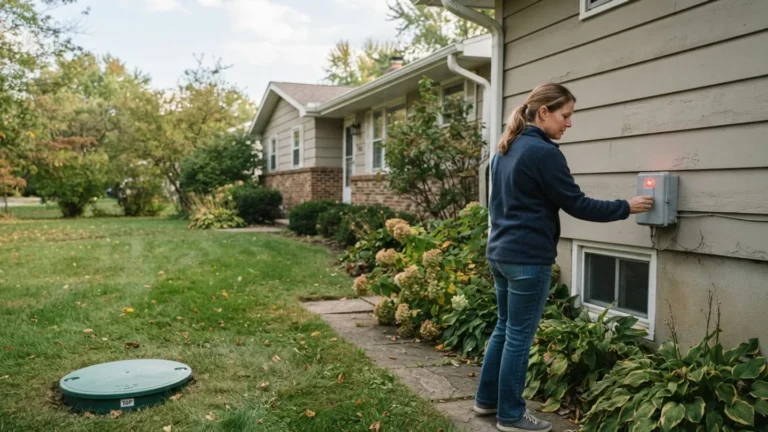
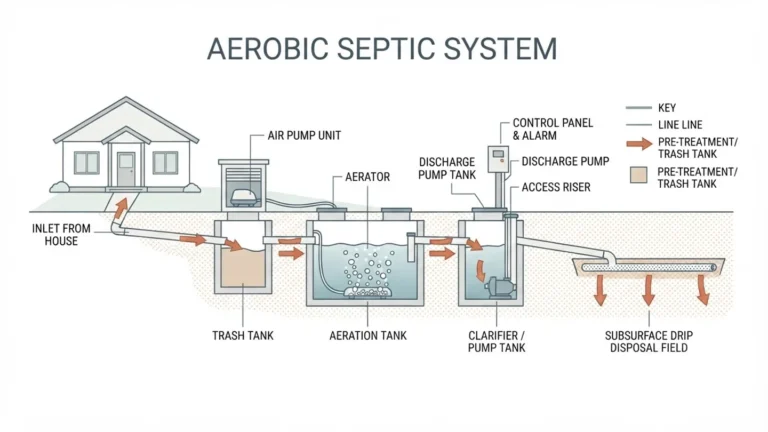
An aerobic system adds air to a treatment chamber so microbes break down waste faster than in a plain gravity tank. It often includes a blower, pumps, an alarm and sometimes a disinfection step before liquid leaves the system.
Because the system depends on moving parts, it can fail quietly. If the blower stops, untreated effluent, the liquid leaving the treatment unit, may reach the drain field without warning.
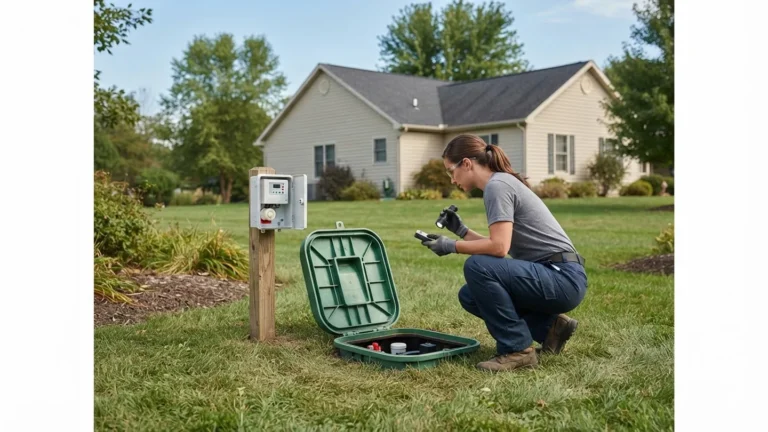
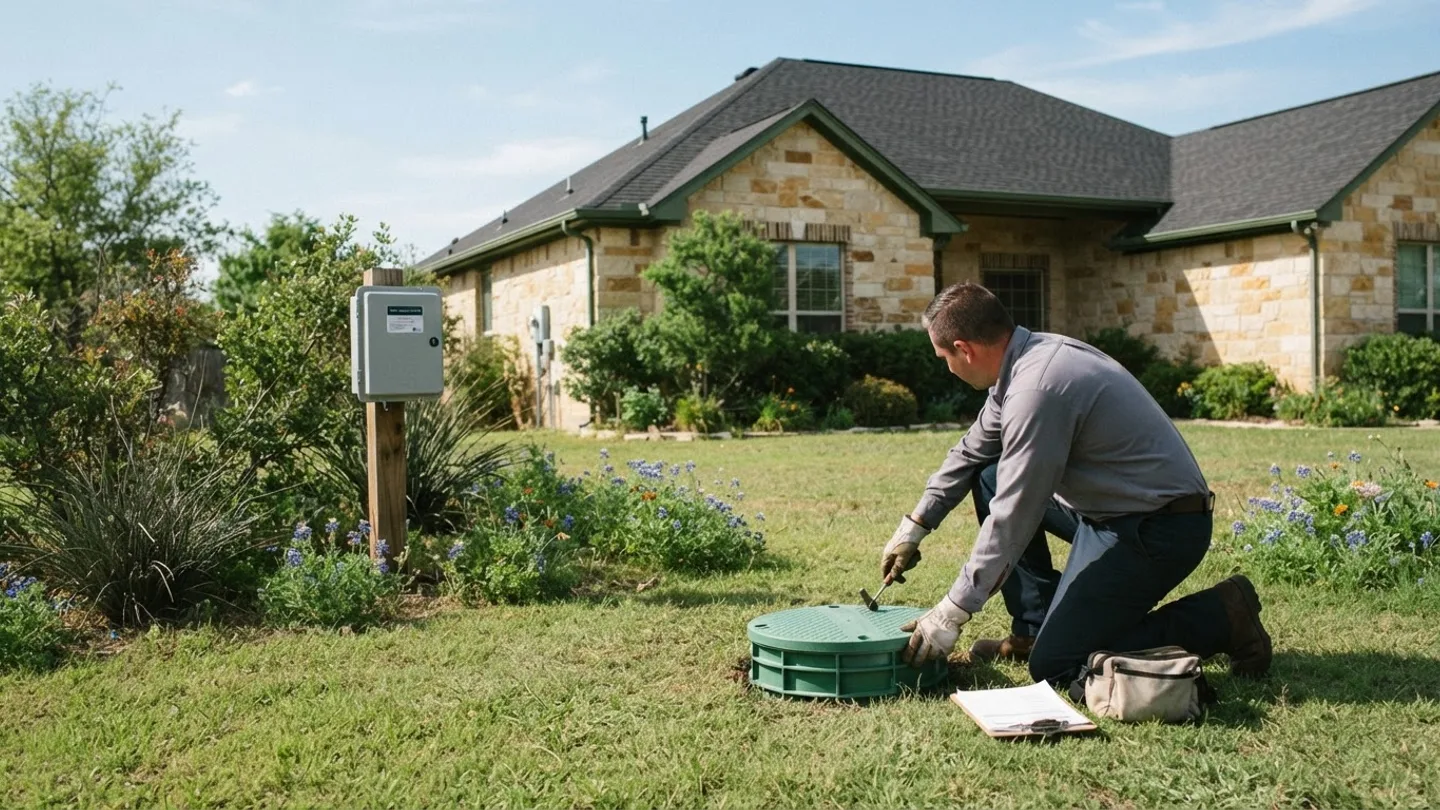
In many Texas permits, an aerobic system needs a maintenance contract with a registered service provider. The provider checks tank condition, mechanical parts, disinfection if present, alarms, and the required inspection records.
The contract should state what is included, how often visits occur, how emergency service is handled and who pays for repairs. Keep receipts and a copy of the provider contact information in your permit folder.
Some owners ask whether they can inspect the tank themselves and skip the provider fee. Texas rules may allow a qualified owner to take that role, but it is not a casual exemption. The owner would need the qualification path accepted by the local agent, the same inspection records, and a way to respond when the system fails.
Do not cancel an existing contract until the local authorized agent tells you in writing that your plan is acceptable. A deed restriction, loan condition or buyer lender may still expect a provider.
Pros
- You may reduce recurring provider fees if you meet the rule and stay disciplined.
- You learn your tank location, risers, alarms and drain field limits.
- You keep inspection notes in one place and can act quickly on a small alarm.
- You may qualify for a permitted self-maintenance path if you complete required training or registration.
Cons
- The required inspection and record duties do not disappear.
- You must be ready to fix or call help when an alarm sounds at night.
- The local authorized agent may not accept your plan without proof.
- A sale or complaint can make missing records look worse than a provider receipt.
- A skipped visit can lead to a drain field repair that costs more than the contract you saved.

What changes at sale
Texas law has a rule for selling property with an OSSF. It centers on giving the buyer written information about system inspection and maintenance before closing.
For a system with an aerobic or mechanical maintenance requirement, also expect current service records or a plan to transfer the contract. The provider contact should be clear and not left in a former owner's name.
A lender appraisal is not the same as a septic inspection. If you are buying, order your own inspection if the seller report is old, incomplete or does not show the required maintenance.
If the system fails, the county or other local agent may require repair, replacement or further testing before the transfer is approved. Get the needed documents in writing before you close.
Questions owners ask
Do all septic systems in Texas need a service contract?
No. A basic gravity tank does not always need a provider, but aerobic systems and systems with mechanical parts or disinfection often do. The permit and local authorized agent rule are the place to confirm.
How often must an aerobic system be inspected?
Follow the permit, service contract and local authorized agent rule. If the rules set a minimum interval, the provider must meet it. Do not rely on a contractor phone call as proof of an inspection unless you receive a dated record.
Can a tank pump company sign off on my aerobic system?
A pump company may remove sludge, the settled solid waste, and scum, the floating layer, but that is not always the same as a required maintenance contract visit. Make sure the person doing the contract inspection is authorized for that system and submits records as your local rules require.
What is a perc test?
A perc test is a soil test to see whether the ground can absorb wastewater. It may be part of the site evaluation for a new or replacement system, but it is not the same as an OSSF permit.
What should I ask before paying a drain field repair quote?
Ask whether the repair changes size or design, whether a permit is required, what inspections will be scheduled, whether the installer is authorized for the system, and whether the repair needs an aerobic service contract. Also ask for a written scope, final drawing and total price.
Does a new permit cancel old local requirements?
No. A new permit resets the approved design, but local rules, inspections, setbacks and service contract requirements still apply. Keep the new permit, old pump receipts and the service contract together.
Where to check the official rules
Last checked: June 15, 2026. The rules and forms can change, so use these official sources before relying on this guide.
Useful sources are the TCEQ OSSF program at tceq.texas.gov, the Texas Administrative Code OSSF rules in Chapter 285, and the Texas Water Code sale rules at statutes.capitol.texas.gov. Search those sites for OSSF, Chapter 285, or Section 16.343 to find current text and forms.
Call your local authorized agent for county forms, fees, permit status and inspection requirements.