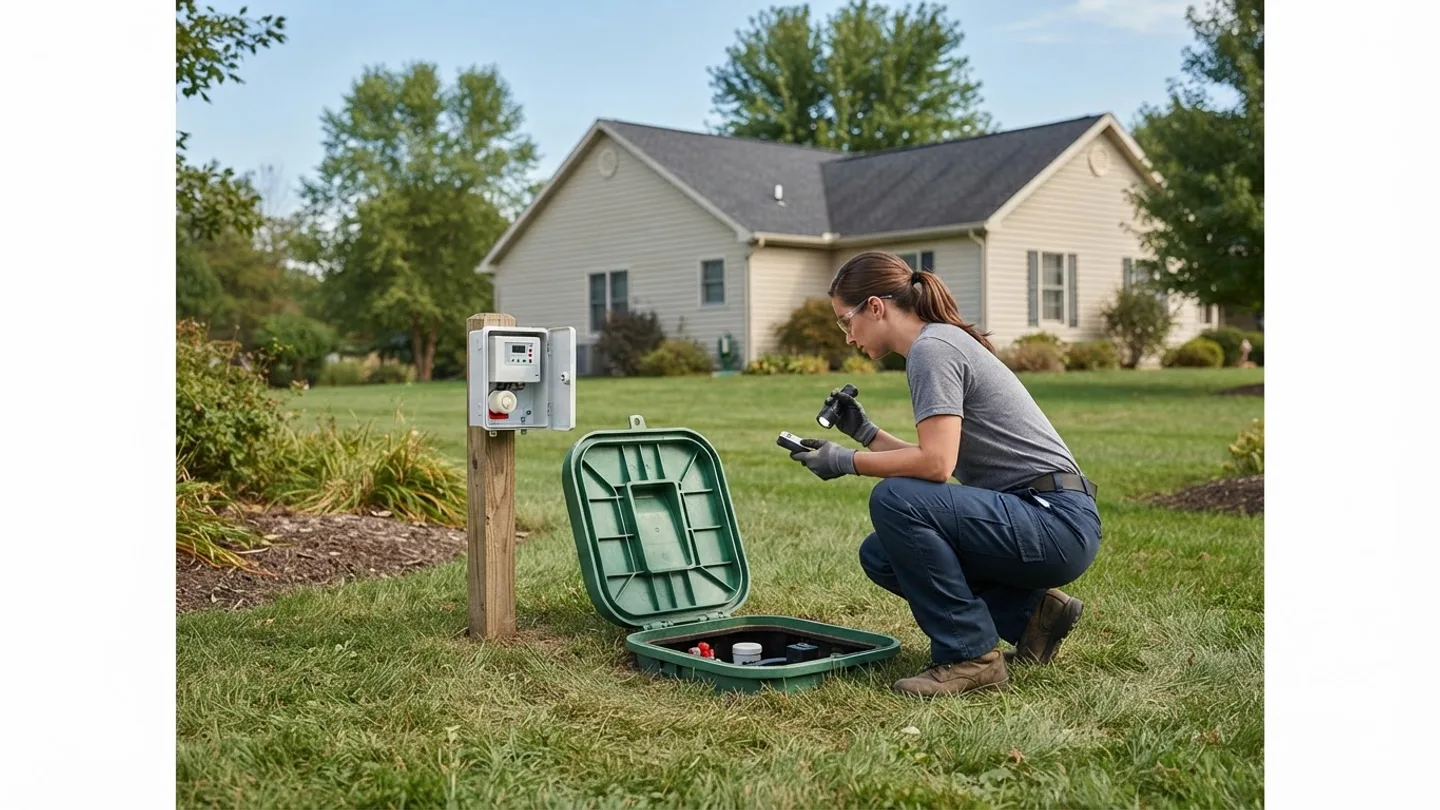
The alarm light on your aerobic treatment unit is on, and you are standing in the yard with a cup of coffee. That is the usual way people start thinking hard about an ATU. It is a working system, not just a tank buried under grass.
An aerobic septic system uses air to help bacteria break down solids faster than a conventional tank. Because that air moves through a pump and small diffusers, the system needs a few simple owner checks and regular service visits.
This guide separates what you can do from what the service company should do. It also covers how often visits happen, what owners usually pay, and when the alarm should not wait until Monday.
What this guide covers
At a glance for ATU owners
- What it covers: owner checks, contractor tasks, service frequency, yearly cost and honest advice on additives and contracts.
- Which systems it applies to: aerobic treatment units with an air pump or blower, chlorination or UV disinfection, and spray or drip dispersal.
- Typical cost: a routine service contract often runs $300 to $800 a year. A year that includes pump out, tablet supply, parts or pump replacement can move above $1,000.
- Urgency: low for routine checks. High if the alarm stays on, sewage backs up into the house, the yard goes wet over the tank or field, or spray stops.
- Who does what: you check the alarm, tablets, spray heads and records. The pro handles electrical parts, the air pump, diffusers, sludge levels and repairs.
Why air matters in an aerobic septic system
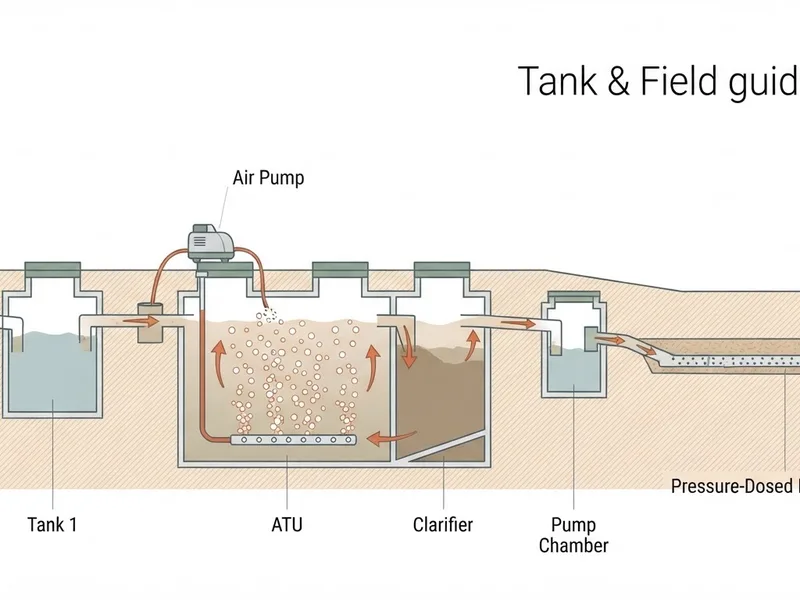
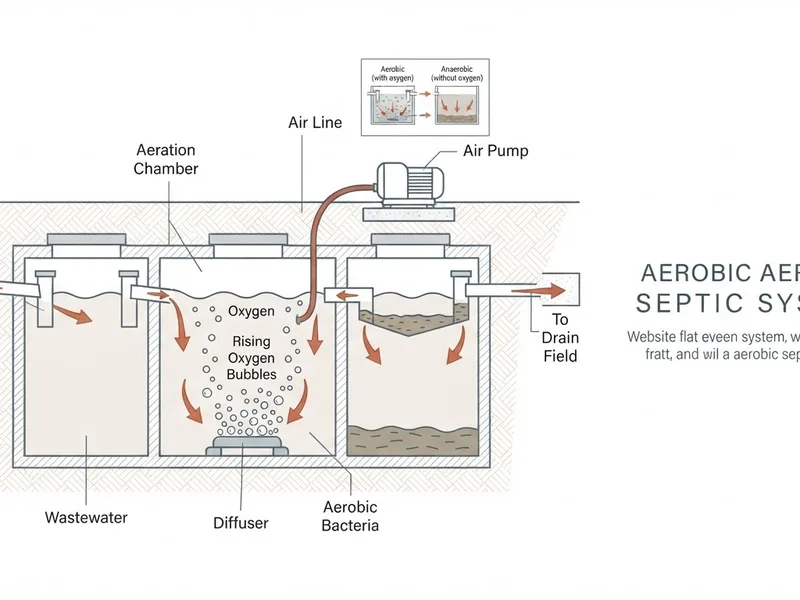
A conventional septic tank works mostly without added machinery. The tank separates solids, and the soil does a lot of the cleanup after the liquid leaves the tank. An aerobic system adds a blower or air pump, and it often adds disinfection before the liquid leaves.
The air pump feeds tiny bubbles through diffusers. Diffusers are small porous devices that push air into the water. The oxygen helps aerobic bacteria grow and break down organic material.
When the pump fails, the power drops, or a diffuser plugs, the bacteria lose oxygen. The system may still look quiet in the yard while untreated water moves toward the drain field.
Because of that, a healthy ATU is partly a living bed and partly a piece of outdoor machinery. You can do the simple owner checks. You should not try to rebuild most electrical and aeration parts yourself.
| Area | What you do | What the service company does | Why it matters |
|---|---|---|---|
| Alarm light | Check the light, note if it is steady or flashing, and write the time. | Find the cause, such as a pump failure, float problem, power loss or clogged air line. | The alarm is the system telling you it has stopped working as designed. |
| Chlorine tablets | Replace approved tablets if the label says owners can do it. Wear gloves and keep tablets dry and out of reach. | Confirm the correct dose, check the chlorinator or UV unit, and document the system type. | Too little disinfection can be a permit problem. Too much can upset spray plants and soil biology. |
| Spray heads | Keep dirt, tall grass, snow and debris away from the spray pattern. | Flush lines, clean nozzles and check for weak coverage. | Blocked spray can pond in the yard, leave streaks dry, or send water back toward the tank. |
| Air pump or blower | Listen for a steady low hum while you check the alarm. | Test, service, replace or repair the pump and related electrical parts. | No air means poor treatment, even if the tank still has water. |
| Diffusers | Do not try to clean them yourself. | Remove, inspect, clean or replace diffusers. | Small plugged diffusers reduce oxygen and can let solids move farther than they should. |
| Tank solids | Ask to see sludge and scum levels during the visit. | Check sludge and scum, clean the effluent filter, and pump the tank when needed. | Aerobic tanks vary in how often they need pumping. Sludge level matters more than a fixed calendar. |
| Water use | Spread out laundry and be careful after gatherings or new guests. | Recommend capacity limits and flag warning signs from flow testing. | ATUs have less room for surges than many conventional systems. |
| Paperwork | Keep service reports, pump records and permits in one folder. | Provide written reports when the system, contract or local rule requires it. | Records can save time during a sale, permit renewal or dispute about repair scope. |
A monthly owner routine that takes ten minutes
Check the alarm while the coffee is hot
The alarm should normally show power, not an active fault. If a red light is steady or flashing, note the time and whether anything changed in the house, such as heavy water use, a power outage or recent rain.
Listen near the air pump
Stand where the pump or blower is. A working unit usually has a steady low hum. If it is silent and the alarm is on, that is a service call, not a tablet fix.
Walk the spray area
Look for heads that are buried, broken, spraying too low or leaving dry patches. Tall grass and dirt piles are easy fixes. A head that will not turn needs service.
Check tablet count or disinfection status
If your system uses chlorine tablets, confirm there is tablet left and that the housing is closed. Do not guess about dose. If you are unsure, ask the contractor before the next visit.
Think about water use for the next week
A big laundry day, a party or a new guest can stress a small ATU. Spread water use out if the alarm has been acting up or the spray area looks wet.
Write one line or take one photo
Keep a simple note: date, alarm status, tablet status and any odd spray. A small folder of service papers is far easier to carry than a stack of loose receipts.
Service visit frequency, contract terms and yearly cost
Many ATU service companies visit twice a year. Some local rules, manufacturers or first-year installs call for quarterly checks, then twice a year after that. Some sensitive areas require more frequent service because soils are tight or the system must be documented for a permit.
A normal visit should include the alarm, electrical connection, pump or blower, air flow, disinfection unit, tablet housing and spray heads. The contractor should also look at solids if the system has an inspection opening. You should get a written note or report, especially if the service was done for a permit or a sale.
For cost planning, a routine contract often falls in the $300 to $800 a year range. The low end usually means inspections and tablet checks. The high end may include tablet supply, minor clearing, travel in rural areas and a more complete report.
The surprise comes when parts are involved. A new blower, pump, control board, float switch or air line can push a single year above $1,000. A full tank pump out can be part of the contract or a separate charge, so ask before signing.
If a quote includes drain field replacement, ask what failed. A weak spray head, a plugged pump or a clogged diffuser is not automatically a failed drain field. Get two or three written estimates. Ask what each visit includes, who pays for parts under warranty, and whether the contractor can show a recent service report for a system like yours.
Rules vary by state. Your state may require licensed service companies, written contracts, service reports or inspection records at sale. Read the state contract rules page before signing a maintenance contract.
Common questions about aerobic septic system maintenance
Can I add septic additives to my aerobic system?
Most additives are not a substitute for a working air pump, clean diffusers and proper sludge checks. Some products can even harm treatment. Use chlorine tablets only if your system is designed for them and the dose is correct. For other additives, be skeptical unless the manufacturer or your permit requires them.
Why is my ATU alarm going on and off?
On and off alarms can come from a failing float, weak pump, power issue, clogged air line, blocked filter or high water use. If it repeats after a reset, get service. The alarm is not decoration; it usually means air, disinfection or flow is off.
How often should an aerobic tank be pumped?
There is no reliable calendar answer for every system. Aerobic tanks vary by size, household use, solids volume and service design. The sludge and scum level matters more than the year on the calendar. Ask the inspector to show you the level and tell you when it should be pumped.
Should I handle chlorine tablets myself?
Sometimes yes, if your manufacturer or contractor says owners may replace approved tablets. Always follow the label, wear gloves, keep the tablets dry and close the housing correctly. If you are unsure, make a note and let the service visit sort it out. Too much chlorine can be as unhelpful as too little.
Can I use a garbage disposal on an aerobic system?
Some ATUs have less room for grease, fibrous waste and solids than a conventional tank. Many homeowners can use a disposal carefully, but heavy use can raise solids and cause strain. Check your permit or manufacturer instructions. If your spray area is wet or the alarm keeps returning, stop using the disposal until a pro looks at it.
What should I have ready when selling a house with an ATU?
Keep recent service reports, pump records, permit copies and a photo of the tank location or riser if you know it. If the buyer's inspector calls the system marginal, ask for the specific failed item, such as pump, alarm, disinfection, spray coverage, or sludge level. Do not accept vague repair language that points to a full drain field without test evidence.
Leave a Reply