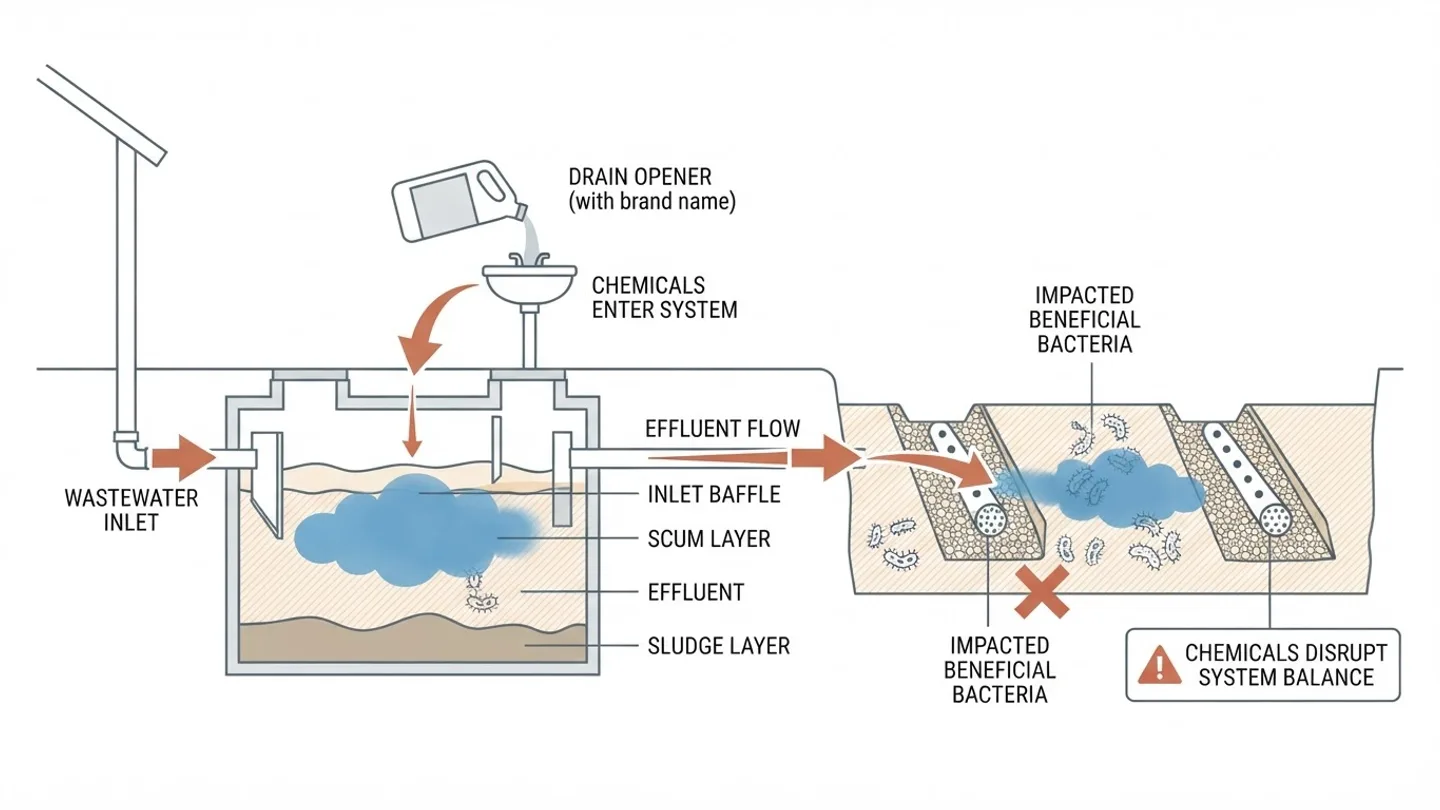
You pour a cup of drain cleaner into a kitchen sink, wait a while, and the water still sits there. Your house runs on septic, so the next thought is less about the sink and more about the tank in the yard.
Drano is common, so the question is normal. The honest answer is that one use is not the same as a habit. A slow drain can also be a sign that the system needs care, not another bottle.
Contents in this article on Drano and septic systems
At a glance
- What this covers: How harsh drain cleaners affect septic systems, gentler ways to clear a slow drain, and when to stop guessing and call.
- Systems it applies to: Conventional gravity tanks, aerobic systems with pumps or blowers, mound systems, and systems with newer or older drain fields.
- Typical cost range: This is not a cost guide. Prices vary by town, tank size, and whether the repair is a pump out, a clogged filter, or a drain field problem.
- How urgent it is: Moderate for one slow drain with no odor. High for indoor backups, sewage smell outdoors, or soggy grass over the drain field.
- Homeowner job or pro job: A homeowner can use gentler methods for one sink or tub. A pro should handle multiple slow drains, tank odor, wet ground, or sewage backups.

Occasional use is not the same as repeated use
Many drain cleaners sold in stores, including some Drano products, work with caustic chemistry. Caustic means strong alkaline, often lye based. That chemistry can eat organic buildup, but it does not dissolve a tree root, a toy, a wad of hair that has turned into a rope, or a blocked tank outlet.
Inside a septic tank, living microbes do the main work. They break down solids so the liquid that leaves the tank, called effluent, can soak into the soil without overloading the field. Sludge, the settled solids at the bottom, and the scum layer, the floating grease on top, grow over time. That is why pumping matters.
A single dose of caustic cleaner, used once and then followed by normal water use, may pass through a healthy tank without shutting the system down. Repeated doses are a different story. They can kill or weaken tank microbes, raise pH, the balance between acid and base, and leave harsh residue behind. In older homes, that residue can also attack metal pipes, thin gaskets, and shorten the life of parts that are hard to reach.
Aerobic systems are especially sensitive because they rely on an air fed treatment zone. Do not add any harsh chemical to an aerobic unit unless the manufacturer care sheet clearly says it is safe. Mound systems often add pumps, floats, and controls, and those parts do not benefit from a chemical flush.
| Option | What it helps with | Septic system risk | Good time to try |
|---|---|---|---|
| Hot water and dish soap | Grease light buildup in a sink trap | Low, but do not use boiling water in old pipes or PVC that can soften | A sink drains slowly after cooking |
| Plunger | Air pressure on a simple blockage | Low | One sink, tub, or floor drain |
| Enzyme cleaner | Organic buildup in drain lines | Low risk to microbes, but not strong enough for roots, toys, or a saturated field | Routine maintenance or mild grease odor |
| Drain snake or auger | Physical hair, grease, and minor blockages | Low risk if used gently, but a deep line snake can disturb a field or damage a pipe if forced | One fixture stays slow after hot water and plunger |
| Septic safe drain cleaner | Light organic film | Low to moderate, depending on formula, check label | When you need a store cleaner and want a gentler option |
| Drano or similar caustic cleaner | Stubborn organic clog in a household line | Low if one time in a healthy system, higher with repeats, old pipes, aerobic systems, or a tank that is overdue for pumping | Last resort, not a routine solution |
| Licensed plumber or septic professional | Unknown cause, repeated slow drains, backup, suspected field problem | Low when they know septic, but cost and scheduling apply | When DIY clears nothing or signs point to the tank or field |
When a slow drain is really a septic sign
A slow kitchen sink after a big meal may be grease in the trap. A tub that gurgles and drains better after a day may be a partial line blockage. A drain that clears after chemical treatment and then slows again every few weeks may be telling you that the tank is full of sludge, the outlet screen is clogged, or the soil under the field is getting overwhelmed.
There are a few names worth knowing. A baffle is a plate or pipe at each end of the tank that keeps solids from escaping. An effluent filter is a screen, often at the tank outlet, that catches fines before liquid goes to the field. A distribution box spreads liquid among field lines. A biomat is the natural slim mat that forms under the pipes, a healthy biomat helps filter, but too much of it can choke the field.
A mound system uses sand, gravel, or a pump chamber to spread liquid. If its pump or float is faulty, chemicals will not fix it. A septic backup is not the time to guess.
Do this now if water backs up
Stop running water
Tell everyone in the house to avoid showers, laundry, dishwashing, and faucets. Every added gallon goes straight into the part that is already failing.
Do not pour more drain cleaner
If you have used Drano before the backup, do not add more. It will not clear a tank, outlet, filter, or field problem, and it can make the next repair call dirtier and less safe.
Check the outside first
Walk the yard. Look for standing water, very wet or squishy grass, strong odor, or grayish water near the tank or field. If you see any of that, treat it as a septic system call, not a plumber for one sink.
Keep people and pets clear
Do not let children or pets play near the wet area. If sewage is in the basement, keep electrical panels, cords, and outlets dry. If contact happens, wash skin and clothing well.
Call with a short description
Tell the pro whether the backup is indoors, outdoors, one fixture, or the whole house. Say the last time you pumped the tank, if you know it. That information helps them bring the right truck, pump, and safety gear.
Questions homeowners ask
Can I use Drano once in a septic tank?
A one time use in a single sink line is unlikely to stop a healthy tank by itself, but it is not a good habit. Use a plunger or snake first. If the system has an aerobic chamber, avoid harsh cleaners unless the care sheet says safe.
Will Drano clear a slow drain field?
No. Chemical cleaners do not fix saturated soil, a blocked distribution box, a failed pump, or roots in the field lines. If the problem is under the drain field, a pump out, clearing an outlet filter, or field repair is the conversation you need.
Are enzyme cleaners safe for septic systems?
They are gentler than caustic cleaners and can help manage light organic buildup. They are not magic. A thick sludge layer, a plugged baffle, or a clogged field will not respond well to any additive. Do not buy enzyme products as a substitute for pumping.
What should I avoid flushing or pouring into septic lines?
Cooking grease, wet wipes, cotton swabs, paper towels, paint thinner, gasoline, strong bleach, antibacterial cleaners, and harsh drain products. They either add solids, harm microbes, or damage pipes and pumps.
How often should a septic tank be pumped?
It depends on household size, tank size, water use, garbage disposal use, and local rules. The only way to know yours is a lid opening inspection that measures sludge and scum depth, or service records.
Does using a garbage disposal make septic problems worse?
It can add food solids and grease. If you have one, conserve water, spread laundry loads, and expect more frequent tank inspections.
Leave a Reply