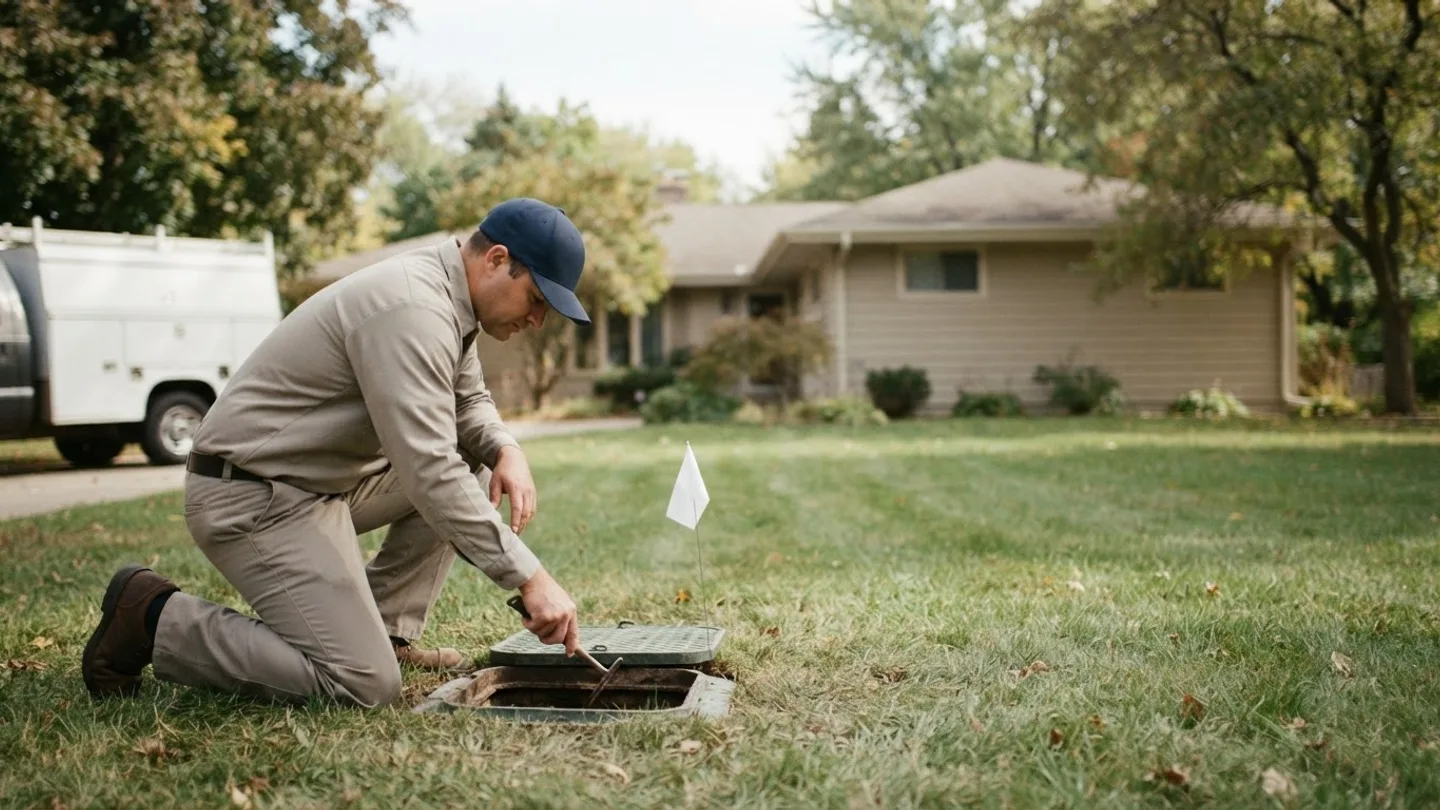
Drains slow down, then a toilet, tub or basement shower starts backing up. That usually means your septic system backed up, and the first step is to stop feeding it with water.
You do not need to know the exact cause in the next ten minutes. You need to prevent more drainage from reaching a tank, a plugged pipe or a saturated drain field.
Stay steady, keep the household away from wet areas and call a qualified pumper. The next sections explain what to do, what the pumper will check and what usually affects the cost.
Sections in this guide
Do this now
- Stop adding water. No showers, toilets, laundry, dishwasher or hoses until help arrives.
- Keep kids, pets and visitors away from wet ground, standing water or areas that smell near the tank or drain field.
- Do not open the tank lid. Gases and pressure can cause injury.
- Call a qualified or licensed septic pumper, or a plumber if only one fixture is affected and you suspect a house line blockage.
- Ask for written next steps after the pump truck leaves, not just a verbal pump it and see answer.
What to do in the next hour
Stop the water input
Do not run faucets, shower, flush, load the washing machine or start the dishwasher. If you have a water softener, filter or hose feeding into the septic side, turn it off or bypass it if that is simple.
Do not keep resetting pumps or alarms
If your system uses a pump, blower or alarm, note what fixture was running when the trouble started. Do not keep resetting equipment. If the owner manual gives an emergency stop step, use it. If not, wait for a pumper or plumber.
Keep people and pets clear
Stay several feet back from tank lids, inspection ports, vent pipes, wet soil and any standing water. If a lid is buried, do not dig. Mark the area if you can do so safely.
Do not open the tank
Septic tanks are confined spaces. They can have low oxygen and harmful gases. A person at the open lid can become dizzy, slip or fall in.
Call the right help
Call a septic pumper first when multiple drains back up, the yard smells, the ground is wet over the tank or field, or drainage enters the house. Tell them you think your septic system backed up, what fixtures are affected and when the tank was last pumped if you know.
Gather records
Find any pump receipt, inspection report, permit, as built sketch, tank size, filter cleaning date or alarm record. If you are a renter or property manager, notify the owner now and document what you see.
Why the backup happened
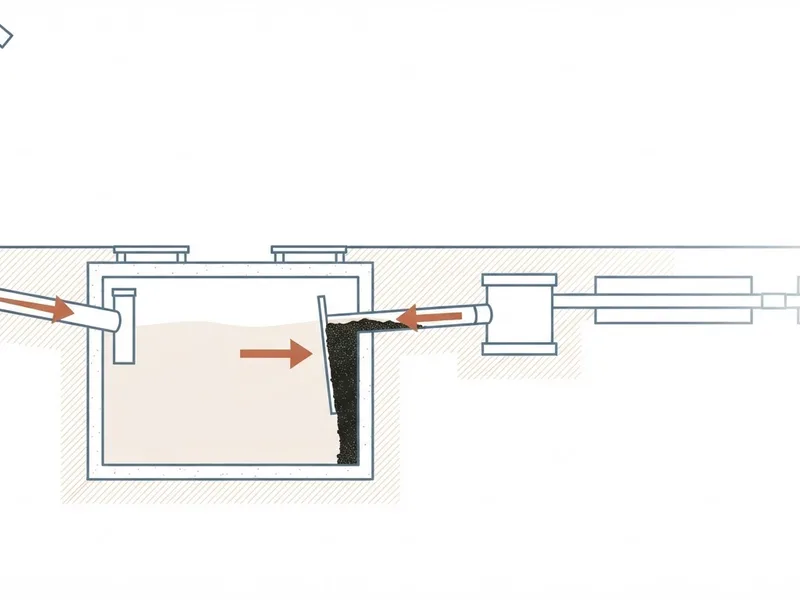
A typical septic tank is a buried box that holds wastewater from the house. Many homes use a tank of at least 1,000 gallons, but the exact size depends on the number of bedrooms and local rules.
Inside the tank, solids separate. A scum layer, which is floating oils and soap, sits near the top. Sludge, which is settled solids, sits near the bottom. The clearer water in the middle, called effluent, leaves the tank through an outlet pipe.
The tank has baffles, small walls or tee fittings that keep scum and sludge from moving out too fast. Some outlets have an effluent filter, a screen that catches particles. If a baffle breaks or a filter clogs, water cannot leave and pressure can return to the house.
Downstream, the drain field is a network of pipes, gravel, chambers or sand. Effluent seeps into soil, where microbes treat it. A biomat can form in wet soil around pipes, a natural layer of growth that limits flow if the field is overloaded.
If too much water reaches the field, from laundry, rain or a failed pump, the field cannot absorb it. The tank stays full and backups happen. A distribution box, a small box that splits flow into field lines, can also plug or tilt and push water the wrong way.
The backup might not be the septic system at all. The house line from the building to the tank can be blocked by roots, grease or a collapsed pipe. If only one fixture is slow or backing up, that blockage may be closer to the house.
In an aerobic system, which uses air to help treatment, a blower, pump or control panel can fail first. A mound system, which raises treated water above natural soil, often depends on a pump or valve. If an alarm sounds, take the alarm seriously and call for help instead of guessing.
| Cause | What you notice | What usually happens next |
|---|---|---|
| Tank is full | Slow drains, backups after laundry, no recent pump receipt, odor near the tank | Pump the tank, then inspect baffles and outlet condition |
| Outlet or effluent filter is blocked | Water rises in a low drain, odor near the outlet, the tank may still be wet in the yard | Clean the filter, check the baffle and clear the outlet if safe |
| Drain field is overloaded or failing | Soggy ground, smell in the yard, repeated backups during rain or heavy use, pump may run long | Confirm water level after pumping, ask about field repair and get a second opinion |
| House line is blocked | Only one fixture backs up or is slow, other drains work, no wet yard near the tank | Plumber snakes or cameras the branch line from the house to the tank |
What a pumper checks
Locate the tank and field
They ask about the yard, probe for lids or use a tank finder. A good crew will explain what they found and why access matters.
Open and measure
They check the liquid level, scum layer and sludge depth. If sludge is too high or scum has escaped, that can explain a backup or a plugged field.
Check the outlet filter and baffles
They look at the effluent filter, if present, and the inlet and outlet baffles. A missing, cracked or blocked baffle is a common cause of solids leaving the tank.
Test flow
After pumping, some technicians run a fixture to see if water moves toward the tank. Not all pumpers do a full inspection, so ask what they checked.
Look at the field
They check for wet soil, odor, high water, a running pump and overflow at the distribution box. If the field is soaked, pumping alone may not solve the problem.
Write the report
Ask what was pumped, what layers were seen, what was cleaned or replaced, and what still needs repair. A written note is more useful than a vague promise.
What affects the cost
The bill usually starts with pumping. Price moves with distance from the truck route, tank access, excavation needed to find lids, amount pumped and disposal fees.
If the tank empties but the backup continues, more work may follow. Clearing a clogged outlet pipe or filter can take jetting. Camera work by a plumber can add cost.
A drain field repair is a bigger job. It may require a county health department permit, excavation, new pipe, gravel, sand or chambers. Replacement costs vary a lot by region, soil and site access.
A second opinion can save money. If a pumper says a field replacement is needed based only on pumping, ask for written observations: sludge depth, scum, outlet condition, water level, wet field and whether the distribution box was checked.
Ask before you hire. Is this a pump quote or a repair bid? What is included? Who will dig, if digging is needed? Does the company hold any required permit or license? Will the report show the date and system location?
Do not choose by lowest price alone. A rushed pump without looking at baffles, filter and field conditions may leave the real cause unfixed.
Common questions
What if only the basement shower backs up?
A single low fixture can point to a house line blockage. If other fixtures drain normally and there is no yard symptom, start with a plumber. If several fixtures back up or the ground over the septic line is wet, call a pumper.
Can additives fix a septic system backed up?
Usually no. Additives do not clear a full tank, a broken baffle, a blocked outlet pipe or a failed drain field. They can also interfere with some systems. Do not spend money on them during an active backup.
Should I pump first or call a plumber first?
If the yard smells, the ground is wet or multiple drains are affected, call a pumper first. If the tank was pumped recently and only one fixture is affected, a plumber may be faster.
How long can I wait?
Do not wait if drainage is entering the house or the ground near the tank is wet. If symptoms started this morning, keep water off and call today.
Does this mean I need a new drain field?
Not always. Many backups are caused by tank solids, a clogged filter or a blocked outlet. Repeated backups after pumping and filter cleaning point more toward a field problem.
Is it safe to open the tank to look?
No. Open tanks are hazardous. Stay away from the lid and let the pumper or an inspector handle access.
Call a qualified pumper
Tell them you think your septic system backed up, list the fixtures affected and note when drainage entered the house.
Leave a Reply