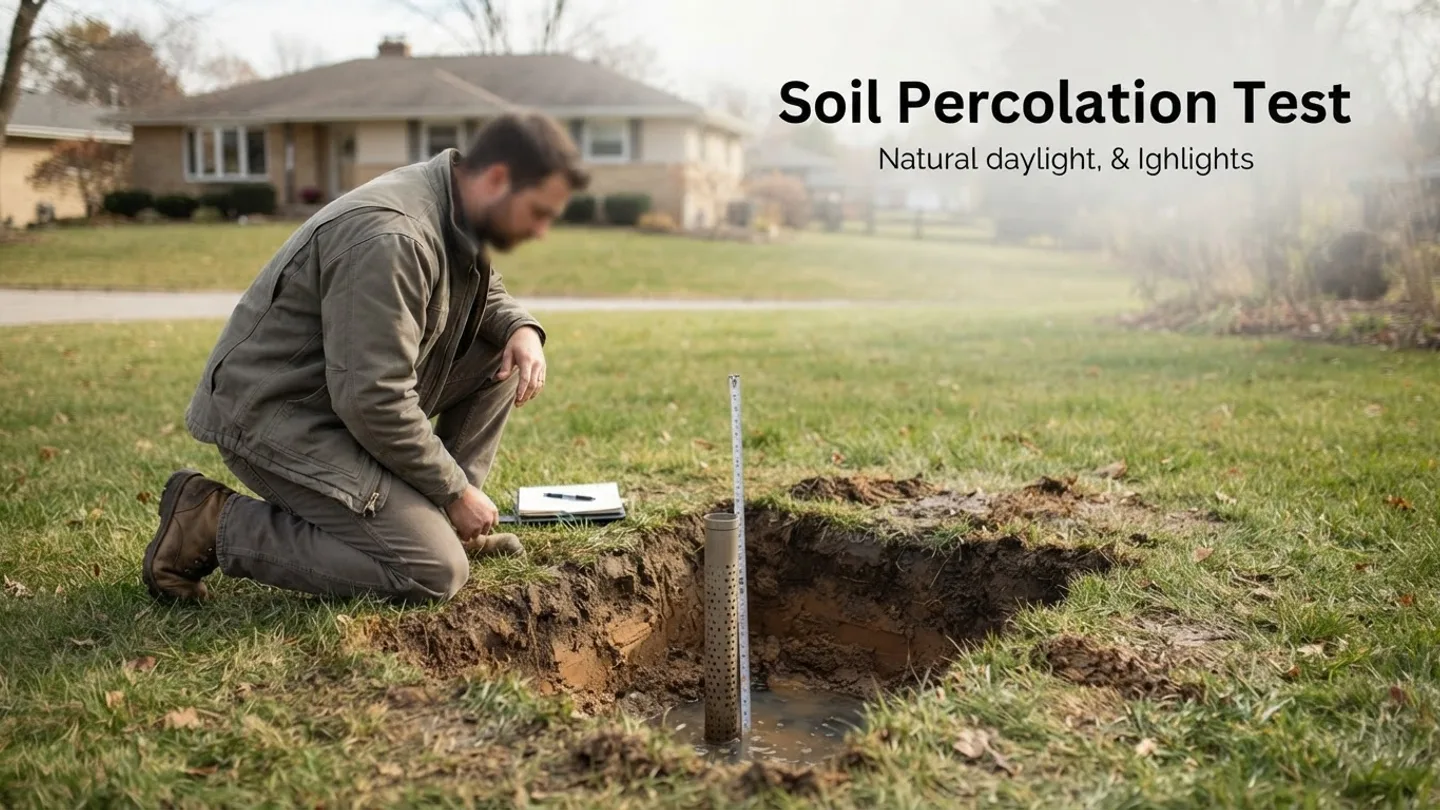
Septic Perc Test: What Happens and What the Results Mean
You are standing on a lot with a survey stake and a permit folder, trying to find out if the land can take a septic system. The local health office, your bank, or your septic installer asks for a perc test.
A septic system perc test checks how fast water moves through the soil that will receive wastewater from the drain field. The result can affect field size, system type, permit approval, and closing timeline.
This guide covers what the test measures, who runs it, how holes are dug, soaked, and timed, and what soil evaluation rules mean. Local rules vary by state, county, and city, so the health office or permit agency remains the final authority.
At a glance
- What this guide covers: the perc test process, who runs it, how timing is measured, and how results affect system type and drain field size.
- Applies to: new rural home sites, septic system replacement, bedroom additions, failed old systems, mound systems, sand filters, pressure dosing, and aerobic treatment setups.
- Typical cost range: varies with access, soil depth, hole number, travel, weather, and local review. Ask for a written quote and a clear scope.
- Urgency: can delay a sale, permit, or closing. Schedule the test before contract deadlines if the land or system depends on approval.
- Homeowner or pro: pro job. The homeowner coordinates, reviews the report, and asks questions.
What a septic system perc test measures
A percolation test, called a perc test, measures how quickly water soaks into native soil after the soil is wetted. A septic system sends treated wastewater, called effluent, into a drain field. The soil must take in that water at a rate that keeps it from surfacing, flooding, or reaching groundwater too soon.
The test does not check the tank, pipes, baffles, or the whole system. A baffle is a wall or screen at a tank outlet that slows solids. An effluent filter is a screen at the outlet that traps small solids before water leaves the tank. A perc test only samples the soil under the planned disposal area.
Results are often reported as minutes per inch, or the time it takes water to drop one inch inside a test hole. A faster drop can mean more open soil, while a slow drop can mean clay, compaction, rock, or a shallow water table. Faster is not always better, because very open soil may pass water too fast for full treatment.
The soil that receives effluent forms a biomat, a biological layer near the soil pores that helps consume organic matter. If the soil cannot absorb water at the design rate, the biomat can flood, the field can surface, or a repair may be needed later.
Perc results are one part of a site evaluation. They help the designer choose treatment area, dosing, and system type. They do not guarantee a system will pass inspection or serve the home without maintenance.
What happens during a typical septic system perc test
The evaluator picks test locations
Test holes are placed where the drain field will be built, not only where the soil looks best. The goal is to learn whether the area that will receive wastewater can handle it. Number of holes and layout depend on local rules and field shape.
Holes are dug to local specifications
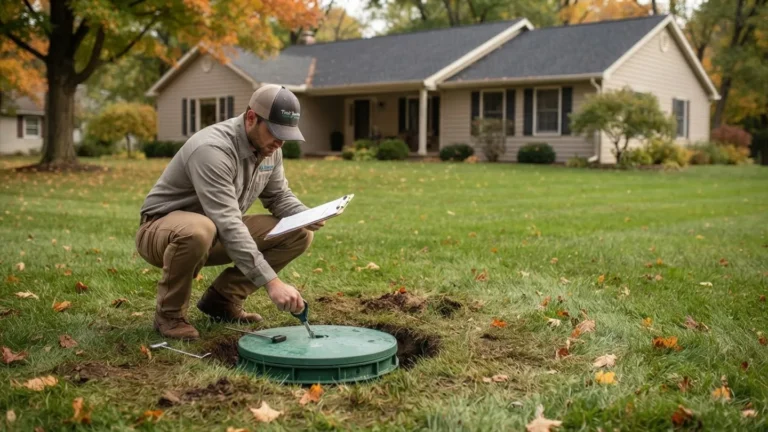
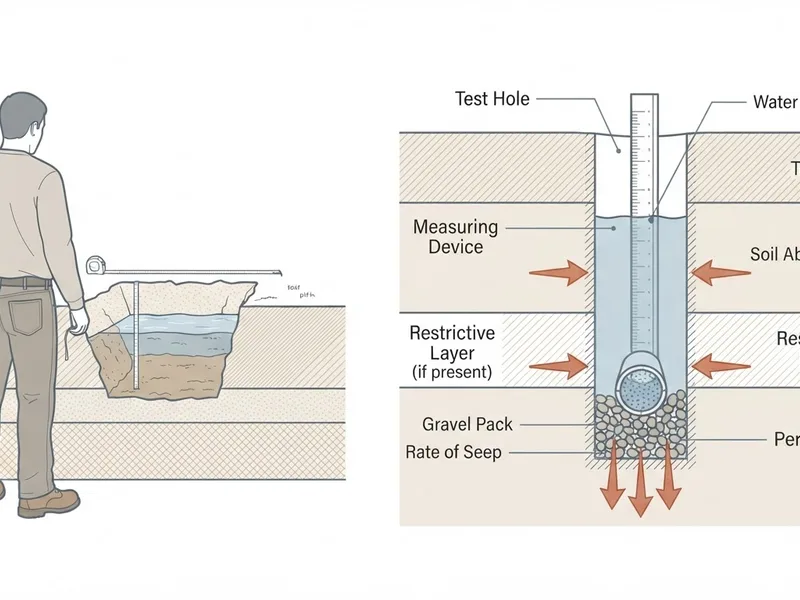
A worker uses a shovel, auger, or machine to make holes in the soil that will absorb effluent. The exact hole size, depth, and bottom level come from the local method. The loose soil is removed, and the sides are left in a condition that represents normal soil contact.
The soil is soaked
Water is added to the holes to wet the soil and reduce trapped air. The soak period can take hours and may depend on soil type, weather, and the test method used in your area.
The water level is set
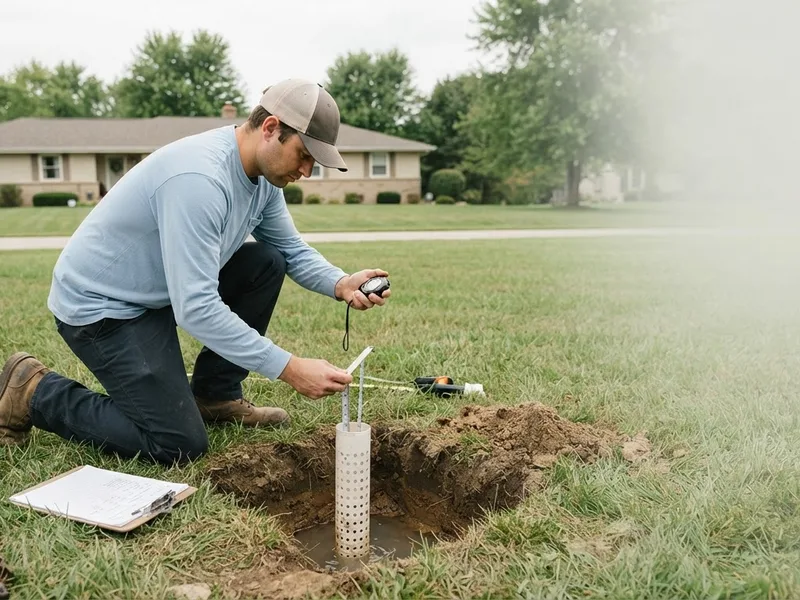
After soaking, the tester adjusts the water to a fixed depth above the soil surface in the hole. The water level may be measured with a ruler or gauge.
Drop times are measured
Water is added back to the marked level. The tester records how long the level takes to fall, often in repeated intervals. The final result may be stated as minutes per inch.
The field notes become part of the permit file
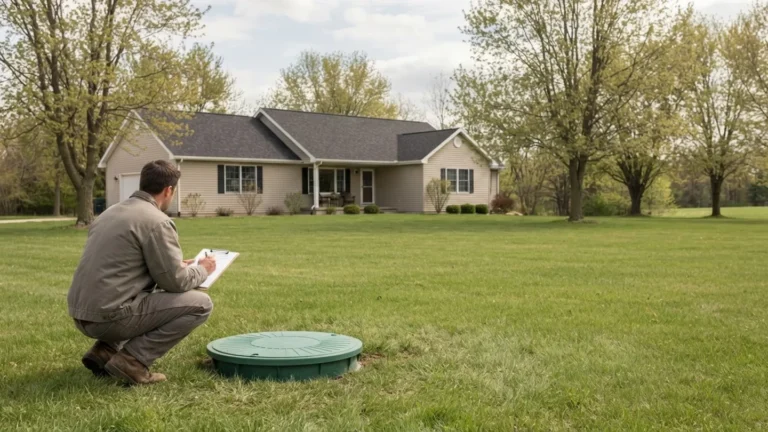
The evaluator notes soil texture, water table, holes that flooded, holes that barely drained, weather, and any unusual conditions. That report goes with the septic design or application.
Who performs a perc test and what they are looking for
The person who runs the test depends on your state and county. It may be a soil scientist, a licensed septic installer, a professional engineer, a testing contractor, or a local health officer. Some places let the designer test. Other places require the permit office to observe or approve the method.
A good evaluator looks for representative soil, not the best pocket of sand in the yard. If a hole fills very fast, the tester may suspect gravel, a void, a root channel, or a drain. If a hole holds water, the tester may suspect tight clay, compacted soil, or a high water table.
Some issues are not solved by timing alone. A restrictive layer is a tight clay, hardpan, or shallow rock layer that slows downward movement. Soil texture is determined by the mix of sand, silt, and clay. Setbacks from wells, buildings, ponds, ditches, and property lines can also matter.
A usable report should say who ran the test, where holes were placed, how deep they were, how long they soaked, what weather and water table conditions were present, and what result is recommended. If the report is thin, ask for the field data before you sign a contract, buy land, or approve a design.
| Feature | Perc test | Soil evaluation |
|---|---|---|
| Main question | How fast will water soak into this soil? | Can this soil treat and absorb septic effluent? |
| Field work | Holes are dug, soaked, and timed | Soil profiles are described, horizons measured, water table and layers checked |
| Output | Minutes per inch or another infiltration result | Notes on suitability, system type guidance, and permit conditions |
| Season sensitivity | Drought and wet season can change hole behavior | Some states place more weight on soil evaluation during wet season or high water table |
| Best used for | Comparing infiltration rates under a common test method | Judging soil quality, depth, restrictive layers, and overall field risk |
Pros
- You learn about soil limits before you spend your closing budget.
- A written report helps your lender, attorney, or real estate agent understand permit risk.
- You can compare one parcel against another instead of buying on hope.
- You can ask for soil evaluation, a design review, or a second opinion while there is still time.
- You can plan for a mound system, pressure dosing, or a smaller build if needed.
Cons
- The test costs money before you know you want the parcel.
- A dry season result may not reflect a wet season condition.
- A failed test can lower resale expectations if you keep the land.
- Some land may need a new test after grading, clearing, or a design change.
- A passing result still does not approve every building or system choice.
How septic perc results affect system type and field size
A drain field is sized around the household water use and the soil's ability to absorb treated wastewater. A 1,000 gallon tank is common for many three bedroom homes, but it does not set field size. Field size comes from design flow, soil conditions, and local approval. If a family of five uses more water than a family of three, the same perc result can lead to different designs.
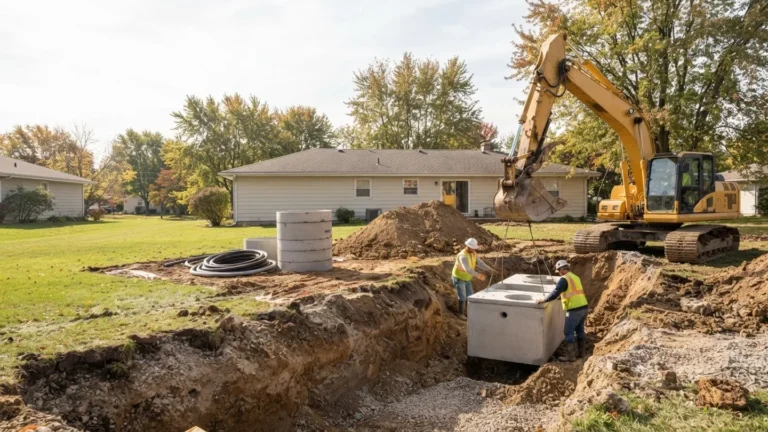
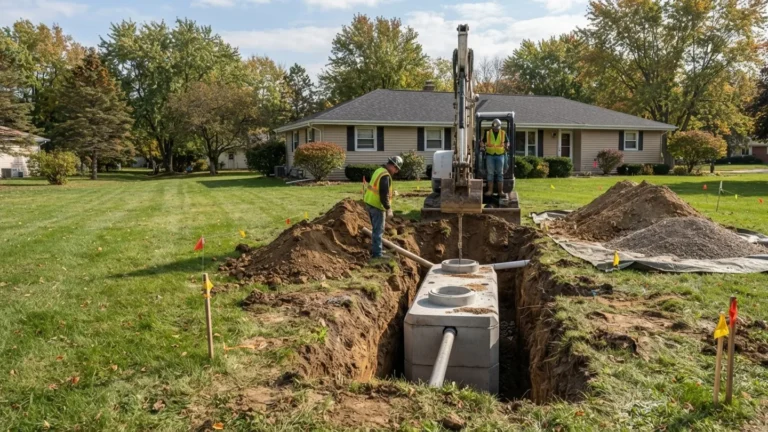
If soils accept water slowly, the designer may need a larger disposal area, raised beds, a sand filter, or a mound system. A mound system lifts the drain field above the natural soil and uses sand and gravel to slow and treat effluent. It is common where soil, rock, water table, or lot distance make a conventional field impractical.
If soils accept water very fast, the worry is that effluent may move too quickly with inadequate treatment. In that case, the design may include stronger pretreatment, an aerobic unit that adds air to improve treatment quality, a dosing chamber, or evenly split trenches. An aerobic system helps treatment, but it does not turn poor soil into good soil.
A marginal result is not the same as a clean pass. It can mean the field can work only with careful sizing, dosing, setbacks, and maintenance. Read the whole report. Ask what field length, system type, water use limit, inspection interval, and pumping expectations come with that result.
Do not assume an additive will fix a slow or fast soil result. No product on the shelf changes how water moves through soil. A good report and a conservative design matter more than a claim on a container.
Frequently asked questions
Can a homeowner do a septic system perc test?
Usually not for permit use, because the test must follow the local method and be accepted by the permit authority. You can dig test holes for information and ask questions, but do not count on a homeowner test for land purchase or system approval.
What if the perc test fails?
A failed test does not always mean no septic system. Options may include a soil evaluation, a mound system, a sand filter, pressure dosing, an aerobic treatment unit, a larger lot, or an approved alternative. The local health office decides what is allowed.
Does a good perc result mean I can install any septic system?
No. The system must match household size, water use, setbacks, tank design, field design, maintenance needs, and local rules.
Is a perc test required for an existing house on septic?
Not usually for normal use. It can matter when replacing a failed system, adding bedrooms, increasing water use, building an addition, or meeting sale or permit disclosure rules in some states.
When should I schedule the test?
Schedule it before you commit to land, before a closing contingency expires, and before a busy season. Ask the local office whether the season, weather, and water table affect the result.