Septic Tank Size: How Big a Tank Your House Needs
You just moved from a house on city sewer to one with a tank in the back yard. The seller says it is a 1,000-gallon system, but you are not sure what that means for your family.
Septic tank size is the first number that matters when you buy, pump or repair a system. In many states, the short answer is the bedroom rule. A typical three-bedroom house is commonly sized at 1,000 gallons. Local approval can move that number up or down.
The sections below give the common size table, the reason bedrooms are used, and how garbage disposals and aerobic treatment units can change the answer.
At a glance: what this guide covers and how urgent it is for most homeowners. Use it to see which system applies, what size rule starts the conversation, and when to call a pro.
At a glance
- This guide covers conventional septic tanks and many aerobic treatment units, also called ATUs.
- The common bedroom rule starts a typical three-bedroom house at 1,000 gallons.
- Tank size is not urgent unless drains slow down, odors appear, grass stays soggy over the field or a fixture backs up.
- You can check permits and pump records yourself. A licensed pumper or inspector should confirm the size or assess symptoms.
- Installed tank costs vary widely by region and site, so no single dollar range fits every job. Ask for written local quotes.
The bedroom rule in plain terms
Most septic size rules begin with bedroom count because it is a simple way to estimate wastewater from a house. The number is not a guarantee. It is a starting point that a county health department or licensed designer may adjust.
For a typical three-bedroom house, many jurisdictions expect at least 1,000 gallons. A one or two bedroom house can often be approved with a smaller tank, while a four or five bedroom house often needs more volume.
When you are buying a home, do not assume the tank in the ground matches the bedroom count. Older houses were often built before local rules tightened. When you are building, follow the permit and design, not just the rule of thumb.
| Bedrooms | Common tank size range | Notes |
|---|---|---|
| Two | 750 to 1,000 gallons | Common minimum, but many counties use 1,000. |
| Three | 1,000 gallons | The rule most homeowners hear for a typical three-bedroom house. |
| Four | 1,000 to 1,200 gallons | Some areas require a step up at four bedrooms. |
| Five | 1,200 to 1,500 gallons | Large homes and high water use can push size higher. |
Pros
- More room for solids between pump visits.
- Better buffer for a long weekend of laundry, showers and dishes.
- Simplicity if you add a bathroom or change how the home is used.
- May be easier to pass inspection if the design is near a limit.
Cons
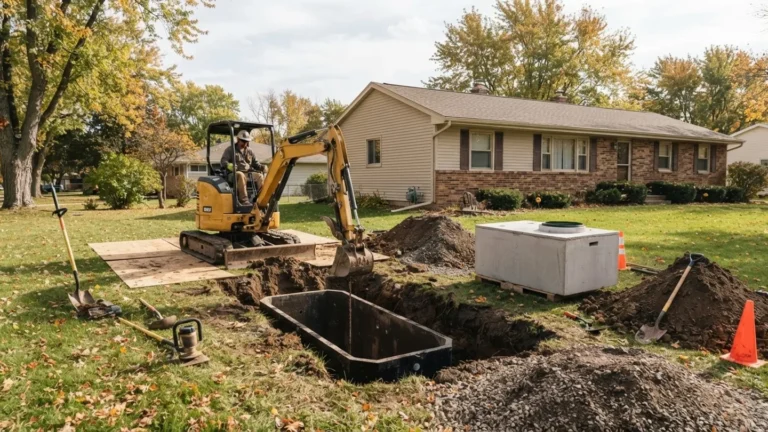
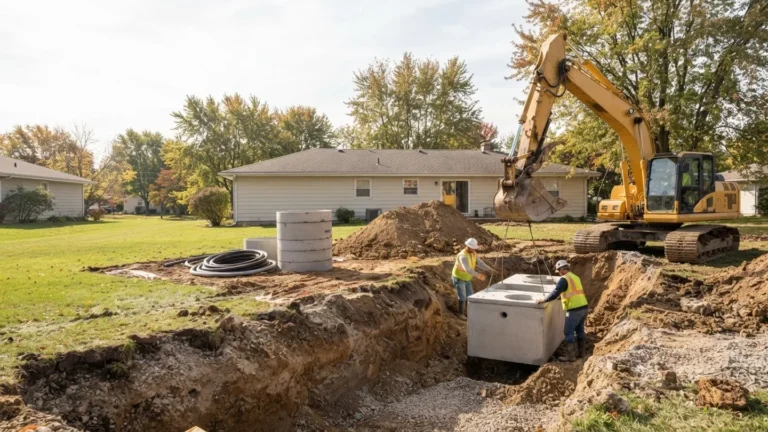
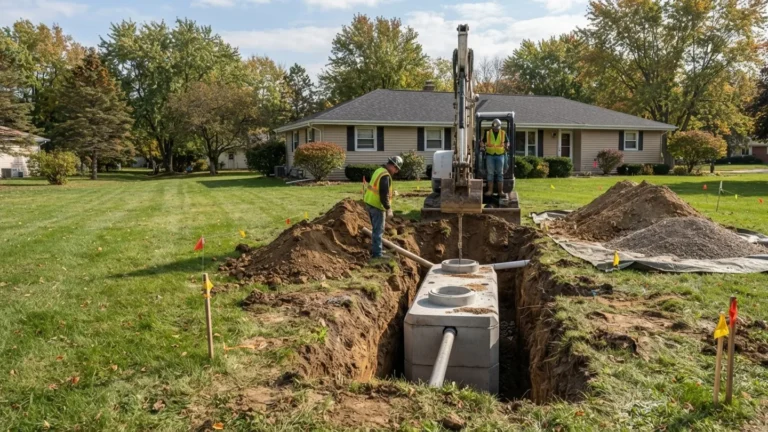
- The bigger tank may need a wider trench, more excavation and a longer pipe run.
- Local rules may not approve a larger tank without a larger drain field.
- Tank size does not fix a clogged drain field.
- A larger tank can mean a higher installed price, so get a written scope.
Why bedrooms, not people
A house does not make wastewater based on how many people live in it. It makes flow through fixtures: toilets, sinks, showers, washing machines and dishwashers. More bedrooms usually brings more bathrooms and more chance that those fixtures run at the same time.
Bedroom count is also stable. You can see it on a plan, and it does not change when a friend visits, a grandparent moves in or a rental is leased. That makes enforcement simple. The rule does not pretend every household uses the same amount of water.
People still matter for maintenance. A three-bedroom house with four residents may use more water than the same house occupied by one person. If your household is heavy users, spread out laundry loads, fix leaky fixtures, keep the effluent filter, the screen at the tank outlet, clean and pump more often.
A garbage disposal changes the load. Food solids grind into sludge, the settled material under the scum layer near the top. More food solids can fill the tank faster and may require more frequent pumping. Some counties require a larger tank or extra maintenance when a disposal is present.
An ATU, or aerobic treatment unit, can also move the target. ATUs use air and moving parts to treat wastewater before it leaves the tank or goes to a polishing drain field. Their size often depends on the unit's rated gallons per day, chamber layout and local approval, not only bedroom count.
Warning signs include slow drains, gurgling pipes, odors near the tank, wet grass over the drain field or backup in a low fixture. A failed baffle, the wall or screen inside the tank that keeps solids and scum from moving too soon, can cause trouble before the tank is too small. An effluent filter, the screen at the tank outlet, may clog if solids build up.
A distribution box, the part that divides flow into drain field trenches, can be unlevel or clogged. The biomat, the natural layer of soil and bacteria under the drain field that slows and filters water, may clog if too many solids arrive. If those parts fail, a larger tank may not solve the issue.
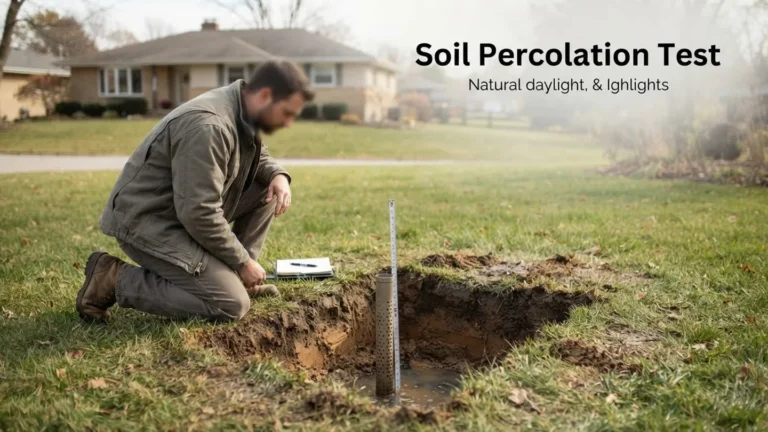
If you are building on rural land, a perc test, a soil test that measures how fast water soaks into the ground, helps size the drain field. It does not replace tank rules, but it can influence the whole system. Check the permit, because county rules decide what counts as approved size.
How to find your actual tank size
Check the permit or pump receipt
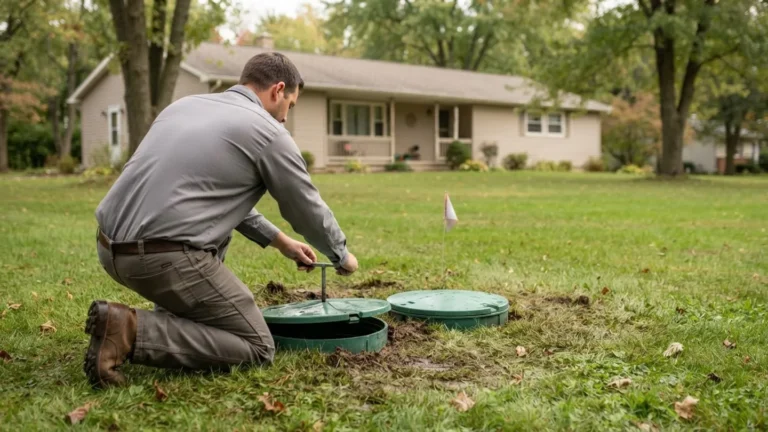
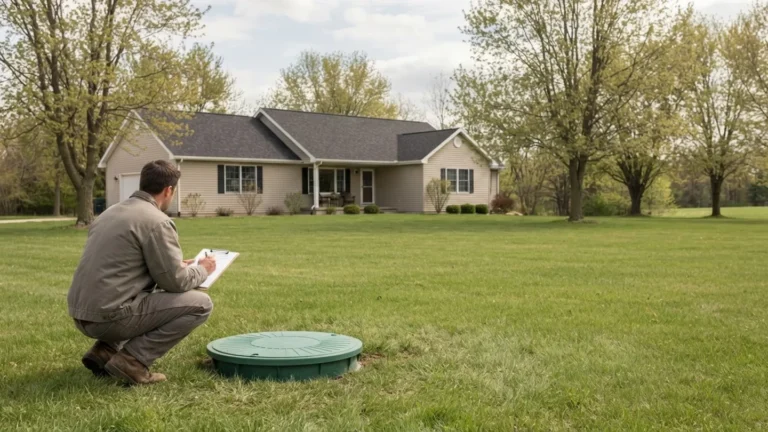
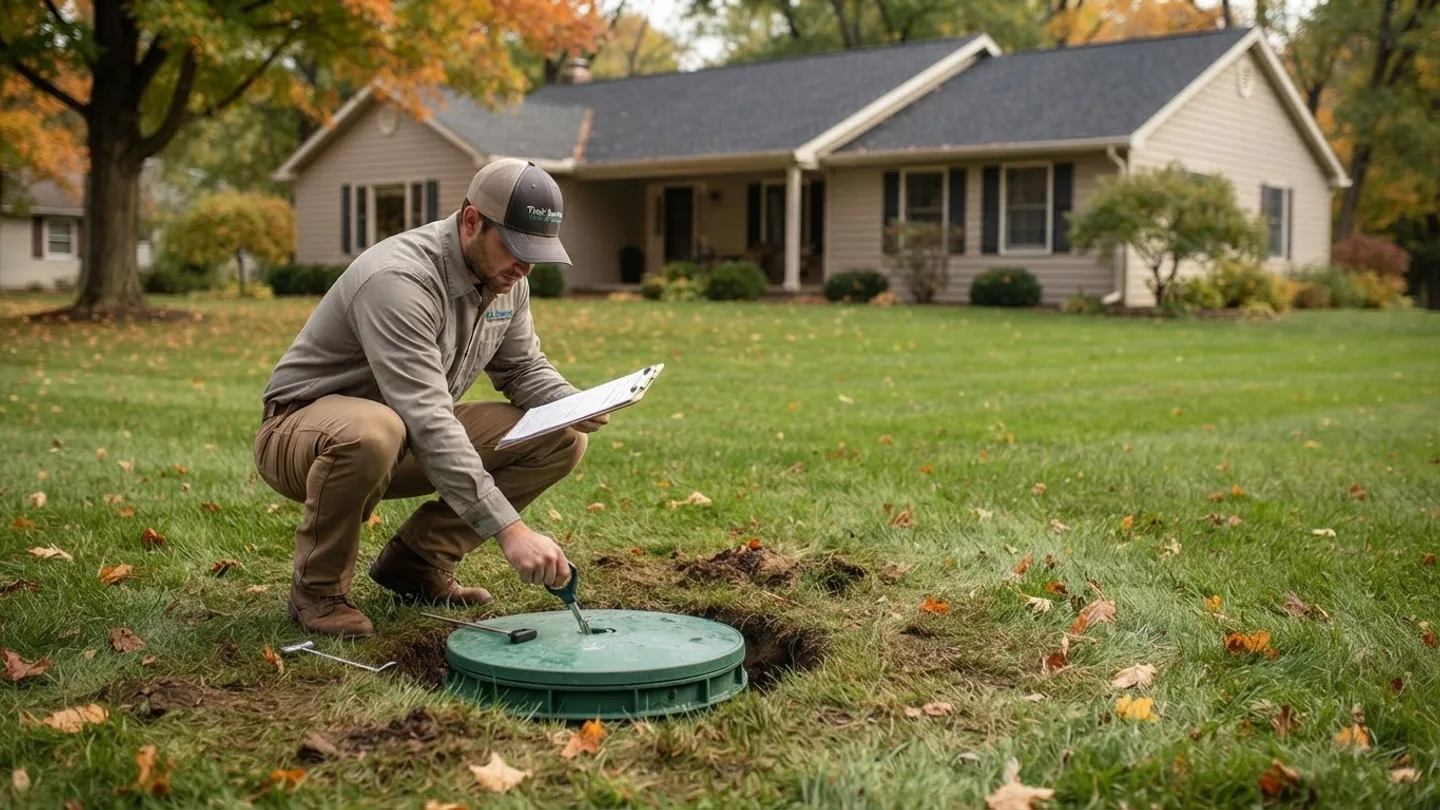
The county health department permit, pump receipt or home inspection report may list tank capacity. Pumpers often note gallons when they service a tank.
Ask the pumper to estimate from experience
A licensed pumper can often tell whether a tank is close to 1,000, 1,200 or 1,500 gallons from its shape, lid spacing and pumping volume.
Measure interior dimensions only if it is safe
Measure length, width and liquid depth in inches. Multiply to get cubic inches, divide by 231 for gallons, then let a pro adjust for baffles, access risers and tank shape. Do not enter a tank.
Compare with the bedroom count on your permit
If your plan says four bedrooms and the tank is smaller than local rules, ask what changed: an old permit, a conversion, a disposal, an ATU or high water use.
Get a septic inspection before a big repair decision
If you have backups, odor or soggy grass, an inspector should check the tank, baffles, effluent filter, distribution box and drain field before you buy a larger tank.
Common questions
Is a 1,000-gallon tank big enough for a three-bedroom house?
In many US jurisdictions, yes. It is a common baseline for a three-bedroom house. Check your county permit because local rules can require more if you have high water use, a disposal or an ATU.
Does the number of people in the house decide septic tank size?
Usually no. The bedroom rule is used because bedrooms are a stable stand-in for fixture count. Your actual people and water habits still affect how often you pump and whether the system struggles.
Can I flush less to make my tank feel bigger?
No. A tank is a fixed volume. Better habits can stretch time between pumps: run full loads, avoid heavy food waste in a disposal, keep grease out of drains and spread laundry over two days.
Do garbage disposals make my tank need to be bigger?
Sometimes. Food waste becomes sludge, the settled material in the tank. Some counties require a larger tank or more frequent pumping if a disposal is present.
Will a bigger tank fix sewage backup into a basement shower?
Not always. If the drain field or distribution box is clogged, the problem is downstream of the tank. A pumper may remove the backup for safety, but an inspection is needed to find the cause.
What if the tank is older and smaller than today's bedroom rule?
An older system may have been legal when built. When you sell, renovate or add a bathroom, local rules may force an upgrade. Ask the county health department before you plan.