Septic Tank Replacement Cost
You get a home inspection, or a pump truck arrives, and someone says the septic tank needs replacing. Before you sign, read what is in the scope. A septic tank replacement cost is often a separate job from a drain field replacement, and the line items matter more than the headline number.
The tank is the holding box. It receives wastewater from the house. It keeps the scum layer near the top and lets sludge, the heavy solids, settle at the bottom. The clearer liquid, called effluent, leaves through an outlet baffle and heads to the field.
If the field is healthy, a new tank can restore the system. If the field is saturated or its soil has lost treatment capacity, a new tank alone will not fix the problem. This guide walks through the cost pieces: tank material and size, excavation, old tank closure, permits, and risers. It also gives the questions to ask before you hire.
At a glance
- Covers: the buried tank, access to it, removal or closure of the old unit, and the permits needed for that work.
- Applies to: gravity septic systems, mound systems, and aerobic systems when the tank component needs replacement. Aerobic units may have separate pump, blower, or control box costs.
- Cost range: local scopes vary widely. Do not rely on a single national estimate. Build the range from itemized quotes for the same tank capacity, same material, and same permit scope.
- Urgency: treat a cracked, leaking, or structurally failing tank as a scheduled replacement, not a casual project. A backup or liquid surfacing at grade is a pro call, not a homeowner job.
What the tank replacement covers
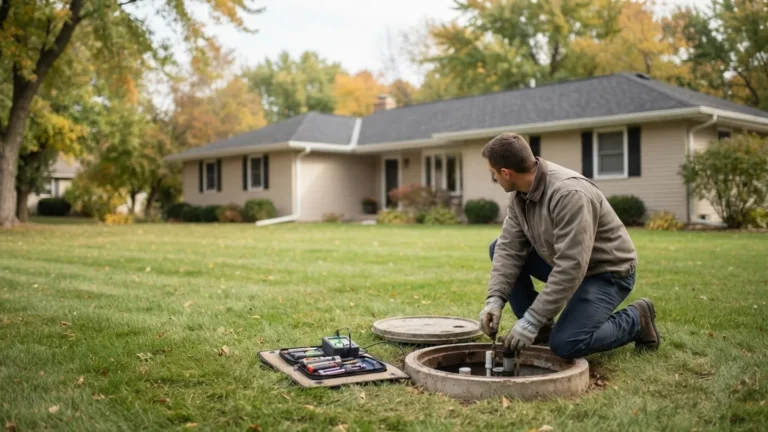
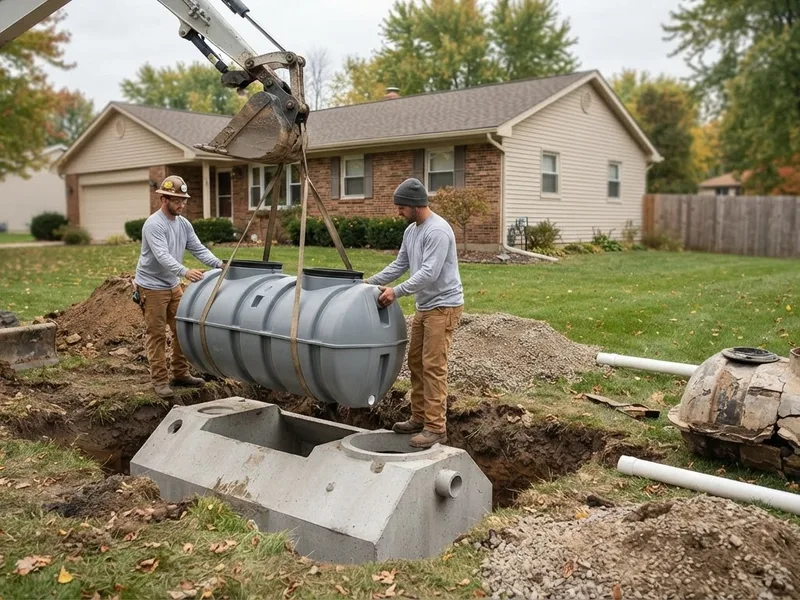
A replacement quote should say whether you are buying just a new tank, or a new tank plus all the work that lets it function. At minimum, it should include delivery to the site, setting the tank, connecting the house inlet pipe, connecting the outlet line to the field, sealing the connections, and restoring the yard.
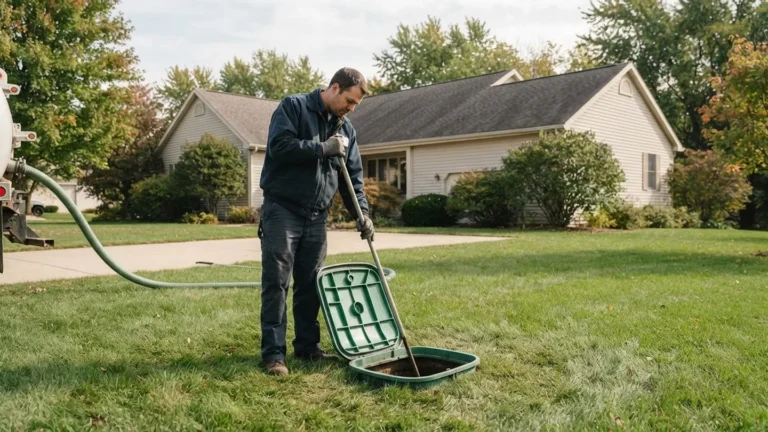
The quote may also include pumping the old tank before it is abandoned, removing or filling the old tank, installing risers, new covers, and handling permit plans and inspections. If those items are not broken out, ask for them in writing.
Do not confuse tank work with field work. The field is where the distribution box, sometimes called a distro box, splits effluent among lines. It also includes the biomat, the slimy biological layer in the soil that treats the liquid before it percolates deeper. Tank work usually does not repair the field.
If your report says the field is failing, a new tank can still be part of the cure, but it is not the whole cure. Ask the inspector to explain which component is failing and what evidence points to that component.
If your house has an aerobic system, the scope can get wider. Some jobs may include a pump, blower, or control panel. Ask whether those are part of the tank replacement or a separate system repair.
| Option | Good for | Watch for | How it shows up in the quote |
|---|---|---|---|
| Concrete | Heavy, stable underground tanks when access allows equipment close enough for a load. | Transport can be difficult on soft or tight sites. Cracks can form if the tank shifts, and repair may be temporary. | The tank unit may be lower per gallon, but delivery and setting can be higher on difficult access. |
| Plastic | Lighter than concrete and often easier to handle on tight lots or remote driveways. | Some types can float if not anchored properly, especially in high groundwater. The installer should explain ballast. | The unit price may vary, but lighter handling can reduce setting cost if access is poor. |
| Fiberglass | Light, watertight, and resistant to corrosion. Often chosen when a contractor wants a single manufactured tank. | It can be damaged by improper backfill or sharp rock. The site needs good bedding. | Cost may be sensitive to tank capacity and site access, not only material. |
Digging, old tank closure, permits, and risers
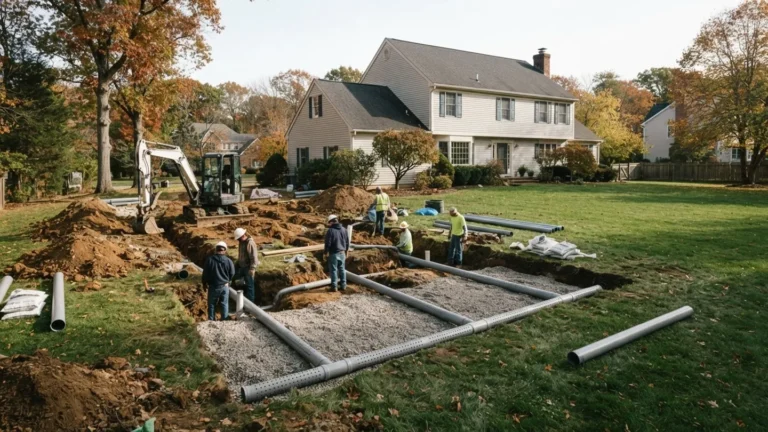
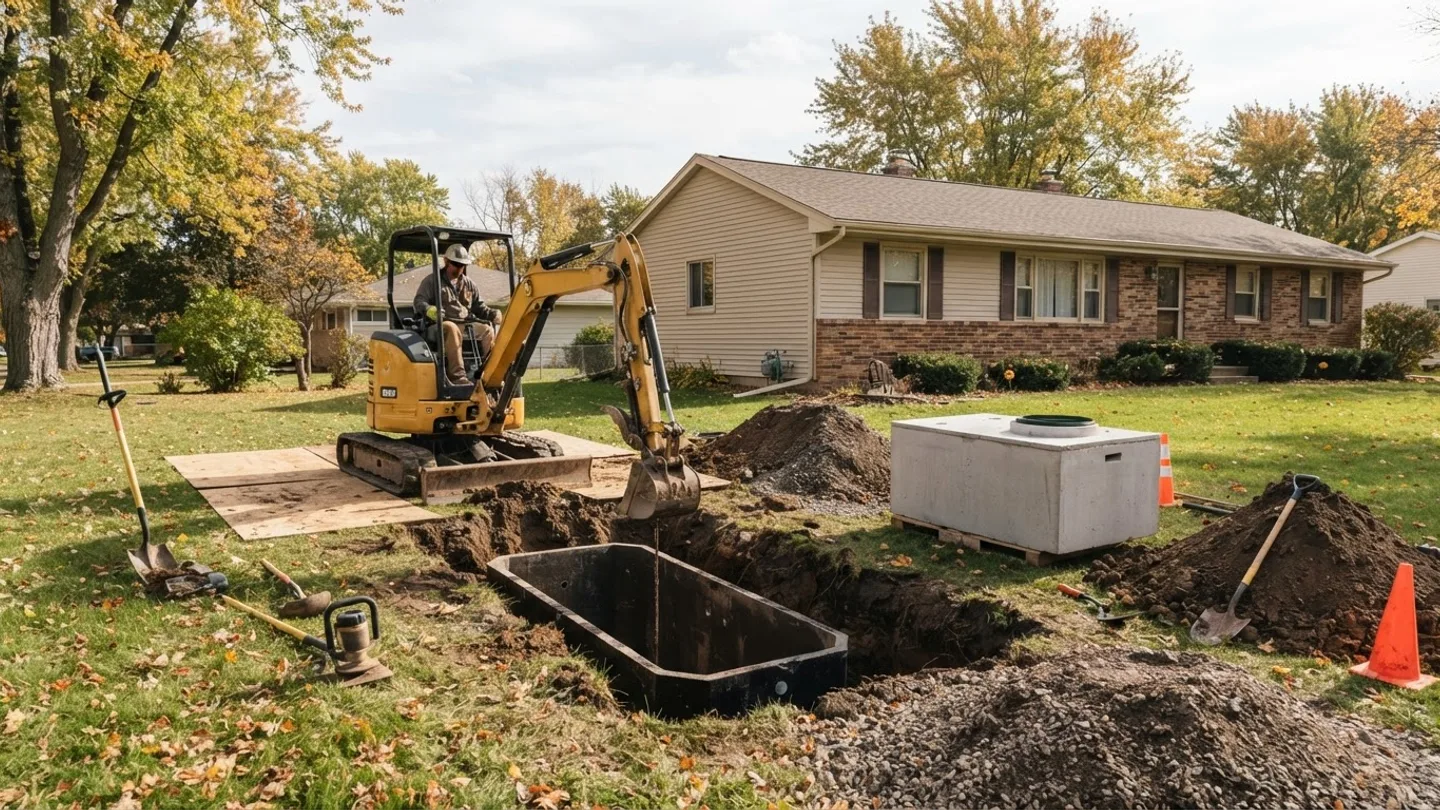
Excavation can be a larger cost than the tank itself. The crew must locate underground lines, protect the house pipe and the field inlet, dig around roots and rock, and move soil away. If the site is wet, dewatering may be needed. If the driveway or landscaping must be removed and restored, that belongs in the quote.
Abandoning the old tank is not optional in many places. The old tank must be pumped or cleaned, and the closure method must match local rules. Some jurisdictions allow it to stay in place if it is filled with clean sand, crushed stone, or approved material. Others require removal. The difference matters to cost and to future property records.
Permits and inspections can add fees, plan preparation, and waiting time. Ask who obtains the permit, whether the fee is included, and whether the health department must inspect the closure or the new connections. A replacement done without required permits can create problems when you sell the house later.
Regional factors also matter. Soil, groundwater, permit office rules, disposal fees, and crew availability can move local costs. A quote from another state may not reflect your county.
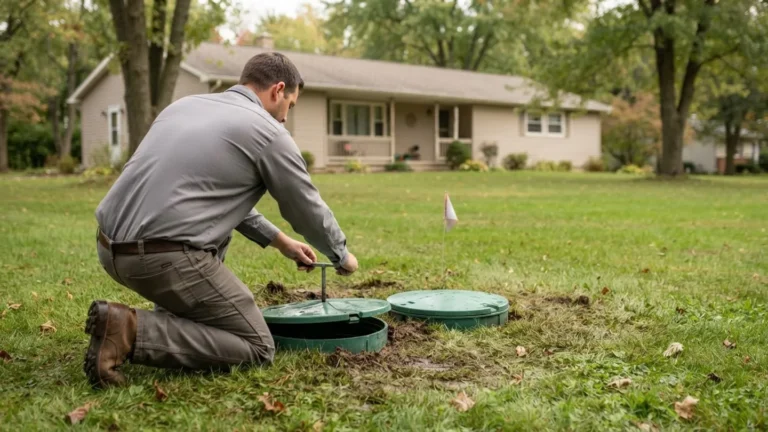
Risers are vertical pipes that bring the tank top to near ground level. They make future pumping simpler and reduce the chance of digging each time. If the tank is already open, risers are cheap work to include now. If they are added later, someone may have to dig a new hole and pay for the trip again.
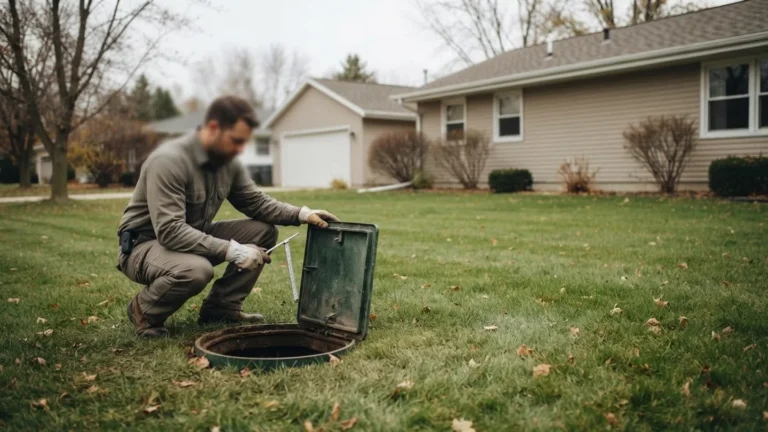
Ask whether the riser has a locked cover or a cover that is safe for children, because an exposed open tank is a serious hazard. The cover should sit flush or slightly above grade and should be rated for the area where it will be walked on or driven on.
Questions to ask before you hire
Get an itemized quote
Ask the contractor to break out tank, delivery, excavation, old tank closure, permits, risers, covers, pipe connections, and site restoration. If the number is only one line, the scope is hidden.
Ask what is not included
Rock breaking, tree roots, extra backfill, dewatering, or landscaping may be separate. Ask for the likely change order triggers before work starts.
Confirm the permit path
Ask who pulls the permit, what inspections are required, and whether the fee is in the quote. If the county requires a licensed installer, ask for the license number.
Ask how the old tank will be closed
Find out whether it will be removed or filled, what material will be used, and whether that closure will be inspected. Get the plan in writing.
Ask about risers and safety covers
If the new tank will be buried deep, ask whether risers are included. If risers already exist, ask whether they are being replaced or upgraded.
Ask how the quote shows the field is okay
If the job is only the tank, the quote should reference an inspection that separates tank failure from field failure. If the field scope is included, ask for the evidence.
When the tank needs replacing and the field does not
A tank replacement can be justified when the tank has a crack that lets liquid escape, a collapsed wall, a broken inlet or outlet baffle, or a leaking joint. It may also be required when the tank is too small for current water use or when local upgrade rules apply during a repair.
It is usually not enough to replace the tank if the symptoms are all in the field: soggy grass over the drain lines, slow drainage through the whole system, or liquid ponding near the field. Those signs can still have tank causes, such as sludge reaching the outlet, but the field must be assessed separately.
A good inspection tells you where the failure is. If the tank is dry and you have wet ground over the field, the problem is more likely downstream. If the tank is overflowing, leaking, or has solids escaping into the field, the tank is a real contributor.
Be careful with any quote that bundles a new tank, a new field, and extra excavation without a clear report. A field replacement is a much larger job. Get a second opinion when the inspector says the field must be replaced but cannot show you the failed distribution box, clogged lines, or saturated soil.
When the tank is the only failing piece, ask for a quote that stays in that lane. Do not pay for a field replacement unless the assessment supports it.
Common homeowner questions about septic tank replacement cost
Is a septic tank replacement the same as a septic system replacement?
No. The system includes the tank, the pipe from the house, the field, and sometimes a pump or blower. A tank replacement only covers the tank component. If a quote says full system, ask what parts are included.
Can a cracked tank be repaired instead of replaced?
Small surface cracks or broken baffles may sometimes be repaired, but structural cracks can leak or shift. Local rules may decide whether repair is allowed. A repair can be a temporary fix, not a guarantee.
Do I need new risers when the tank is replaced?
In most cases, yes. They bring the tank top to near grade and make pumping easier. Adding them while the tank is open avoids digging later. Ask for a cover that can be locked or is safe for children.
Will the permit fee be included in the quote?
Sometimes it is, sometimes it is not. Ask directly. Permit fees, plan review, and inspections vary by county and state, so a low tank price may hide those costs.
How do I know I am getting a fair price?
Compare at least two itemized quotes for the same scope. Check the tank capacity, material, excavation depth, closure method, permit responsibility, risers, and restoration. A much lower number often means missing scope, not a better deal.
If my drain field is failing, should I replace the tank first?
Not as a substitute for field repair. A new tank helps only if the tank is part of the failure. Get a field assessment and an upgrade plan if the field is the main problem.