Mound Septic System Cost
A seller's septic report says you need a mound, not a conventional drain field. That can make a home look cheaper to buy and costlier to install. Before you sign a contract, get the price split into site work, sand, pump chamber, power and annual checks.
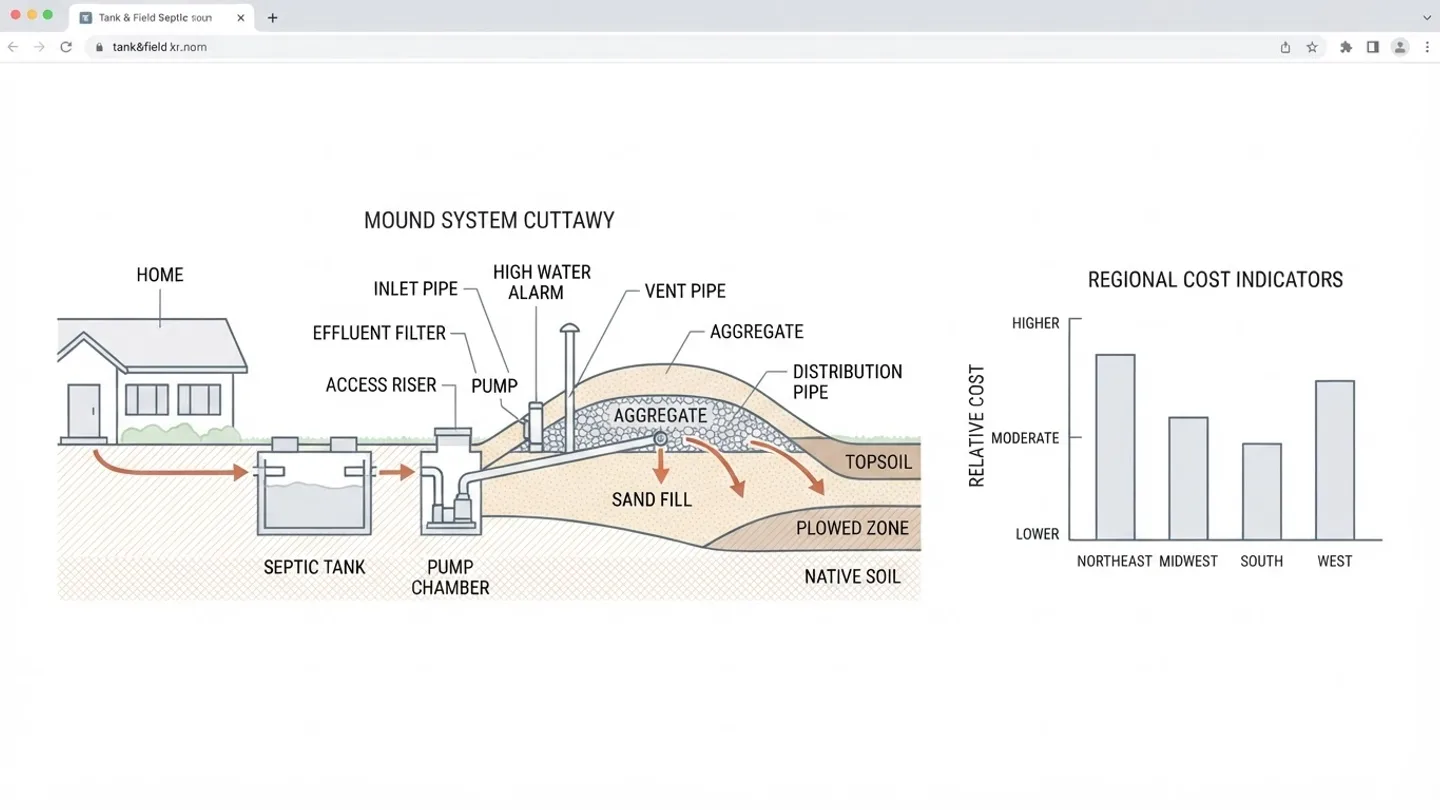
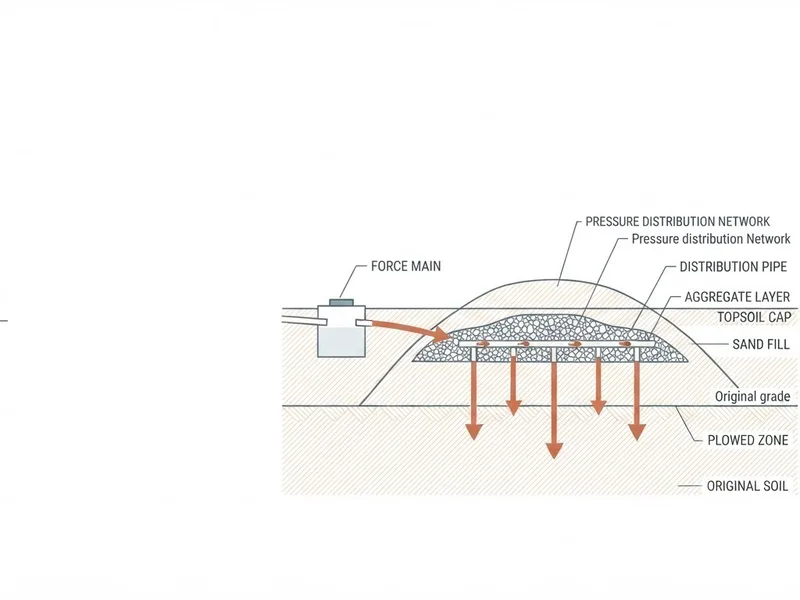
A mound is a raised drain field. It is used when native soil cannot meet a state's treatment depth, setback or soil speed rules. Sand fill, imported sand in a built bed, does the treatment. A pump chamber lifts treated water out of the tank and up to the sand.
This guide covers mound septic system cost, the items that move a quote, and yearly power and inspection costs. Last checked: June 15, 2026.
Jump to section
Key takeaways
- What this covers: install ranges for a mound, sand fill, pump chamber, engineering, permits, yearly power and inspections.
- Systems it applies to: mound systems needed for shallow soil, high water table, rocky soil or tight setbacks, often on 3 and 4 bedroom homes.
- Typical cost range: full install planning range from $18,000 to $45,000 for a 3 bedroom mound and $25,000 to $55,000 for a 4 bedroom mound, before site surprises.
- Urgency: cost planning is not urgent. If you have slow drains, a wet mound, odor or a backup, stop heavy water use and call a septic pro now.
- Homeowner or pro job: pro job for design, sand construction, pump chamber and alarm. Homeowner job for water control, pump records and watching for warning signs.
Mound install planning ranges by region and bedroom count
Use a table, not a single number, because regional sand, permits and soil make price swing. A mound is still a septic system, so the cost starts with a tank, then adds a way to lift treated water above the native soil.
The ranges below are full system install planning ranges for a new mound or complete replacement. They assume a standard tank, pump chamber, sand fill, distribution piping, alarm and basic permit. They do not cover unusual rock blasting, long electrical runs, restoration of steep landscaping or emergency access.
Bedroom count matters because larger homes may need a wider sand bed, a bigger pump chamber and more distribution pipe. Compare quotes on the same scope. A low bid may omit sand testing, risers or power work, so read the scope before you react to the number.
| US region | 3 bedroom planning range | 4 bedroom planning range | What usually shifts price |
|---|---|---|---|
| Northeast | $24,000 to $50,000 | $30,000 to $62,000 | Rock excavation, cold weather access, tight setbacks, state design review |
| Southeast | $20,000 to $44,000 | $26,000 to $54,000 | High water table, sand distance, county inspection timing |
| Midwest | $19,000 to $42,000 | $25,000 to $52,000 | Clay or limestone, pump chamber depth, winter excavation |
| Southwest and Mountain West | $22,000 to $48,000 | $29,000 to $58,000 | Rocky soil, sand haul distance, water setback rules, remote access |
Cost drivers that move a mound quote
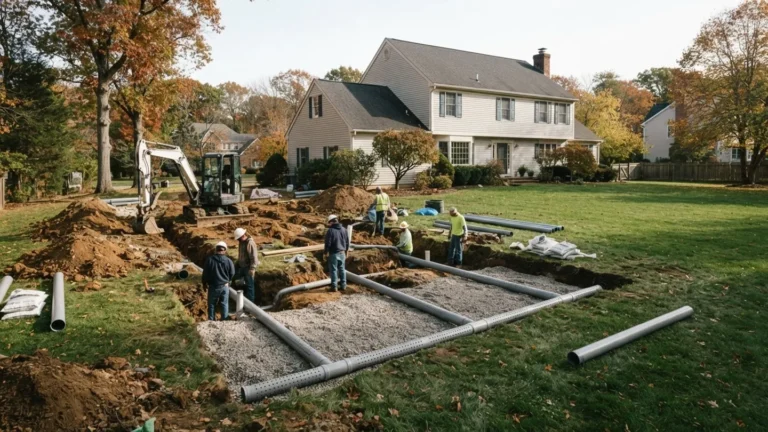
Sand fill is not dirt. It is washed, graded sand placed in controlled layers so water moves at the rate the design expects. If approved sand is far away, if the lot is tight, or if the sand must be craned in, the line item grows.
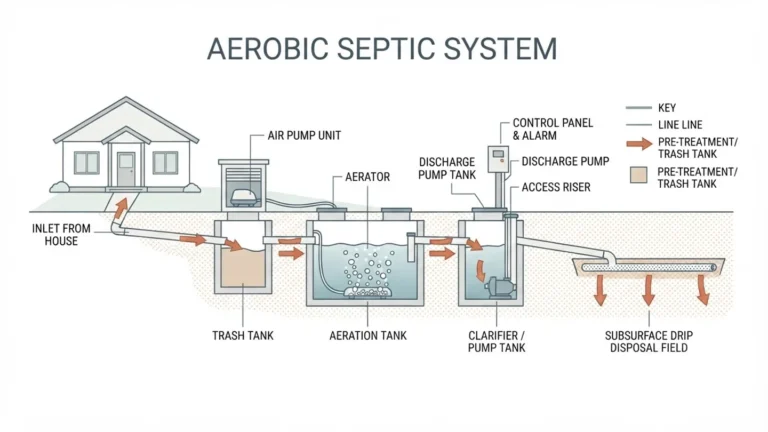
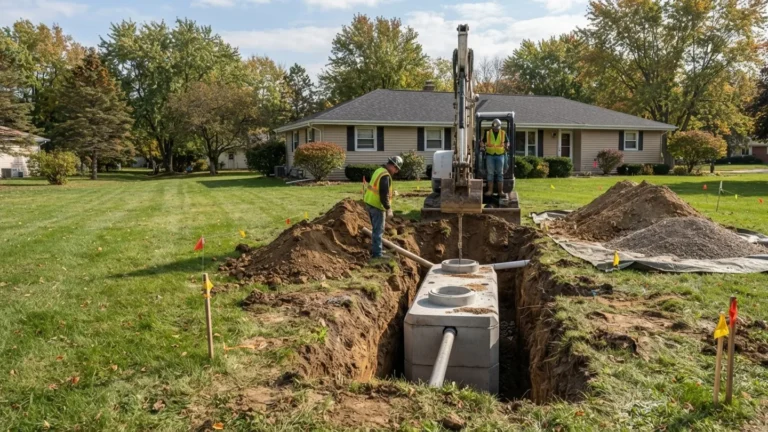
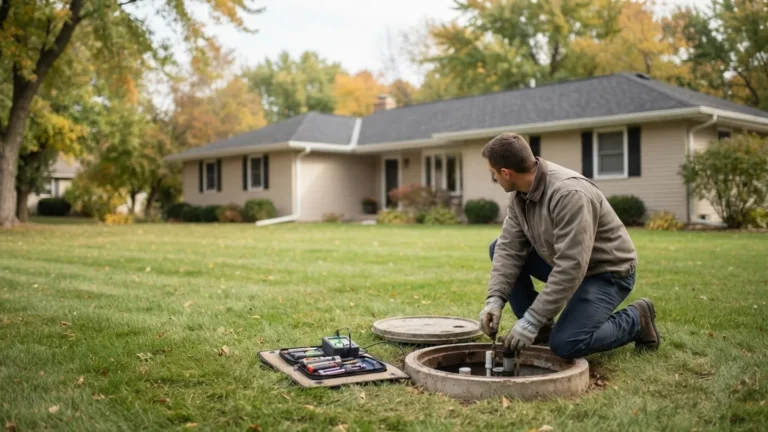
A pump chamber is a small compartment that lifts treated effluent, the water that leaves the tank after solids settle. Float switches turn the pump on at a set level, and an alarm warns when water cannot rise. Ask whether the quote includes the chamber, pump, floats, alarm, power cord, disconnect and access.
Engineering and permits add cost before the first truckload of sand moves. A perc test, a percolation test, measures how fast water sinks through native soil. The design may also include setback checks, sand gradation notes and state or county permit fees. Some places require inspection during sand placement.
A distribution box, a small box that splits effluent into the mound's pipes, should be level and accessible. An effluent filter, a screen at the tank outlet, helps keep solids from moving into the mound. These parts are small, but bad leveling or no access can create bigger bills later.
A biomat, a natural layer where treated water meets soil and sand, helps polish the liquid before it leaves the system. If the site is too rocky, too shallow or too hard to drain, a good design may need more sand and a larger bed. That is construction cost, not a maintenance add on.
Estimate annual pump power cost
Enter your pump size, estimated run hours and local electricity rate. This only covers power for the mound pump, not repairs, inspection visits or a replacement pump.
Estimated annual pump power cost USD
Yearly costs, inspections and where to push back
Yearly cost has two normal parts: power and monitoring. Many mound pumps run short cycles, so power can be in the $20 to $80 per year range. The calculator above gives a rough number with your rate.
Inspection cost varies by state and county. Mound systems often need more frequent checks because the pump chamber, alarm and sand bed must be watched. A routine inspection may cost $100 to $300 per visit. If the local rule requires a pump log, ask the inspector to write down meter readings, cycle time and any alarm events.
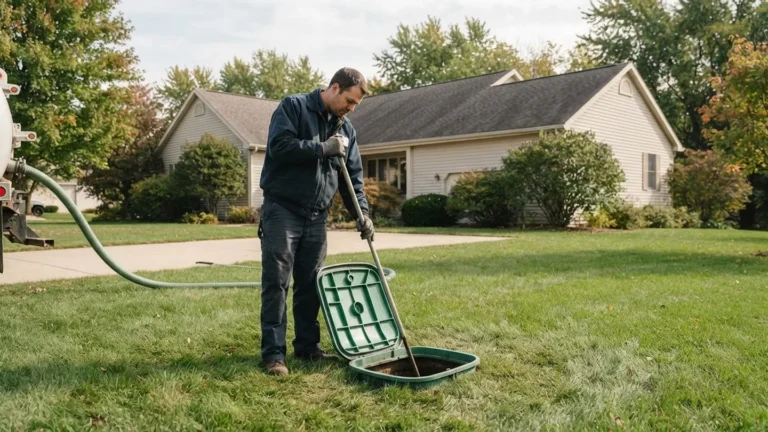
Do not treat a mound as a set it and forget it system. If the alarm beeps, if grass stays wet over the mound, if odors appear after heavy rain or if indoor drains slow, stop high water use and call a pro. Waiting can turn a small pump or float issue into a larger bed repair.
A mound quote deserves a second opinion when one price is far below the others. Common omitted items are sand gradation tests, distribution box leveling, risers, lid locks, alarm monitoring, electrical work, permit fees and yard restoration. If a contractor says the old system failed only because of the pump chamber, ask for water table and perc test notes before you approve a full bed replacement.
Questions to ask before you hire
Ask for a line item scope
Request separate prices for tank, pump chamber, sand fill, distribution box, piping, alarm, electrical work, permits and restoration. A lump sum hides what can be added later.
Ask what the site cannot do
Ask for the perc test, water table notes and soil description that justify a mound. If the only answer is high water table, ask how deep the limiting layer sits.
Ask how the mound will be built and checked
Ask whether the installer will show sand type, compaction lifts, level checks and inspection points. A mound that is built to paper may still fail if sand is off spec or buried during rain.
Ask what the pump chamber includes
Confirm the pump model, float type, alarm, standby access, warranty and whether the chamber is watertight. Ask how often the pump is expected to run.
Ask about access and records
Ask for risers or lid extensions, a clear path for pumping, as built drawings and a maintenance schedule. Buyers should get the same records at closing.
Compare three bids with the same assumptions
Send each installer the same plot plan and permit scope. If one bid is low, ask what it leaves out before you call it a deal.
Frequently asked questions
How much does a mound septic system cost?
For planning, a 3 bedroom mound often runs $18,000 to $45,000 and a 4 bedroom mound $25,000 to $55,000, before local site surprises.
Why does a mound cost more than a conventional drain field?
It adds sand fill, a pump chamber, alarms and more inspection access. The cost is not just the tank, it is building a treatment bed above the site.
How often does a mound need inspection?
Many counties require one or two visits each year because of the pump chamber and raised bed. Check the local rule at permit time.
Can a homeowner service a mound system?
A homeowner can keep water use low, watch the alarm and record pump cycles. A pro should handle electrical work, pump or float replacement, chamber repair and sand bed issues.
Do septic additives fix a mound problem?
No. Additives do not clear a clogged pump screen, level a distribution box, replace a float or restore failed sand treatment. Spend the money on water control and a good inspection.
When should a buyer question a low mound bid?
Question it when sand tests, distribution box leveling, risers, alarm work, permits or restoration are missing. Compare the scope, not just the bottom line.