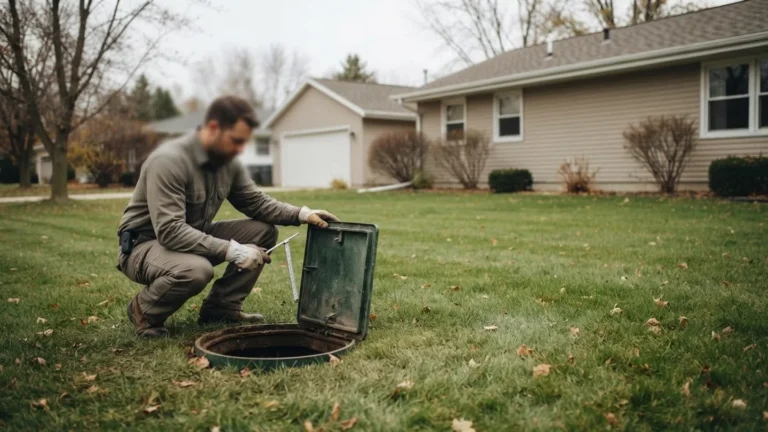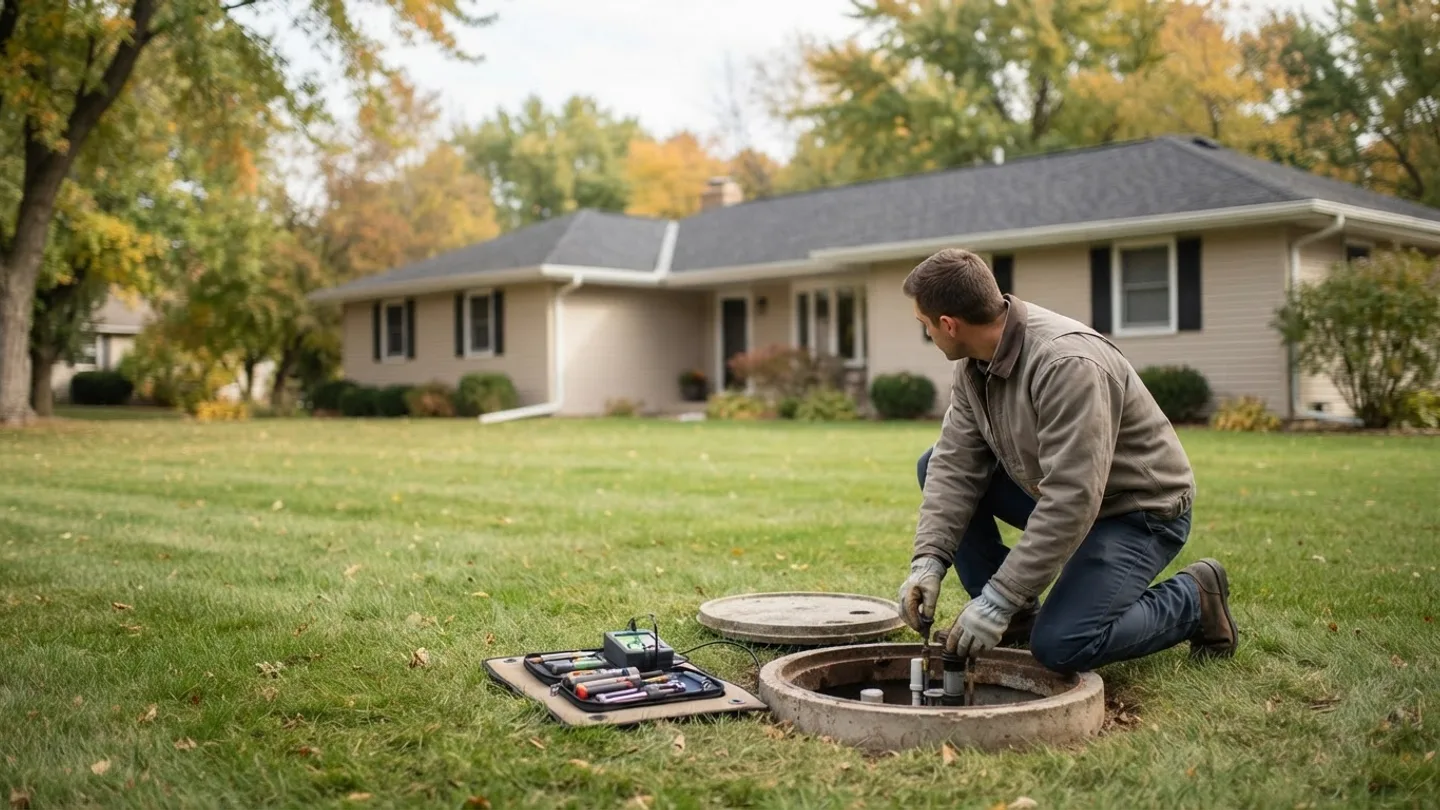
Septic Repair Cost: Common Repairs and Price Ranges
A slow drain, a gurgling pipe, or a smell in the yard can mean a part repair, not a whole new system. It can also mean the drain field is close to the end of its useful life. The first thing to do is get the tank looked at before you pay for digging.
This guide breaks down septic system repair cost for common jobs: baffles, lids, risers, pumps, alarms, the distribution box, line jetting and drain field work. It also gives when a repair makes sense and when a large drain field quote should get a second opinion.
If you have a backup in the house, water on the ground, a strong odor, or an alarm on an aerobic or mound system, cut water use and call a licensed septic professional. Do not open a tank yourself.
At a glance
- This guide covers common septic repairs and repair cost ranges for US homeowners.
- It applies to conventional gravity systems, aerobic systems and mound systems.
- Typical minor repairs often run from a few hundred dollars to low four figures. Drain field work can move into many thousands.
- Urgent signs include backups into the house, standing water in the yard, strong odor, or an alarm on an aerobic or mound system.
- Homeowner tasks are limited: keep records, keep water low, and know the tank and field location. Pumping, electrical, baffles, lines, drains and excavation are pro work.
- Last checked: June 2026.
What counts as a septic repair
A septic repair cost is easier to understand when you know the parts. A typical three bedroom house often uses a 1,000 gallon tank. The tank keeps floating scum, which is fats and oils, apart from settled sludge, which is solids. Effluent is the clearer liquid that leaves the tank.
A baffle is a plate or wall that stops scum and sludge from flowing into the field. An effluent filter is a screen at the outlet that catches solids. If the filter or baffle fails, solids can move toward the drain field and speed up clogging.
At the field start, a distribution box or manifold splits effluent into several lines. A biomat is the compact layer of soil and microbes at the edges of the field pipes. A normal biomat helps treat effluent, but a thick one can stop water from soaking into the soil.
An aerobic system uses air, a pump or blower and often a disinfection step to treat effluent more fully than a simple tank. A mound is a raised drain field used where the soil is shallow or groundwater is close. Both have more moving parts than a basic gravity system.
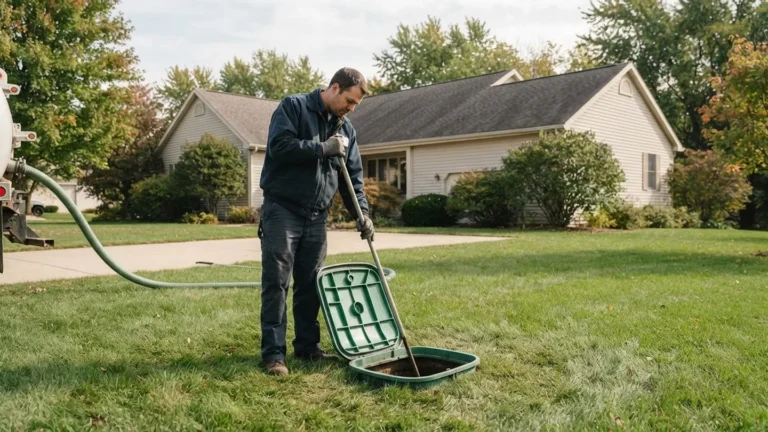
If the tank or field needs repair, pumping is often part of the job. A riser is a lid extension that brings the tank opening near ground level. A perc test is a soil test that shows how fast water drains, which matters for new or replacement field design.
| Repair | Applies to | Typical cost range | Good repair candidate when | Cost drivers |
|---|---|---|---|---|
| Pumping or tank access needed before repair | All systems | $300 to $600 for a 1,000 gallon tank | The tank has not been pumped recently, or a baffle or filter check needs an empty tank | Tank size, distance, scum and sludge amount |
| Riser or lid repair | All systems | $150 to $500 per access point | Riser is missing, cracked, or lid is broken | Digging depth, soil, tree roots |
| Baffle repair or replacement | All systems | $300 to $900 per baffle | Inlet or outlet baffle is broken or missing | Tank access, concrete condition, pump out cost |
| Effluent filter cleaning or replacement | All systems | $75 to $250 per filter | Filter is clogged or tank liquid is high | Filter condition, tank level, access |
| Pump, motor or blower repair | Dosing, aerobic and mound systems | $400 to $2,500 | Unit has power but fails to dose or treat properly | Parts availability, electrical access, control panel age |
| Alarm or float switch repair | Aerobic and mound systems | $150 to $600 | Alarm sounds and float is stuck or wiring is local | Float age, wiring, control box condition |
| Distribution box repair or replacement | Conventional gravity systems | $500 to $2,000 | Box is cracked, uneven, or one line is starved | Field line access, excavation depth |
| Main drain line clearing or line jetting | All systems | $250 to $800 | Clog is in pipe from house to tank or tank to field | Roots, pipe diameter, distance |
| Drain field patch or single line replacement | Conventional, aerobic and mound systems | $1,500 to $8,000 | One lateral line is blocked while soil nearby still drains | Excavation, permits, landscaping |
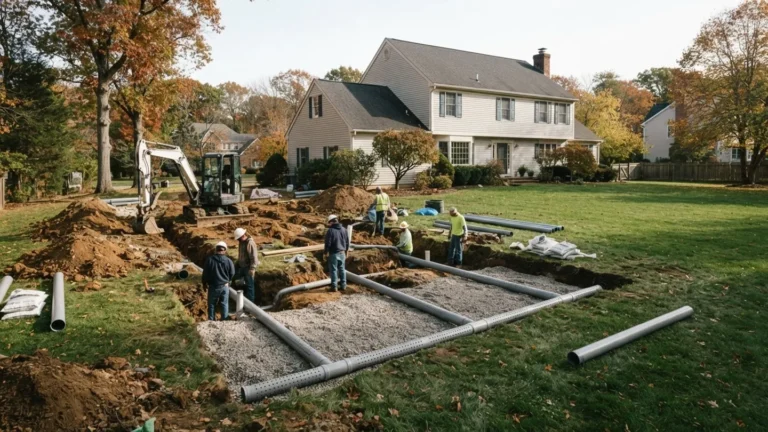
| Full drain field replacement | Conventional gravity systems | $8,000 to $20,000 | Surface pooling, repeated backups, or failed absorption across the field | Soil type, depth, access, permit |
| Mound or advanced field replacement | Mound and aerobic systems | $12,000 to $35,000 | Media, dosing pump, blower, or distribution has failed and field cannot be repaired | Engineering, permits, sand, pumps |
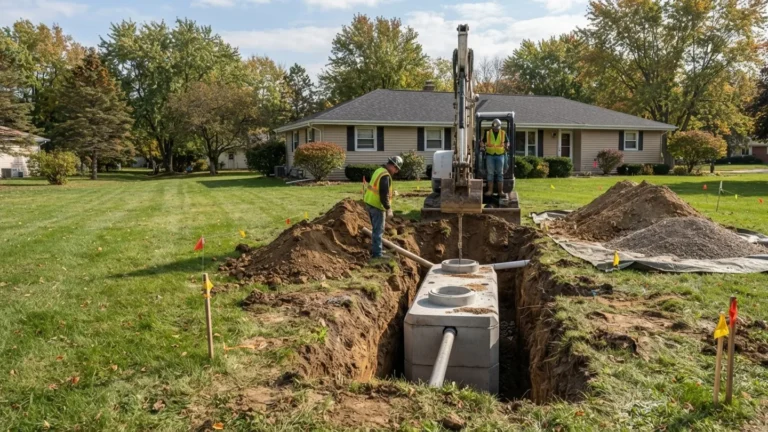
| Septic tank replacement | All systems | $5,000 to $15,000 | Tank has structural cracks, collapse, or cannot be safely accessed | Excavation, disposal, new baffles, permits |
What moves the price and schedule
The same repair can cost less in a dry, open yard and much more where the truck has to park far away, dig through rock, or work in standing water.
Tank depth and missing risers can add labor. A deep tank may need careful excavation. If the lid is under a tree, the crew may need to protect roots and restore landscape.
System type matters. A simple gravity tank and field often has lower access and repair costs than an aerobic or mound system, which can have a pump, blower, control panel, alarm and dosing equipment.
Local rules can move the schedule too. Some counties require a health department permit for tank or field work, and some require an inspection at sale. A perc test or design review can add time before a full field replacement starts.
The table is a broad US planning range, not a bid. In lower cost regions and simple sites, many repairs cluster near the low end of a row. In dense or higher cost regions, expect the middle to high end. Rural distance can also push a simple pump and repair job higher.
Pros
- Repair is a strong first step when the tank is sound, access can be improved with a riser, and the symptom traces to a baffle, filter, pump, blower, alarm or blocked line.
- Jetting one line or fixing one side of a distribution box can be far cheaper than replacing the whole field.
- A conventional gravity field with no surface pooling and only slow drains may be a maintenance problem, not a replacement problem.
Cons
- A repair is not enough if the biomat has stopped absorbing water across the field, the ground is wet over the drain field, and backups keep returning.
- A failed mound or aerobic system can waste money on parts if the media, pump station or distribution has lost its ability to treat and move effluent.
- If a replacement quote was written without pumping and inspecting the tank first, pause before treating the number as final.

When a big drain field quote deserves a second opinion
A big drain field replacement quote deserves a second opinion when the diagnosis rests on one symptom. A smell, one slow drain, or a wet patch over one line may not mean the whole field is dead.
Ask the first pumper or installer to explain which part failed: baffle, filter, distribution box, lateral line, pump, blower, soil absorption or the tank itself. If the answer is vague, call another licensed septic professional.
Second opinions are common for field replacement. You are buying certainty, not just a price. A good inspector can say whether a riser, jetting, a new filter, a pump repair, or field work is the real next step.
If a contractor wants to open a tank, enter it, or make field changes with a small crew and no written scope, that is a reason to slow down. Septic work usually needs a licensed pumper or installer.
Before you approve a septic repair
Cut water use
If drains are slow, smells appear, or grass is wet over the field, reduce laundry, showers and dishwashing until a pro looks. If sewage is backing into the house, hold water use and call now.
Locate the tank and field
Find lids if possible, but do not open a tank yourself. If there are no risers, ask the pumper to locate access before quoting repair work.
Pump and inspect
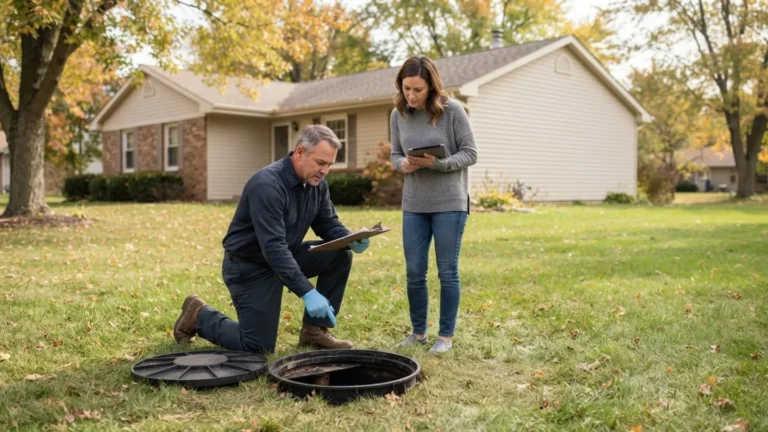
Get a written condition report after the tank is pumped. The report should cover liquid level, baffles, filter, tank condition, and field symptoms.
Separate the quote
Ask for line items: pump out, baffle or filter work, riser access, electrical work, jetting, excavation, permits, and cleanup. A lump number hides what is failing.
Ask about repair first
If a field replacement is quoted, ask whether a baffle, filter, riser, pump, blower, distribution box, or line jetting could solve the current problem.
Get a second opinion on big field work
For a full drain field or tank replacement, get another opinion from a licensed installer or septic inspector. Check local permit and health department rules before signing.

Warning signs that should change your repair choice
Slow drains in one fixture often point to a pipe or local clog. Gurgling, multiple slow drains, a backup into the house, or a strong odor in the yard point to tank or field stress.
Standing water, soggy grass, or a wet area over the drain field are signs to keep traffic and watering off the field. If there is a backup into the basement shower, do not wait until Monday. Call a licensed septic professional.
For aerobic or mound systems, an alarm means the blower, pump, float or power supply may have failed. Do not let it run for days. The system can stop treating effluent the way it is designed to.
Common questions about septic system repair cost
What does septic system repair cost typically include?
Pumping or tank access, the failed part, labor, small excavation, and cleanup. Field replacement may add permits, design, sand or media for a mound, restoration, and longer site access.
How much is a small septic repair?
Many small repairs run from a few hundred dollars to a few thousand dollars. A baffle or riser job may stay low, while a pump, blower, distribution box or field patch can reach upper ranges.
Is replacing baffles worth it if the tank is old?
Often yes, if the tank has no structural cracks, can be safely accessed, and the field still absorbs water. If the tank walls are failing or cannot be inspected safely, replacement may be the better path.
Can I save money by skipping pumping before baffle work?
Not safely. A baffle, filter or distribution check needs the tank pumped down so the worker can see water level, solids and parts. Do not open a tank yourself.
Do additives reduce septic repair cost?
No. A broken baffle, clogged filter, failed pump, or tired field cannot be fixed by packets, enzymes or bacterial tablets. Pay for pumping and parts instead.