Drain Field Replacement Cost
At a glance: This guide covers replacing a failed conventional, chamber, or mound drain field for a US home. Planning ranges often start near $8,000 to $18,000 for a conventional gravity bed, $12,000 to $25,000 for a chamber bed, and $25,000 to $55,000 for a mound. Urgency rises if wet soil, odors, or slow drains appear over the field.
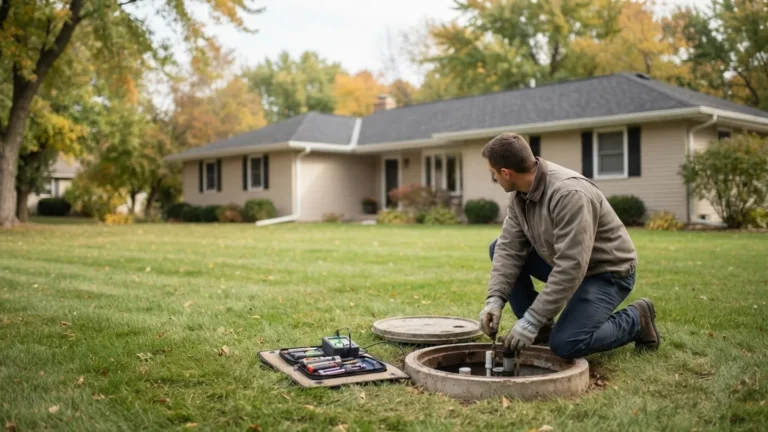
This is mostly a pro job. You can mark buried tank lids, keep pumping records, and watch test areas, but digging, soil testing, permits, and install need licensed contractors and local approvals.
The price is not just pipe and gravel. Soil testing, permit fees, design, excavation, trucking, and yard restoration shape the final number.
Key takeaways
- A failed drain field usually needs a replacement, not a cleaning.
- Conventional, chamber, and mound fields cost different amounts because design and labor differ.
- Soil tests, permits, design, excavation, and yard restoration drive the bill.
- A new field may require a different system when soil conditions are poor.
- Get a second opinion before you pay for a major replacement.
Signs that point to replacement
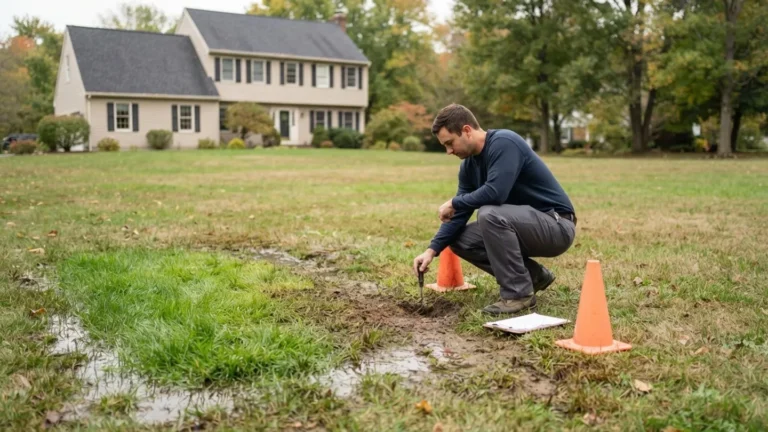
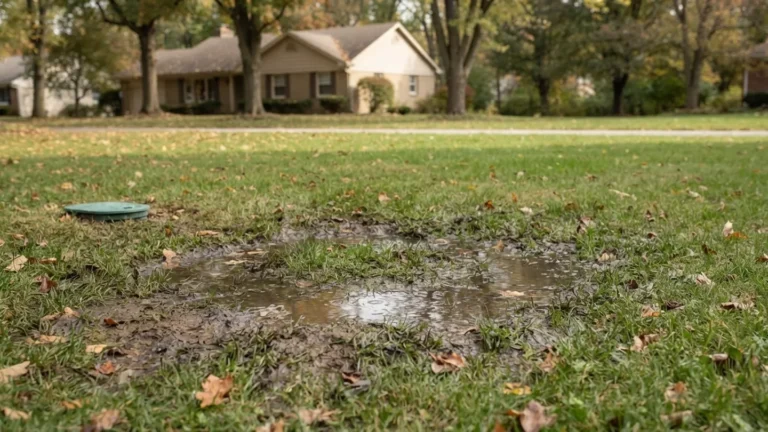
The first sign is often a soggy patch over the drain field that does not dry after rain. The wet spot may be wider than a single tank leak, and it may have a mild odor.
Slow drains inside the house can point to a full tank or a field that cannot accept more liquid. If pipes gurgle when a washer drains, the system is under pressure.
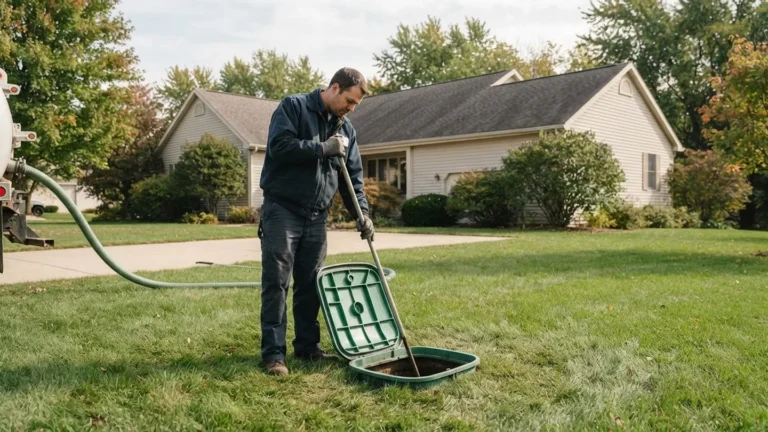
A septic inspector may pump the tank, look at the outlet baffles, and check whether the tank is dry because wastewater is not moving into the field. Baffles are tees at the tank inlet and outlet that keep solids from flowing into the field.
A failed field has often lost the ability to absorb. A normal field develops a thin biomat, a natural filtering layer in the soil. When that layer gets too thick, or soil pores clog, effluent, the liquid leaving the tank, backs up.
These are not reasons to buy an enzyme product. A clogged soil bed cannot be reliably cleaned by additives.
| System type | What it is | When it is used | Planning cost range |
|---|---|---|---|
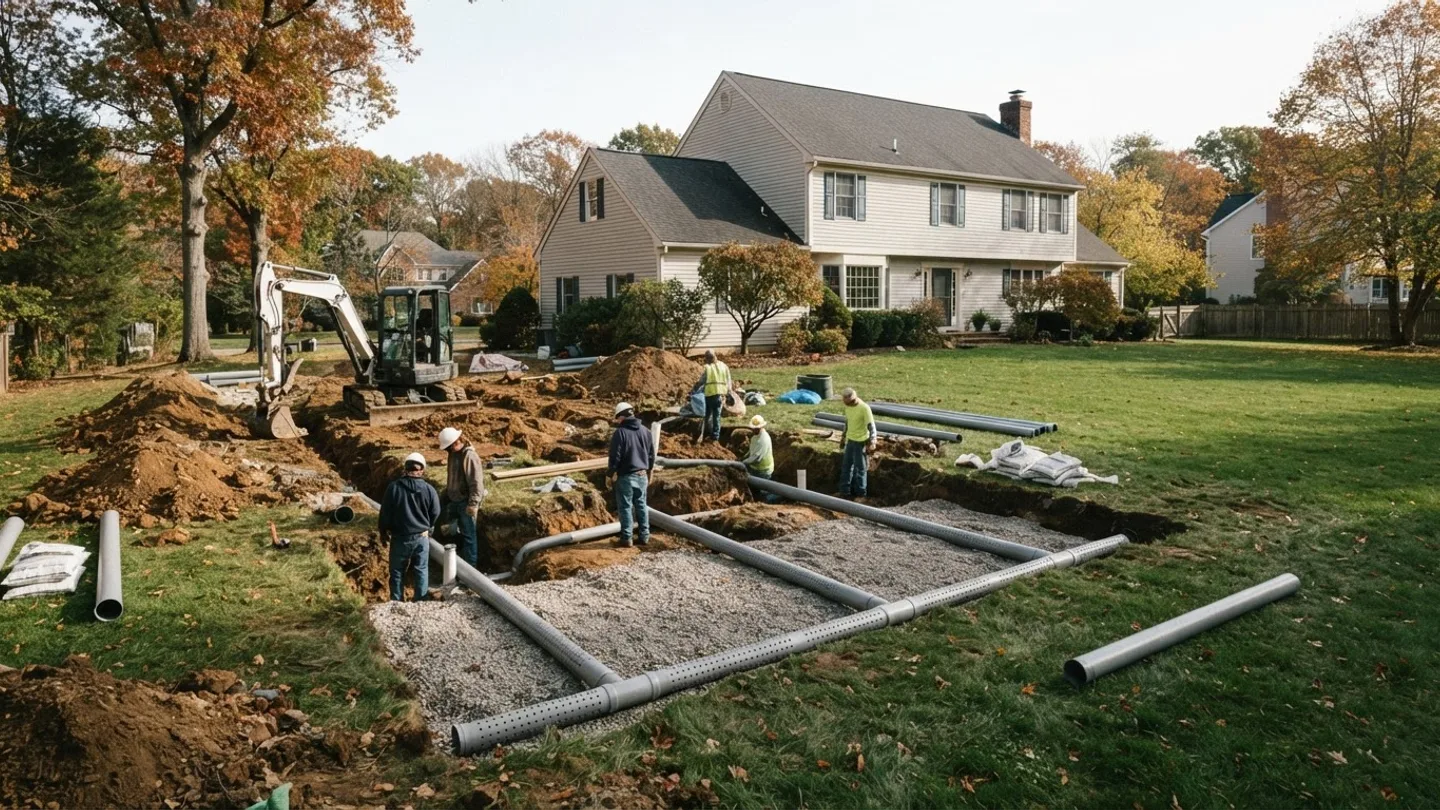
| Conventional gravity bed | Gravel, pipe, and a soil filter buried in trenches. Wastewater leaves the tank and soaks into the soil. | The soil absorbs water, the tank can gravity feed, and the lot has room. | $8,000 to $18,000 |
| Chamber field | Prefabricated plastic chambers replace much of the gravel. Chambers provide void space and can spread flow. | The design needs more storage volume or a contractor wants faster trench assembly. | $12,000 to $25,000 |
| Mound system | An engineered sand bed sits above the native soil, and a pump doses measured amounts to the field. | The soil is shallow, the water table is high, or the native soil drains poorly. | $25,000 to $55,000 |
What moves the final bill
Labor and truck time matter more than pipe. A crew with an excavator, a dump truck, and a licensed installer costs more where wages, rock, and disposal fees are high.
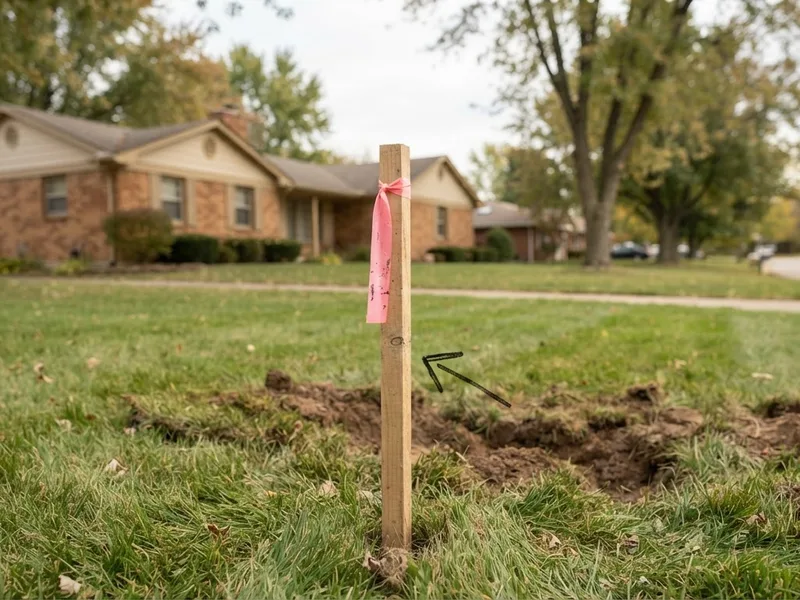
Soil testing changes the design. A perc test, or percolation test, times how fast water soaks into a small pit in the soil. If water drains slowly, the designer may need an engineered bed, which costs more than digging trenches.
Access can raise the bill. If the field is behind a house, down a slope, or under trees, crews need more time and equipment. A distribution box, the small box that splits flow to several trench lines, may need replacement if its pipes are clogged or unlevel.
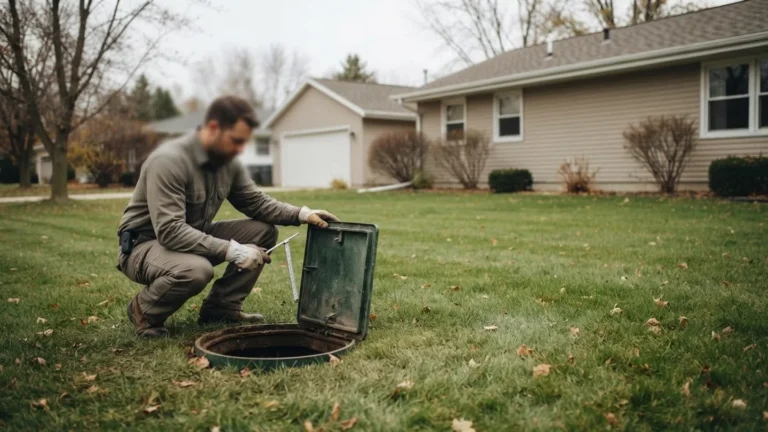
Tank work may be separate. A typical tank for a three-bedroom home is often 1,000 gallons, but size depends on wastewater flow and local rules. If tank walls, baffles, or lids are cracked, replacing or repairing them adds dollars. Lid digging may take another hour when lids sit 12 inches or deeper.
Permits and final inspections vary by county or city. Permit review can add fees, a licensed engineer design, and a hold before backfilling. Your local health agency or building department is the place to confirm what is required.
Restoration is part of the cost. The yard may need topsoil, seed, sod, or drainage repair after large equipment has driven over it. Ask whether grass is included or billed separately.
How a replacement bid is built
Confirm the problem
Pump the tank and check liquid levels, baffles, and whether the field absorbs a dose.
Locate the system
Find the tank, lid depth, outlet, and distribution box, then probe the field boundaries.
Test soil and set design
Run a perc test or review existing soil data, then have the designer choose a bed type.
Get permits
Submit the design to the local agency, pay fees, and schedule any required inspection before backfill.
Dig and install
Remove failed soil, set pipe, gravel, chambers, or mound media, then connect to the tank or dosing system.
Restore and close out
Backfill, grade, seed or sod the area, and obtain the final sign off if your jurisdiction requires it.
Why a new field may mean a different system
If the old field failed because soil was not absorbent, simply replacing the same gravel bed may not pass a permit review. The health agency may require a design for different soil conditions.
A chamber bed can replace some gravel with hollow plastic chambers. It still relies on soil absorption, but the design may handle flow more evenly.
A mound system puts an engineered sand bed above the native soil and uses pressure dosing, where a pump sends measured batches of effluent to the field. It is used for shallow soil, high water tables, or rocky sites.
An aerobic system adds air to the wastewater after the tank, producing a cleaner liquid that can be dosed to a smaller bed. Maintenance matters more than in a conventional gravity system, because blowers and dosing equipment need service.
A failed field also may need to move if the current area is under a driveway, shed, or large trees. Moving it can add pipe runs, trench length, and restoration.
Tradeoffs that often favor the same or nearby field
- Staying near the old field is often faster and cheaper if soil and permits allow it.
- Relocating can give you cleaner soil, better drainage, and a longer service life.
- Changing system type may solve a design problem instead of repeating a failure.
- A second design can identify lower maintenance options for a rural lot.
Tradeoffs that may require a change
- The same spot may carry clogged soil, old biomat, or poor drainage into the new bed.
- Relocation adds pipe runs, excavation, and yard restoration.
- A new system type may add pumps, blowers, dosing tanks, and maintenance.
- A design change can trigger more permit review and longer scheduling.
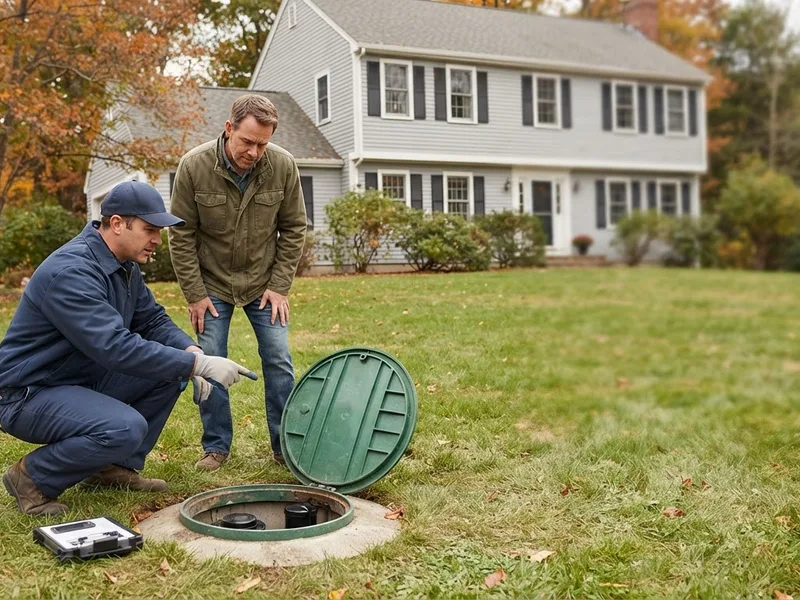
When a second opinion pays off
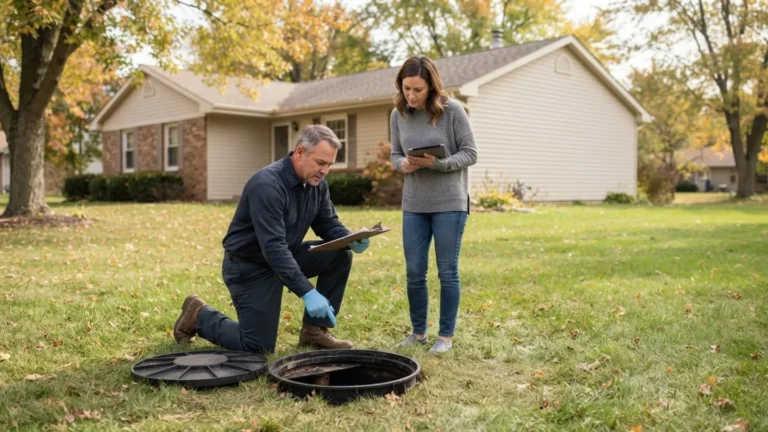
A second opinion is worth the fee when the first quote is unusually high, the lot is tight, or the contractor recommends a new system type.
Ask another inspector to check the tank condition and the outlet. Sometimes slow drains are a full tank, a broken effluent filter, or a failed baffle, not a dead field. An effluent filter is a screen at the outlet that catches fine solids.
Be cautious with anyone who promises to restore a failed field with pumping plus an additive. Pumping removes solids, but it does not fix clogged soil or a design that cannot absorb wastewater.
If a contractor quotes a full replacement without showing soil test notes, permit steps, and restoration scope, get a second set of line item bids.
Common homeowner questions
How long does drain field replacement take?
A simple gravity bed may install in 1 to 4 days. Permits, soil tests, crew scheduling, and final inspections can make the total process 2 to 6 weeks.
Do I need a new tank when I replace the field?
Not always. Many replacements keep the tank if it is sound. If the tank is cracked, leaking, blocked by roots, or missing outlet baffles, repairing or replacing it adds cost.
What are the most common extra costs?
Permit fees, engineer design, rock disposal, long pipe runs, pump tanks, dosing equipment, and yard restoration are frequent add-ons that move the final price.
Can I keep using the house while the field fails?
Reduce water use until the field can be repaired. Keep showers short, avoid running the washer and dishwasher together, and fix leaks. If wastewater is surfacing or backing up, stop using the system and call a pro.
Can I dig near the tank or field?
No, not without knowing where it is. Lids, pipes, and cables may be only a foot or two below grade. Heavy equipment or hand digging can crack the tank or break lines.
What should I ask before hiring?
Ask for the soil test result, the proposed system type, who pulls permits, who handles tank repair, whether restoration is included, what warranty applies, and how long the field is expected to last.
Estimate your line item total
Estimated line item total