How Long Does It Take to Install a Septic System?
Home buyers and builders ask how long it takes to install a septic system because the answer changes move dates, financing and landscaping plans. If the soil review, design, permit and crew all line up, an install can move in a few weeks. If one piece stalls, the same job can run for several months.
The schedule follows approvals, not machinery. The excavation often takes days, while the paperwork, soil checks, inspection waits and contractor backlog take much longer.
At a glance
- What it covers: the schedule from site review through final inspection.
- Systems it applies to: standard gravity systems, mound systems and aerobic systems.
- Cost range: not fixed here, because price changes with soil, system type, site access and local rules.
- Urgency: low unless you have a closing date, move date or failing system to replace.
- Who does the work: a licensed designer and installer run the project, while you prepare access and records.
The normal phases from evaluation to final inspection
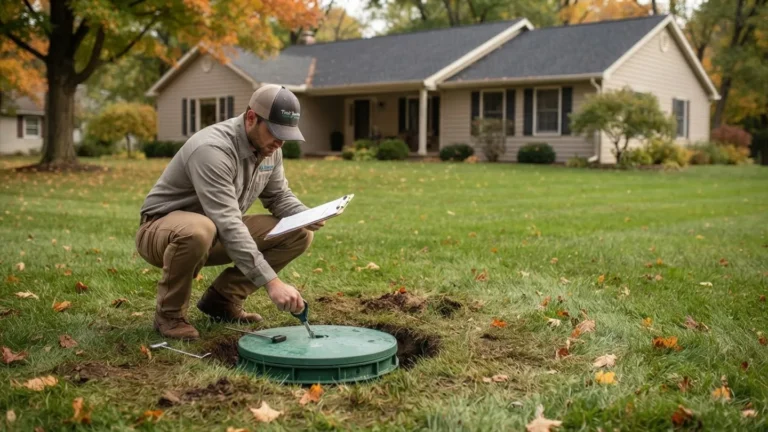
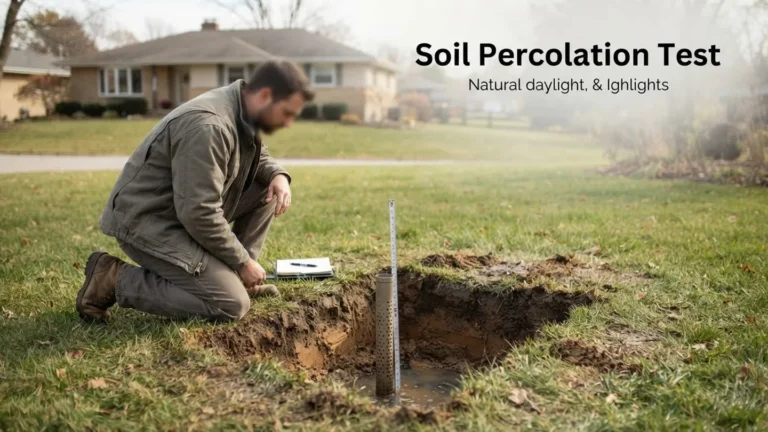
- Step 1Property and soil reviewA designer, soil scientist or local inspector checks the lot, soil conditions, water table and setbacks from buildings, property lines and water sources.
- Step 2Septic designThe system is drawn for your house size, daily water use, soil profile and lot shape. Tank size, drain field layout and any pump or dosing parts get settled here.
- Step 3Permit application and county reviewThe designer or installer files the paperwork. The local health department or environmental office checks setbacks, soil notes and whether the design fits its rules.
- Step 4Site clearing and accessTrees, brush, rocks and old fencing are handled, and a stable route is made for the excavation machine, tank truck and delivery vehicles.
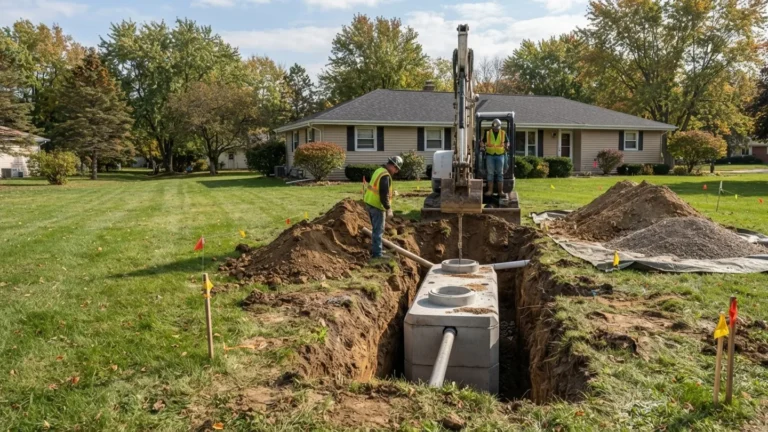
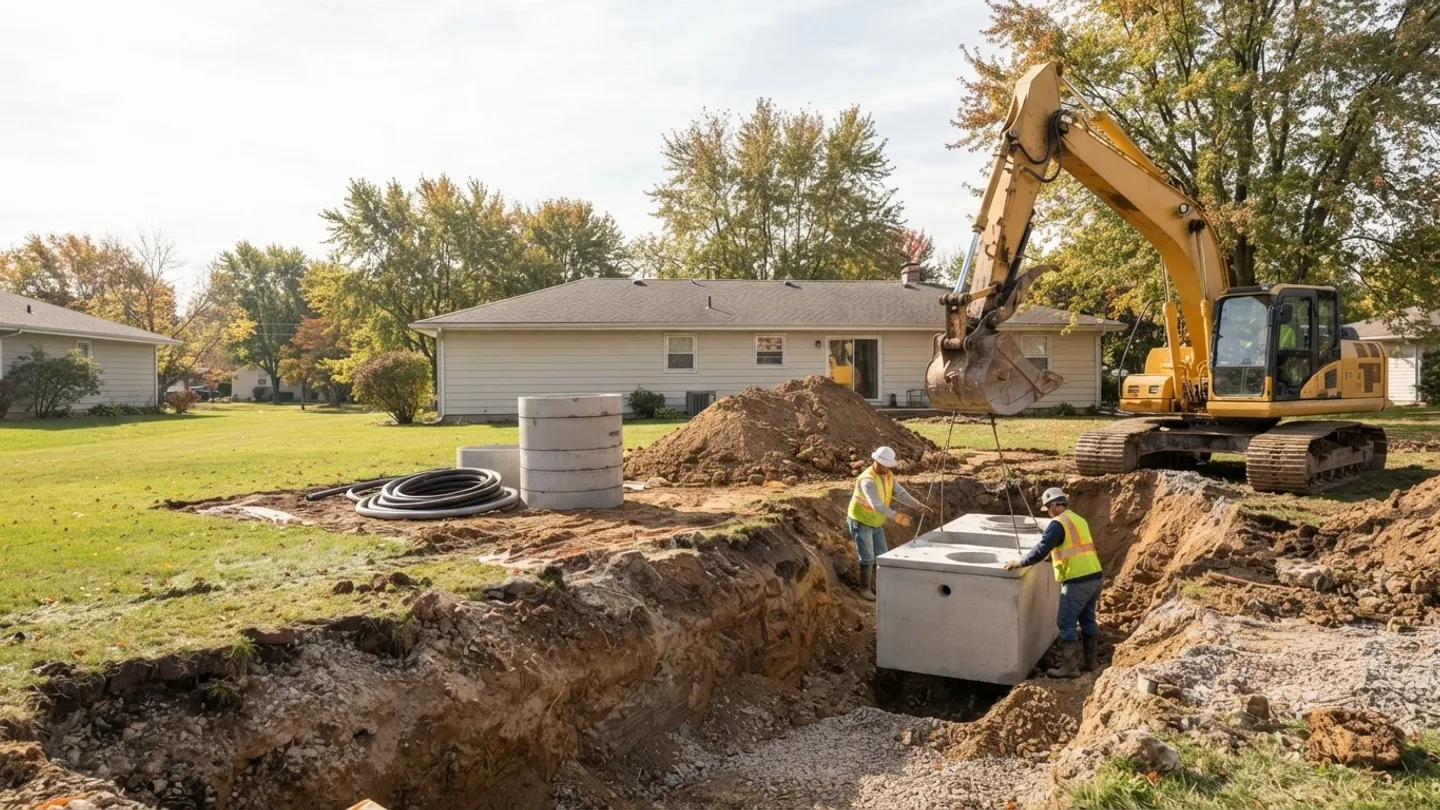
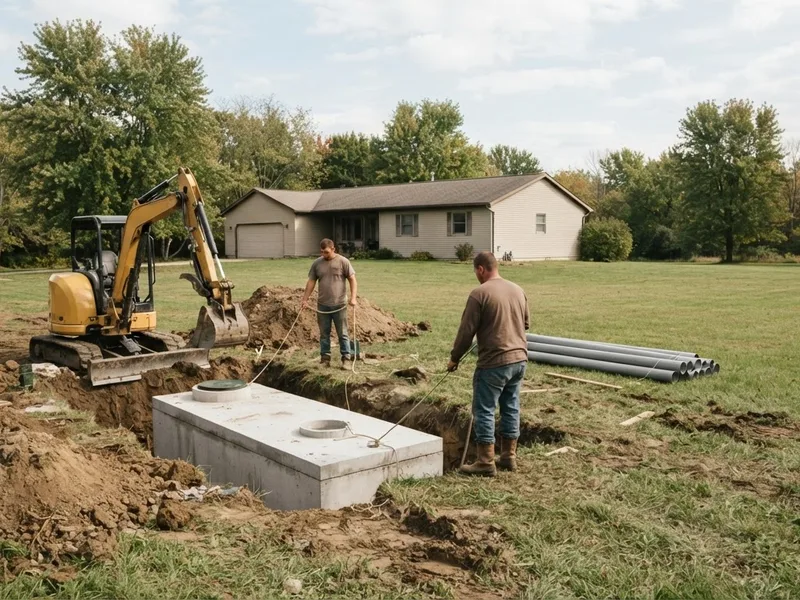
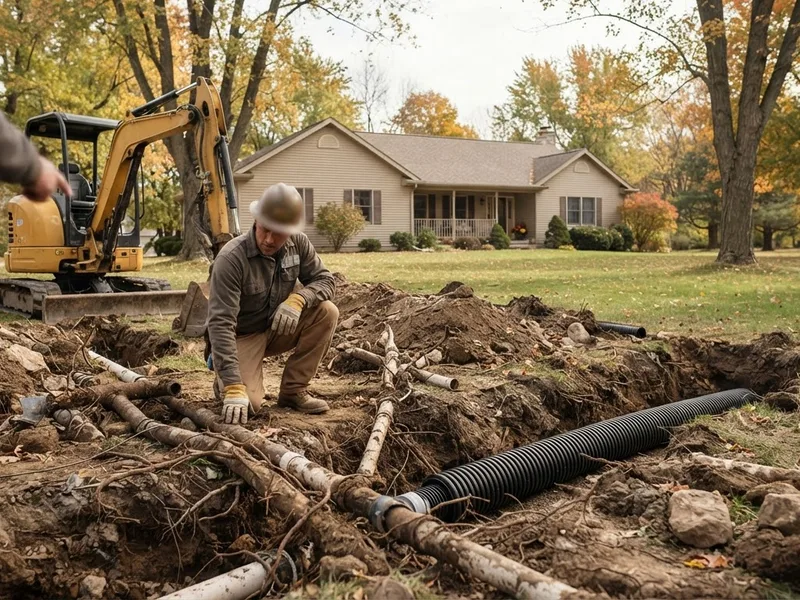
- Step 5Excavation and installThe trench is opened, the tank is set, the field line or chamber beds are placed, and the system is connected to the house. This part often takes days, not months.
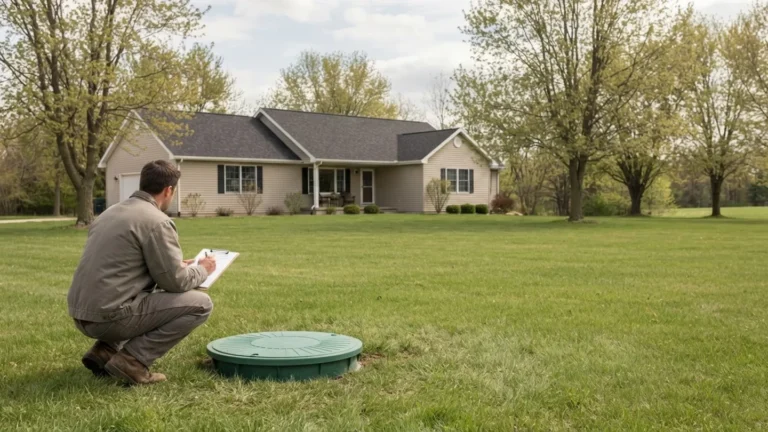
- Step 6Final inspection and sign offAn inspector checks the tank, field, access points, connections and record details. The system may be backfilled before the final walk, so clean soil and easy access matter.
Why the schedule follows approvals, not machines
A septic install is a sequence of gates. Each gate needs information before the next one opens. The first gate is the site. A perc test, short for percolation test, is a field check of how fast water soaks into the soil. A designer may also ask for soil depth, groundwater notes and the distance from the proposed tank to the house, well, pond, property line and driveway.
The second gate is the design. A simple gravity system, where water flows out of the tank into the drain field without a pump, is often easier to permit. A mound system, built above tight or shallow soil, usually needs more drawings and more questions. An aerobic system, which uses a blower or pump to move air through the tank, adds electrical and maintenance review.
The third gate is the permit. Local offices review the package for completeness. A good application may answer its questions the first time. A weak application may come back for a revised soil note, a changed drain field size, a tank location change or a clearer map of the property lines.
The fourth gate is the crew. Once the permit is ready, you still need the right machine, tank, pipe, gravel, pump or electrical parts. If the lot is tight, muddy or wooded, the installer may ask for a shorter route to the work area or a different tank placement.
The last gate is the inspection. A county inspector may visit during excavation, when the tank is set, when the field is open, and again after backfill. If the inspector cannot see the field line or cannot check the lid location, the final visit may need to come back later.
The practical takeaway is simple. The dig can be fast. The path to the dig is what decides how long it takes to install a septic system.
| Factor | How it can change the schedule | What you can do |
|---|---|---|
| Soil and water table | A lot with tight soil, a high water table, shallow rock or a steep slope may need a different system, more tests or a revised field layout. | Ask the designer before you buy a long site plan, and tell them where water pools or springs have shown up. |
| System type | A simple gravity tank and drain field usually moves faster than a mound, advanced aerobic or pressure dosed system. | Choose a system that fits your soil and water use, not only your lot appearance or price. |
| Permit completeness | Missing soil notes, unclear setbacks or incomplete drawings can send the application back for review. | Ask for a local checklist and review the drawings with your designer before filing. |
| Weather | Rain, frozen ground, flooding and saturated soil can make trenching unsafe, delay the field install or postpone the final inspection. | Build a buffer into your schedule and do not let a contractor dig in mud that will collapse the trench. |
| Contractor backlog | Busy spring and summer seasons, storm cleanup work and pump truck shortages can push the install date. | Ask what the next open install window is and whether the permit will expire before that date. |
| Site access | Trees, septic trucks, utility lines, old slabs, tight driveways and soft lawns can slow the crew and change tank placement. | Clear brush, mark utilities, and make a solid path for equipment before the permit clears. |
How to prepare your property before the installer arrives
Start with the permit checklist
Ask the designer or installer what your local office calls a complete application. Soil notes, property maps, house details, well locations and setbacks are common parts.
Mark the house, lines and water sources
Make sure the map shows the house, property lines, any well, pond, creek, septic field, tree line and existing drain field. A small error can delay a permit review.
Find your utilities
Call the locate service before anyone digs. Gas, water, electric, phone and buried lines change the path of the pipe and the safety of the job.
Clear the work route
Remove brush, branches, rocks and old fencing where trucks and machinery need to move. The crew needs a stable path from the road to the tank area and field line.
Protect the topsoil
Ask the installer how topsoil will be stockpiled and spread back. A good finish makes the lawn easier to restore and reduces muddy access after the inspection.
Set access points for the inspector
Know where the tank lid, distribution box, pump, riser and inspection ports will be. Easy access helps the final inspection go smoother.
When a simple install gets complicated
Some septic projects look ordinary on paper and then reveal the problem at the trench line. A lot may show a soil layer that holds water, a buried rock ledge, a former field that still drains poorly, or a slope too steep for a straight line. The crew may stop and ask the designer to check the field size again.
A failed perc test, meaning the soil did not pass the soak test, can change the path. It may require a different drain field layout, a mound system, a pressure dosed field, or a smaller daily water use plan. That is not a bad thing by itself. It means the system is being matched to the site.
Replacing an old septic system can also add time. The old tank or field may need removal or abandonment, and the new location may need to avoid the same wet spot. If the old field still has plumbing in the house, the crew may need to locate and cap lines before the new install is final.
A septic smell, wet grass or slow drains around an old field can point to a system that needs more than a new tank. The inspector may ask to see the biomat, the living layer at the soil interface that affects absorption, or may want the field opened in several places. Each added look can add schedule time.
If your timeline feels tight, ask the installer to separate three things in writing: the design date, the permit ready date, and the install date. That makes it easier to tell which part is slow: the soil work, the county, or the crew.
Common questions
Can a septic system be installed in a few days?
The excavation and tank setting can happen in days, but the full job usually takes longer because soil review, design, permit checks, weather and inspections come first.
How long does a septic permit take?
It depends on your county, the design and how complete the paperwork is. A clean application for a standard gravity system may move faster than a mound, aerobic or pressure dosed system on a difficult lot.
Can rain delay the install?
Yes. Wet soil can close the trench, make the field unsafe to dig, and stop the final inspection until the site is visible and stable. A good installer will wait instead of digging in mud.
Do all systems take the same time?
No. A simple tank and drain field is often faster than a mound system. An aerobic system may add blower, pump, alarm and electrical review. A pressure dosed system may add tank pumps and field line details.
Can I do any of the work myself?
You can prepare access, keep records, answer site questions and mark utilities. The tank, field, electrical, pump and final connections usually need licensed workers where your local rules require them.