Dishwashers and Septic Systems: Detergent, Water Use and Timing
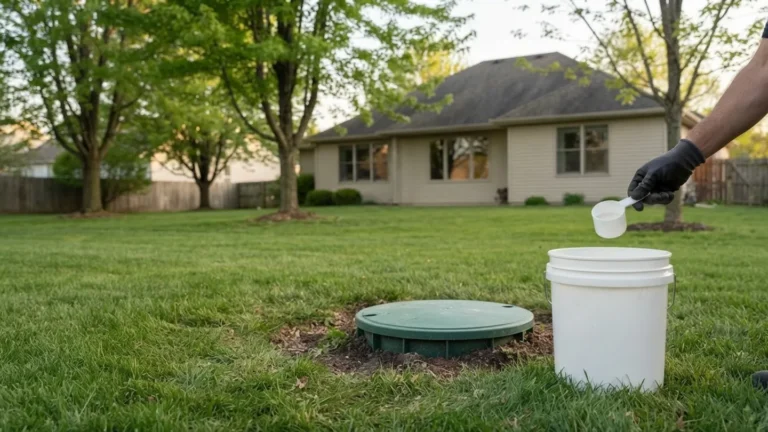
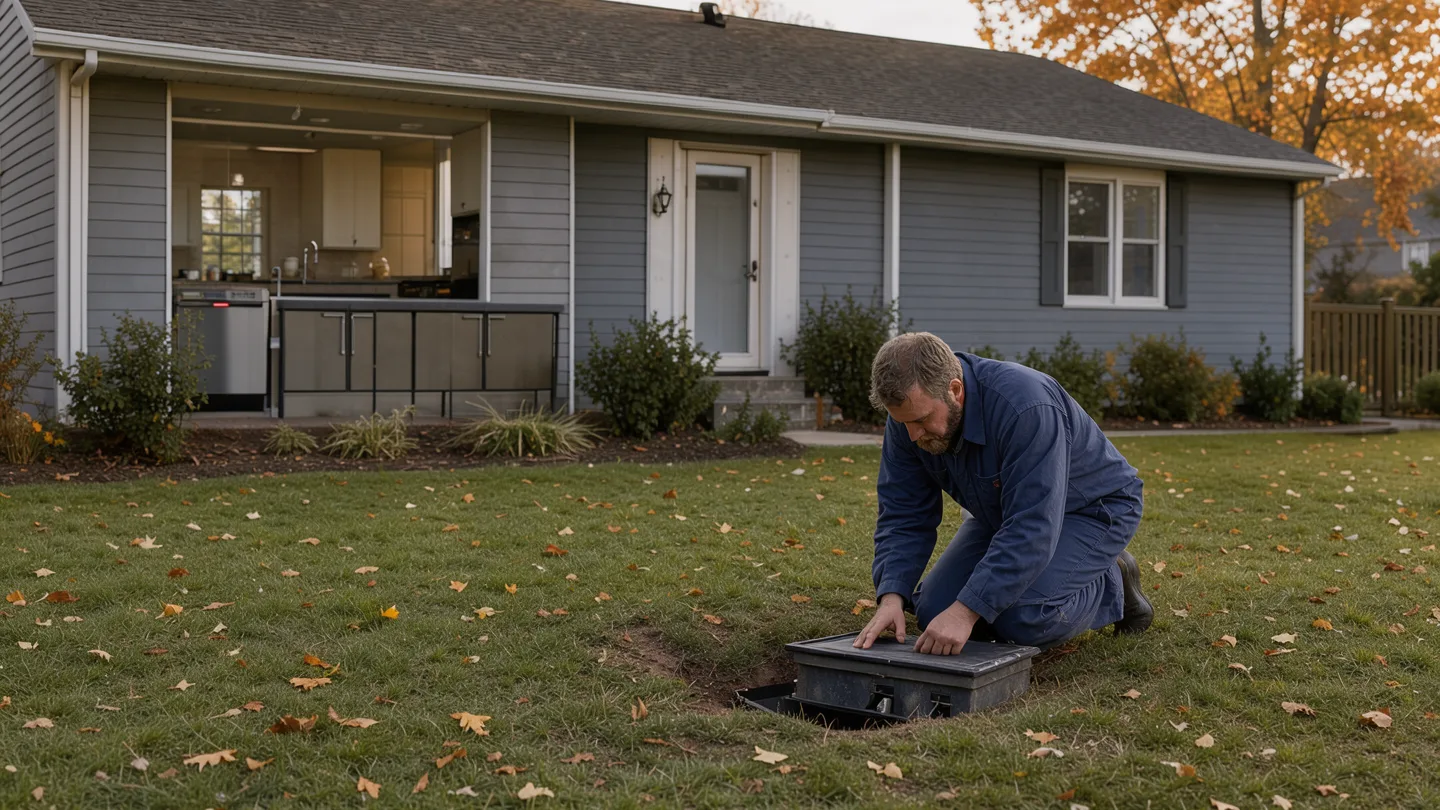
You just moved into a house on septic. The kitchen has a dishwasher, and you want to know if running it will wreck the tank buried in your backyard. The short answer: no. A dishwasher is fine on a working septic system. The longer answer involves how much water you send over at once, what kind of detergent you use, and whether your tank is sized for your household.
This guide covers the practical details: gallons per cycle compared to handwashing, how to spread loads across the day, which detergents and rinse aids are safe, what to do about food scraps and grease, and when an older or undersized tank needs extra care.
Key takeaways
- A modern dishwasher uses 3 to 5 gallons per cycle, which is less than handwashing under a running tap.
- Run one load per day on a standard 1,000-gallon tank. Spread multiple loads across the day if you have a large household.
- Pick phosphate-free and low-bleach detergents. Phosphates harm the biomat in your drain field.
- Rinse aids in normal amounts are fine. They do not kill the bacteria your tank depends on.
- Scrape plates before loading. A dishwasher does not handle grease or large food scraps the way a [garbage disposal](garbage-disposal-septic) does, and neither should your tank.
- If your tank is older, undersized, or you have a mound or aerobic system, watch your daily water total more closely.
Water use
How much water a dishwasher sends to your tank
A typical septic tank for a three-bedroom home holds 1,000 gallons. Your household might send 300 to 400 gallons of water per day into that tank from showers, laundry, toilets, and the kitchen combined. The dishwasher is one piece of that total, and it is a smaller piece than most people expect.
A modern Energy Star dishwasher uses about 3.5 gallons per cycle. Older models from the 1990s or early 2000s can use 6 to 10 gallons. Handwashing under a running tap uses 6 to 27 gallons per load, depending on how long you leave the water on. Handwashing in a filled basin uses roughly 4 to 8 gallons.
So a dishwasher is usually the lower-water option. The concern is not the total volume over a day. The concern is the surge: dumping 5 gallons into the tank all at once, especially if you also run the washing machine and take a shower in the same hour.
A 1,000-gallon tank can handle a normal daily flow. What it cannot handle is a sudden spike that pushes solids out the outlet baffle and into your drain field before they have time to settle.
| Method | Water per load | Food and grease handling | Best for |
|---|---|---|---|
| Modern dishwasher (Energy Star) | 3 to 5 gallons | Minimal if you scrape plates first | Daily family use |
| Older dishwasher (pre-2005) | 6 to 10 gallons | Same as modern, but more water | No reason to keep if water is a concern |
| Handwashing, running tap | 6 to 27 gallons | More scraps go down the drain | Small loads, hand-wash-only items |
| Handwashing, filled basin | 4 to 8 gallons | You control what goes down | Occasional use, small households |
Spread your loads across the day
The drain field is where the real work happens. Effluent (the liquid that leaves the tank) soaks into the soil through a layer called the biomat, a living mat of bacteria and fungi that treats the water before it reaches groundwater. If you flood the system with too much water in a short window, the biomat gets overwhelmed and the soil cannot absorb the flow. You get soggy grass, slow drains, or a backup.
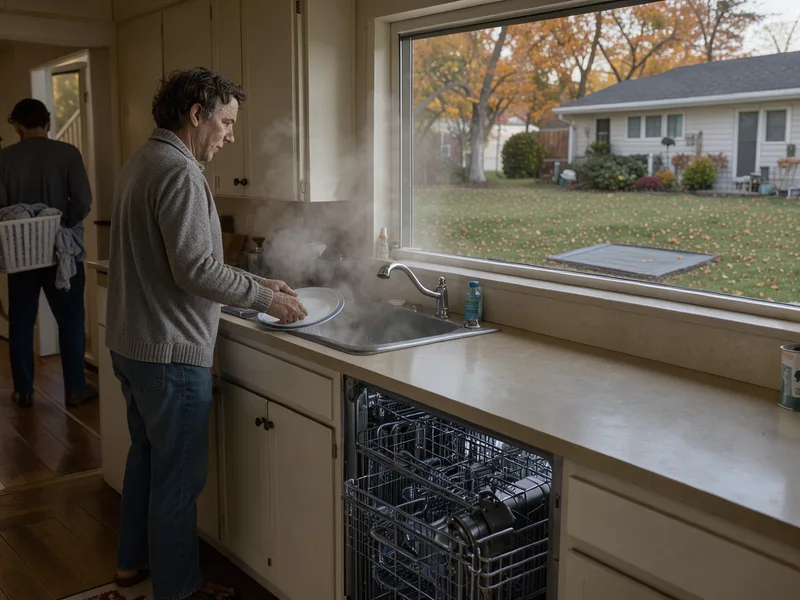
One dishwasher load per day is fine on a standard system. If you have a large household and run two or three loads, space them out. Run one in the morning, one at lunch, one at dinner. Do not stack the dishwasher, the washing machine, and three showers into the same two-hour window.
A good rule: keep your total water use under 50 gallons per bedroom per day. For a three-bedroom home, that means staying under 150 gallons per day as a comfortable target, though many systems handle more. If you regularly exceed that, your tank may be undersized for your household, and you should talk to a pumper or inspector about whether a larger tank or a water-efficient upgrade makes sense.
Detergents
What to use and what to skip
Phosphates are the main concern. They were common in dishwasher detergents for decades because they cut grease and prevent spots. But phosphates feed algae and bacteria in ways that clog the biomat in your drain field. Many states have already banned phosphates in dishwasher detergents, and the EPA has limited them in other products. Check your label. If it says phosphate-free, you are fine.
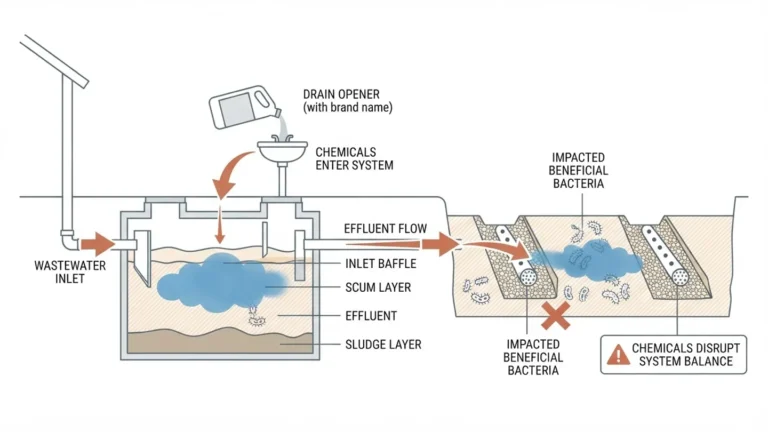
Bleach is the second concern. A small amount of bleach in a detergent pod or a rinse cycle will not kill your tank. The bacteria in a septic tank are resilient, and the volume of bleach in a normal dishwasher cycle is tiny compared to the tank volume. But if you are pouring cups of bleach into the machine for sanitizing, that adds up over weeks. Stick to products labeled for dishwashers and skip the extra bleach.
Rinse aids are fine. They are surfactants that help water sheet off dishes. In the small amounts a dishwasher dispenses (a few milliliters per cycle), they do not harm the bacterial balance in your tank. You do not need to avoid them.
Avoid anything labeled as a septic-safe dishwasher additive or enzyme booster for the dishwasher specifically. These are marketing products. Your tank already has the bacteria it needs. For more on why additives do not help, see our breakdown of septic tank additives.
Scrape before you load
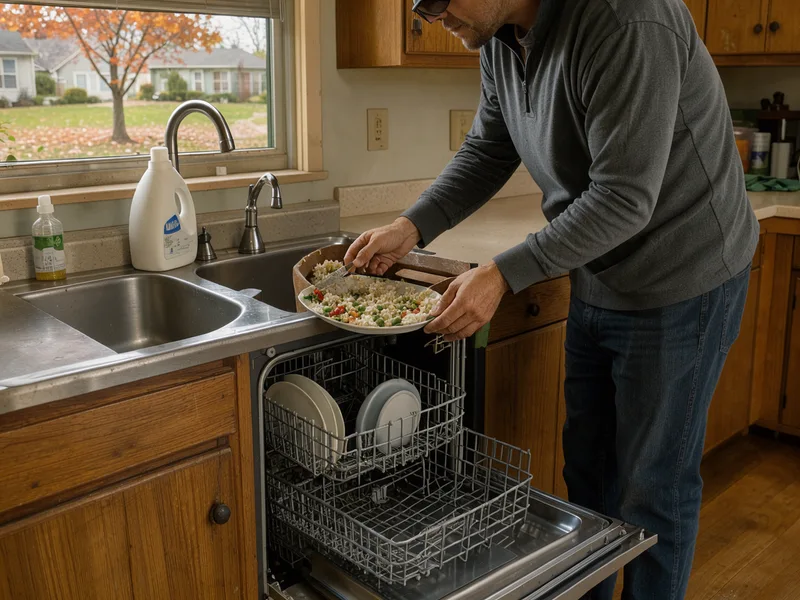
A dishwasher is not a garbage disposal. It sprays water at plates, but it does not grind food. Large scraps, rice, pasta, and potato peels can end up in the filter at the bottom of the machine, and some of that material washes into the tank. Over time, food solids add to the sludge layer (the settled solids at the bottom of the tank) and the scum layer (the floating fats and oils at the top). More solids mean more frequent pumping.
Grease is the bigger problem. Cooking oil, bacon fat, and butter do not break down easily in a septic tank. They float to the top, thicken the scum layer, and can eventually clog the outlet baffle or the effluent filter. Wipe greasy pans with a paper towel before loading them. Pour used cooking oil into a container and take it to a recycling drop-off, not down any drain.
For a full list of what should never go down your drains, see what not to flush or pour down the drain.
Special cases
When an older or undersized tank needs extra care
If your tank is more than 20 years old, check its capacity. A 750-gallon tank was common for two-bedroom homes in the 1970s and 1980s. If you have a family of four running a dishwasher, a washing machine, and multiple showers daily, that tank may be undersized. A pumper can measure your sludge and scum levels and tell you how quickly solids are building up.
Aerobic systems (which use an air pump to feed oxygen to bacteria) are more sensitive to surges and chemicals than conventional gravity systems. If you have an aerobic unit, keep detergent use normal but avoid anything with antibacterial additives, and follow your service provider's maintenance schedule. See our guide to aerobic septic system maintenance for details.
Mound systems sit above the soil line and rely on a sand bed for treatment. They are less forgiving of water surges because the sand bed has a fixed absorption rate. One dishwasher load is fine. Three loads plus a laundry cycle in the same afternoon may push the system past its design capacity.
If you are unsure whether your system can handle your current water use, the simplest check is to watch for warning signs: slow drains, gurgling pipes, or damp soil over the drain field after a heavy-use day. If you see those, cut back on simultaneous water use and schedule an inspection.
Common questions about dishwashers and septic
Can I run the dishwasher every day on septic?
Yes. One load per day is well within the capacity of a standard 1,000-gallon tank serving a typical household. The issue is not daily use. The issue is stacking multiple water-heavy appliances into the same short window.
Do I need a special septic-safe dishwasher detergent?
No. Any phosphate-free, standard dishwasher detergent is fine. You do not need a product marketed as septic-safe. Just avoid pouring extra bleach or antibacterial cleaners into the machine.
Will the dishwasher kill the bacteria in my tank?
No. The volume of detergent and rinse aid that reaches the tank is far too small to disrupt the bacterial population. The bacteria in a septic tank are robust and reproduce quickly.
Should I rinse plates before putting them in the dishwasher?
Scrape them, yes. Rinse them under the tap, no. Scraping removes the bulk of food without adding extra water. A quick rinse under running tap adds gallons you do not need.
What if my dishwasher drains into a garbage disposal?
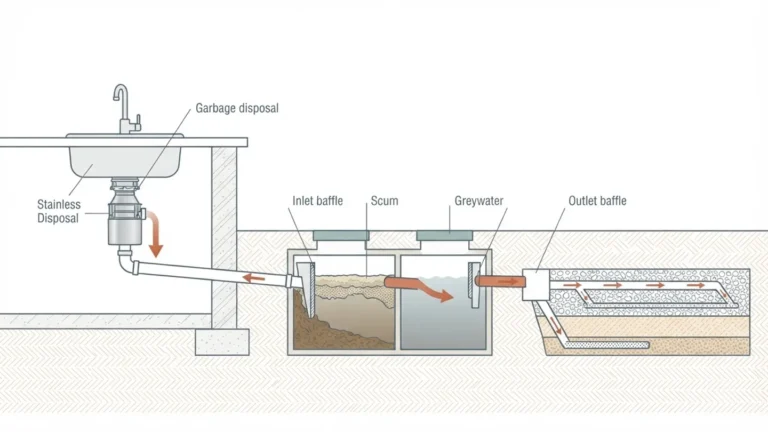
Some older kitchen setups route the dishwasher drain through the disposal. If you have a [garbage disposal on septic](garbage-disposal-septic), the combination adds more solids to your tank than either alone. You will likely need to pump more often, roughly every two to three years instead of every three to five.
Is a dishwasher better or worse than handwashing for septic?
A modern dishwasher is better. It uses less water and sends fewer food particles down the drain than handwashing under a running tap. The only case where handwashing wins is if you use a filled basin and are very careful about scraps.