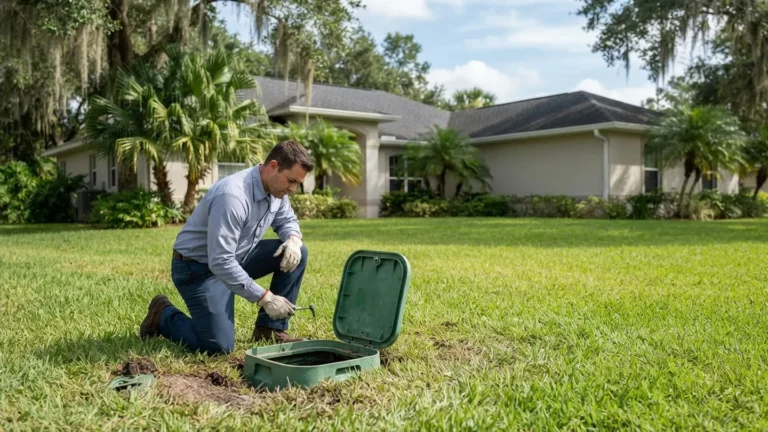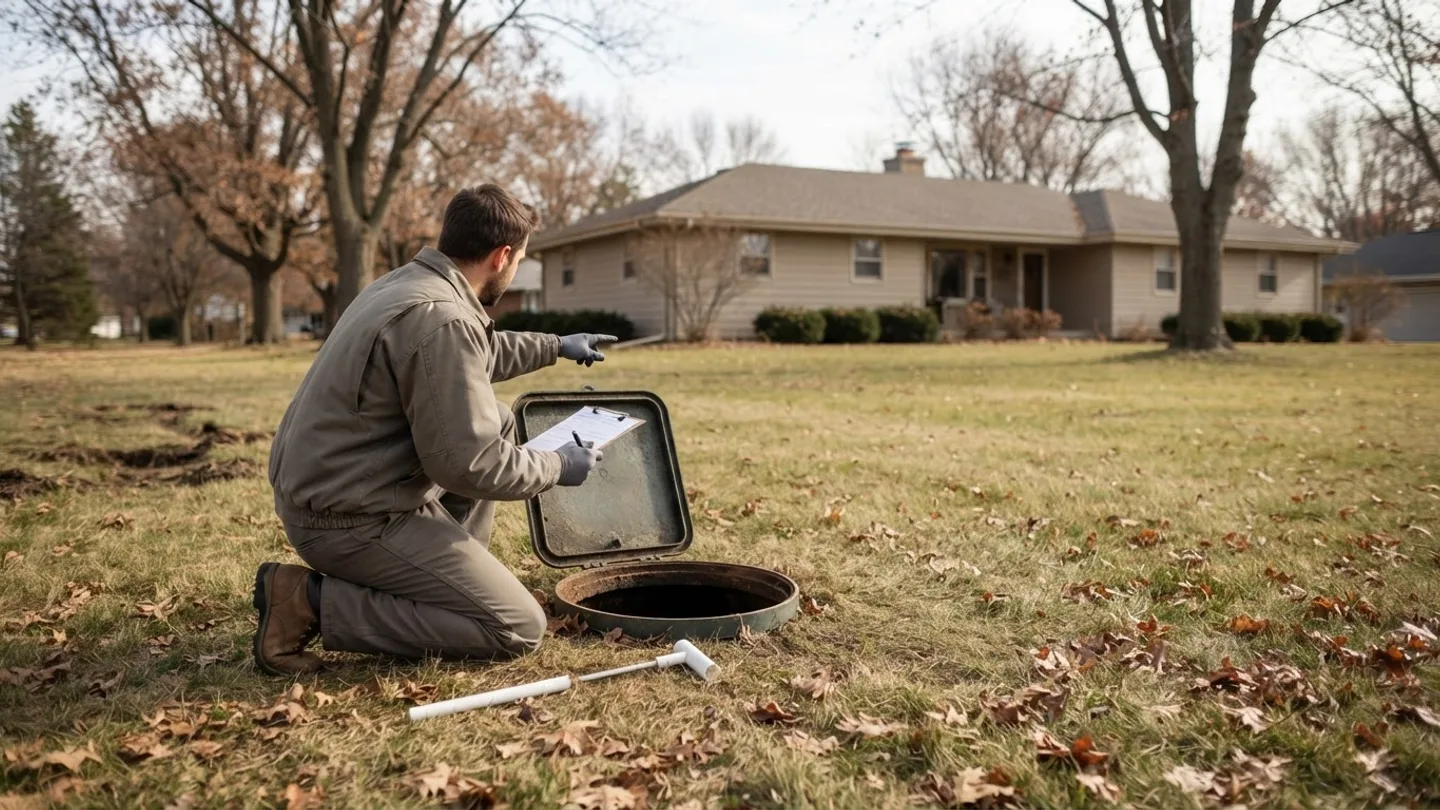
Failed Septic Inspection: Options for Buyers and Sellers
The inspection report comes back and the septic system failed. The first instinct is to panic or push the papers aside. A failed report is a signal, not a verdict on the whole house.
Before you negotiate, get the details. The value of a failed septic inspection depends on what failed, which standard was used and how local rules affect your closing. A blocked outlet or aging drain field can be treated differently than a cracked tank or a field that is surfacing.
If the system is backed up, has standing water where people walk or has a strong odor, stop using the house until a professional checks it. Do not assume the problem is a small fix or a large replacement.
At a glance
- A failed septic inspection means the system did not meet the inspector pass point or local requirement. Ask which test, permit condition or rule was used.
- A marginal report often means the system works with concerns. It may delay closing if a lender, insurer or local agency wants more proof.
- The paths apply to conventional systems, aerobic systems that add air for treatment, and mound systems that raise the field above wet soil.
- There is no single national cost range. A pump-out or small repair can differ greatly from a tank repair or drain field replacement. Get itemized bids.
- Most decisions are a pro job. Homeowners can collect records, watch water use, keep access clear and ask for written scopes.
- If sewage is surfacing, the house is backed up or there is standing water near the field, stop use and call a professional before negotiating.
What failed and marginal mean in a septic report
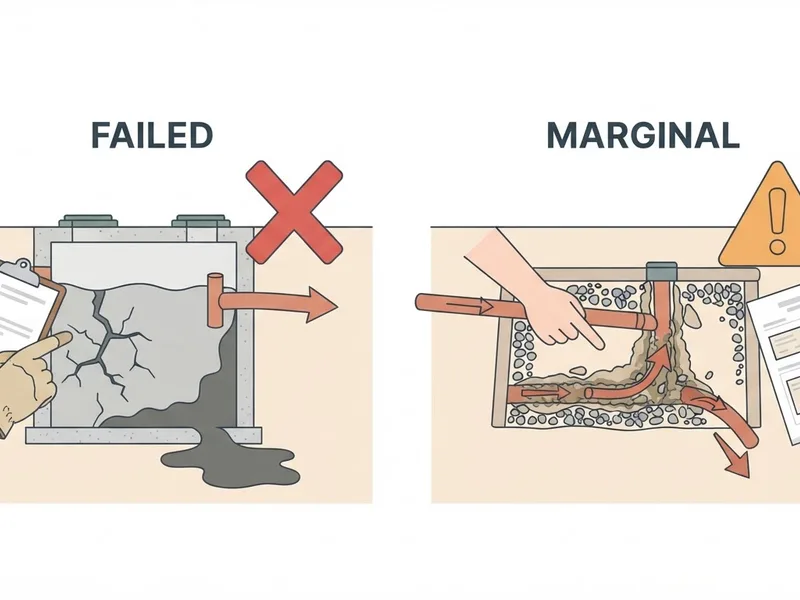
Inspectors do not use one national label for failure or marginal. Ask what standard was used: a local rule, a permit condition, a test result or the professional opinion.
A failed report usually means the system did not meet the pass point that mattered. That could be a cracked tank, leaking joints, a blocked baffle, the flow control piece that keeps solids inside, a clogged effluent filter, the outlet screen, or a drain field that is not absorbing liquid well.
A marginal report may mean the system is working, but the inspector saw concerns. It might point to slow recovery after a test, old tank components, ponding after use or a field that is aging. The word matters less than the condition.
Some terms come up in both types of report. Scum is the floating layer in the tank, sludge is the settled solids at the bottom, and effluent is the liquid leaving the tank to the field. The distribution box, the part that sends liquid to each line, can be tipped or plugged. The biomat, the natural soil layer under a drain field, can slow absorption if it becomes too thick.
A perc test, a soil test for how fast water soaks in, may be part of the history for a new or replaced field. That is different from a current inspection of a used system.
For the buyer, the practical question is what action clears the concern. For the seller, the practical question is what repair or document will satisfy the inspector, the lender or the local agency.
Do this now after a failed septic inspection
Stop the system if there is an immediate sign
If drains back up, sewage surfaces, the yard is soggier than usual over the field, or there is a strong odor, stop using the system. Call a licensed professional before you negotiate or close.
Read the exact report language
Ask for a written answer to three questions: what failed, which test or rule was used, and what repair or re-inspection would clear the concern. A vague failed label is hard to price and hard to fix.
Get locations and measurements
Ask the professional to locate the tank and field, if possible, and write down lid depths in inches, tank size in gallons and field boundaries. Keep that information in your file.
Get a second opinion when the report is unclear
If the first report calls for a field replacement but does not check the tank, baffles, outlet line, effluent filter or distribution box, get a second written opinion. A second look can change the scope and the cost.
Ask for itemized repair scopes
Get at least two written bids from licensed septic professionals. Separate tank work, baffles, filter, distribution box, access, permits, pump-out, field work and re-inspection. A lump sum hides the reason for the repair.
Compare the paths with your contract
Review the inspection contingency, closing date, lender rules and local agency requirements. Ask your real estate professional and attorney what your contract allows before you choose repair, holdback, credit or cancellation.
| Path | What it does | Buyer advantage | Seller advantage | Main risk |
|---|---|---|---|---|
| Repair before closing | Seller fixes the listed issue and a re-inspection confirms it before the deal closes. | Buyer closes with a documented, inspected fix. | Seller can keep the original price and remove the obstacle. | Closing can delay, and the scope can grow after work starts. |
| Escrow holdback | A set sum is held after closing by the lender, attorney or escrow company until repairs are finished and inspected. | Buyer can close on time and still require proof of repair. | Seller can satisfy the inspection concern without stopping the sale. | The money, deadline, permits, access and release terms must be written clearly. |
| Price credit | The seller gives the buyer a closing credit or lower price, and the buyer arranges the repair later. | Buyer may keep any savings if the work costs less than expected. | Seller can close quickly and avoid managing repairs. | Buyer must handle permits and repairs, and lender rules may limit credits. |
| Walk away | The buyer uses an inspection contingency, or the seller agrees to cancel. | Buyer avoids a known problem and can keep earnest money if the contract allows. | Seller can re-list after repairs or reduce price later. | Both sides lose time, and the seller may face another inspection. |
| Second opinion | A licensed septic professional reviews the report and, if possible, the system before repair bids. | Buyer can confirm whether the repair is urgent or overstated. | Seller can strengthen the case for a lower cost or faster resolution. | A second report can raise new issues, so define the question asked. |
Costs, bids and second opinions
Costs move with the diagnosis. A pump-out, clogged effluent filter, missing baffle or blocked outlet line can be smaller than a cracked tank or a drain field that no longer absorbs liquid well.
The site changes the price too. A tank that is 12 inches deep and easy to reach is not the same as a buried tank under a driveway, deck, tree roots or an occupied basement. Ask how much access work is included.
A failed drain field is often a larger repair than tank work. A mound system raises the field above wet soil, and an aerobic system adds air to treat effluent. Both can include pumps, blowers, controls and alarms, so the repair quote should list those parts too.
Ask for dollars, not just a line that says repair as needed. A fair bid should list the work, permits, inspection, cleanup, warranty and what happens if the soil or tank condition is worse than shown.
Questions to ask before you hire: Do you pull permits, who calls the local agency for re-inspection, how many hours will access take, what could change the price, and what is not included. If a quote says every failure needs a new field without checking the tank, baffles, outlet line, filter or distribution box, get a second opinion.
A second opinion can pay for itself. A failed field quote may be reduced if the problem was a plugged outlet baffle, a blocked effluent filter, high water, or a tipped distribution box sending flow to one field line instead of all lines.
Additives are not a repair. A septic additive may not fix a failed system, and it is not a way to postpone a needed pump-out, baffle repair or field assessment. Save the money for a written diagnosis.
Cost ranges cannot be set by one national rule. The report, the local agency, system type, access and repair scope determine the number. Use written bids and compare them item by item.
Common questions from buyers and sellers
Is a failed septic inspection the end of the sale?
No. It is often a negotiation point, unless local rules require a pass before occupancy or the lender will not move forward without a clear resolution.
What does a marginal septic inspection mean?
It often means the system works, but the inspector saw concerns. It is not a universal label. Ask for the exact condition, the test used and the repair that would change the result.
Who usually pays for septic repairs?
It depends on the contract, local custom and who discovered or caused the issue. Get the repair duty, cost and timing in writing.
Can the seller give a credit instead of a repair?
Yes, in many deals, but the lender and contract must allow it. A credit can be quicker, but the buyer takes the repair risk.
Should the buyer walk away from a septic failure?
Walk away if the cause is unclear, the repair requires permits or land changes, the cost is too high for your plan, or the seller refuses a workable path.
What should an escrow holdback agreement include?
The repair scope, amount, who holds the money, deadline, permit duty, re-inspection, access plan and what counts as release.
Do septic inspections cover the whole drain field?
Often not. Inspectors check visible and testable conditions. A failed surface test or slow absorption can point to a problem without exposing the whole field.
Does a garbage disposal affect a failed inspection?
A disposal does not make a system fail on its own, but high water use, grease and solids can speed sludge and scum buildup. Ask for pump-out records and water use habits.