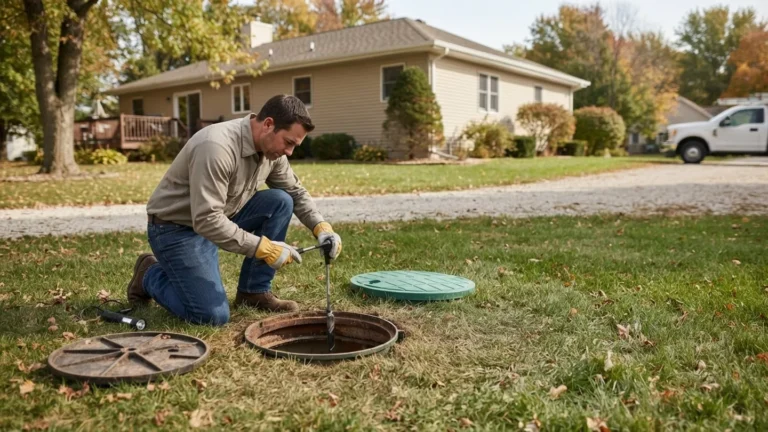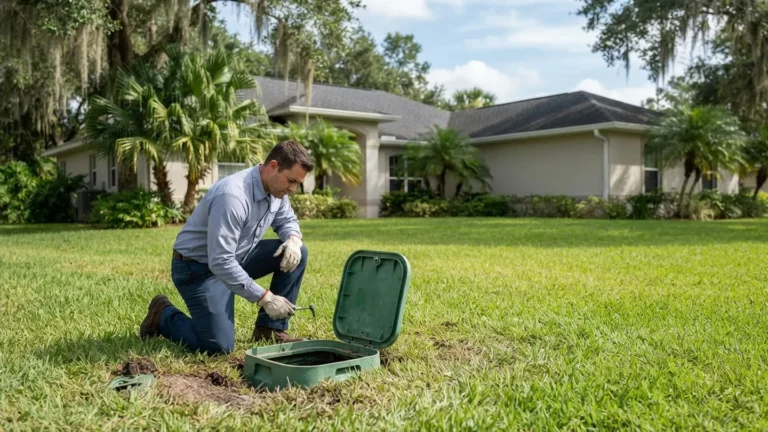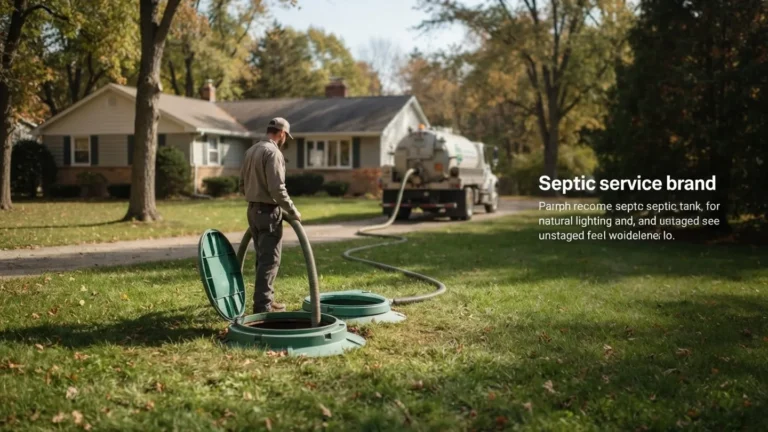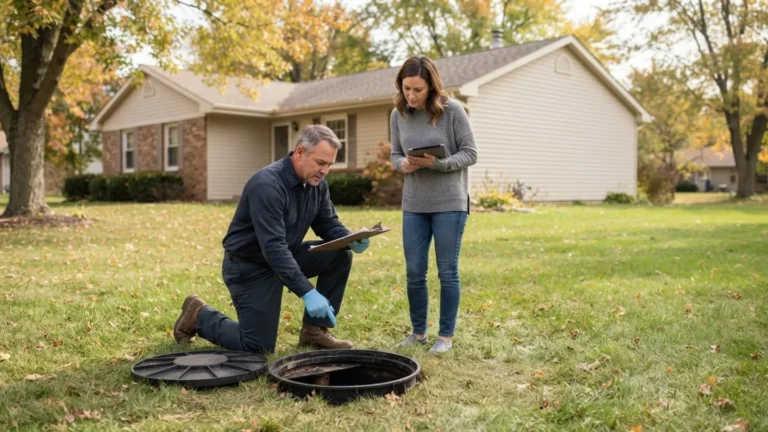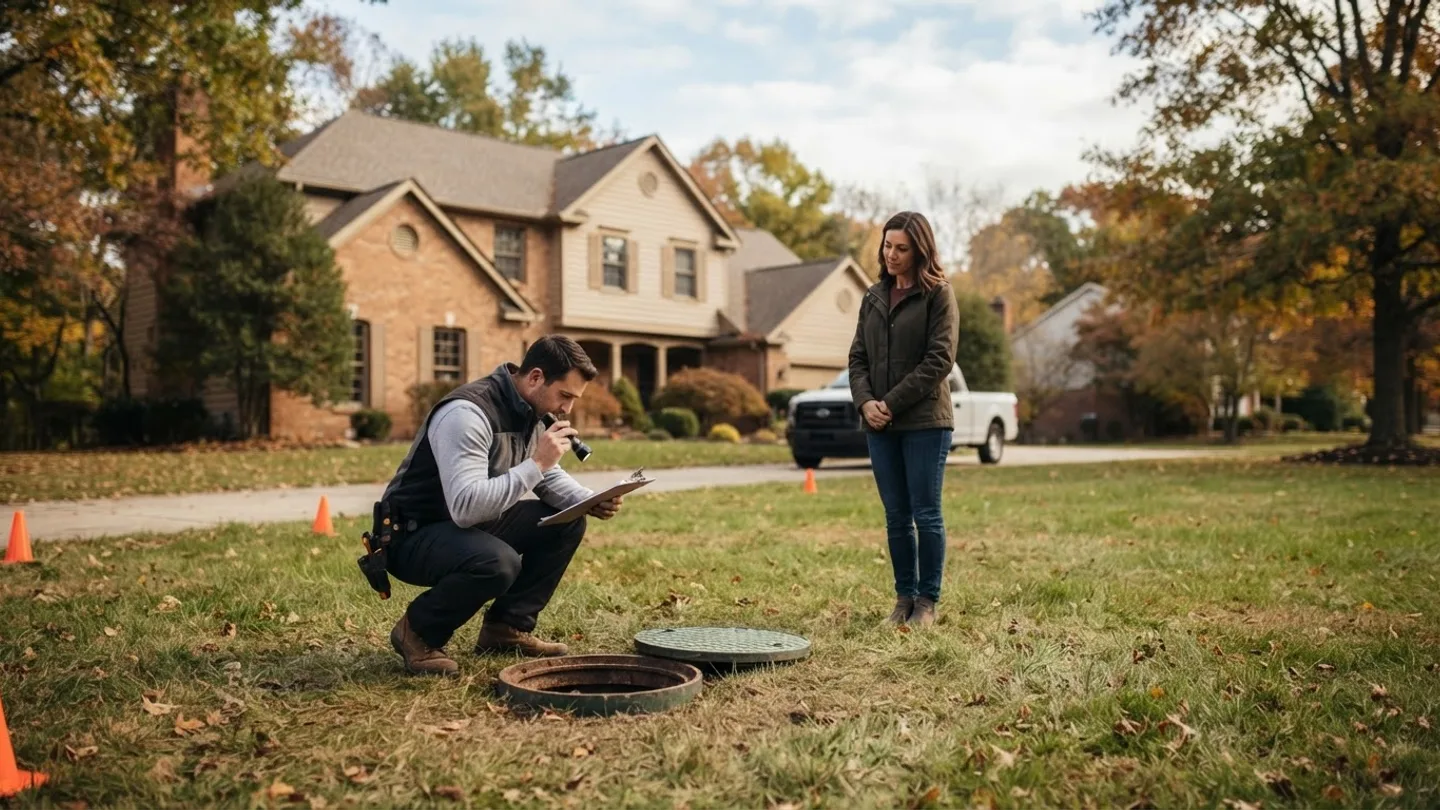
Septic Inspection When Buying a House
You are under contract on a rural home. The septic inspection when buying a house report lands in your email with the word marginal. The tank can be located, but the drain field shows slow water. You are not being asked to decide based on one word. The first step is to check the contract date.
A septic system is usually judged in three parts: the tank, the outlet and piping, and the drain field or treatment area. An inspection can say which part is causing the issue, and it can tell you what repair or cleaning is needed. That information is useful even if the house is otherwise fine.
This guide walks through the sequence, the report terms, and the decisions that come after. It does not try to predict every state rule. It starts with the practical moves that protect the purchase while keeping the conversation with the seller clear.
What this guide covers in order
At a glance for home buyers
- This guide covers septic inspection when buying a house: contract timing, choosing an independent inspector, pumping records, contingency language, and marginal results.
- It applies to common septic systems, including conventional, aerobic, and mound setups, when the home has a private wastewater system instead of city sewer.
- Typical cost range: no fixed national range is shown here. Inspection, pumping, and repair costs move with region, system type, and access difficulty, so ask for a written estimate before work begins.
- Urgency: high if the inspection contingency deadline is near. Do not wait for the closing date to get the result.
- Job type: pro job for inspection, pumping, tank probing, and drain field evaluation. A homeowner can collect records and ask questions, but cannot safely inspect the buried parts alone.
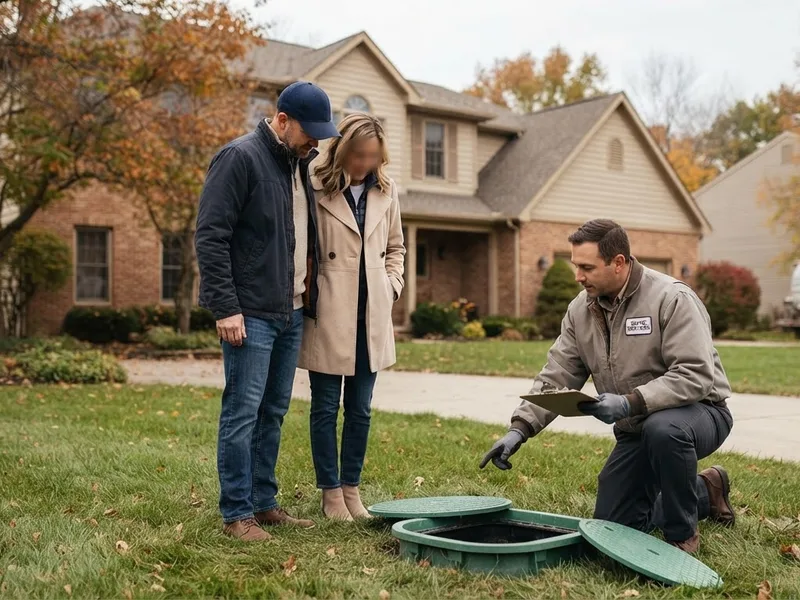
Start with the purchase contract deadline
When you make an offer, the septic inspection contingency needs to do real work. It should give you access to the property for inspection, a time frame for the report, and a way to ask for repairs, a price change, or a cancellation if the system does not meet the agreed condition. Your real estate agent or attorney can use language that fits the state, but the point is simple: know the deadline before you sign.
Count backward from closing. If the lender needs the report early, the deadline must leave room for a second opinion, a pumping visit, or a second inspection. If the tank is not located, the deadline also needs to include time to find it, because a missing lid can make the report look inconclusive.
Ask the seller, in writing, to provide pumping records, system maps, repair permits, and any recent service notes. A clean system can still fail if the drain field is saturated, so the records are not just paperwork. They tell you what the inspector will see.
If the seller resists access or gives a short notice date, treat that as part of the inspection. A septic system is buried, and it often needs a clear path, a known tank location, and enough time to evaluate it properly.
A steady sequence for a septic inspection when buying a house
Confirm the local rule and lender expectation
Ask what your state or local health department requires at sale, and ask the lender what proof it accepts for the property.
Check the contract dates
Look for inspection, repair approval, and lender paperwork deadlines. Count backward from closing.
Request the seller's records
Ask for pumping records, system location, repair permits, and recent service notes before the inspector arrives.
Hire an independent inspector
Choose someone who can describe the tank, baffles, distribution box, and drain field in plain terms.
Prepare access and conditions
Make sure the tank can be opened safely, water use before the inspection is normal, and missing lids are located before the visit.
Read the report for the cause, not just the word
If the result is marginal, identify the specific cause and decide whether to ask for repair, cleaning, retest, or a new opinion.

Choose an independent inspector who can explain the report
An independent inspector works for the purchase evaluation, not for the seller or the listing. Ask who pays for extra probing, tank location, or a later retest. A good report should name what was observed, what was not observed, and what conditions could change the result.
Explain terms in the report. The scum layer is the floating material inside the tank. The sludge is the settled solids at the bottom. The baffle is the inlet or outlet device that helps keep solids from leaving the tank. An effluent filter, if the system has one, screens particles before water leaves the tank.
Ask about the distribution box, the part that shares flow among drain field lines, and the biomat, the living layer at the soil interface that can slow down if it becomes too thick. Those words can make a report seem vague when the fix may be modest.
Honest advice: if an additive is presented as the cure for a failed drain field or a blocked outlet, it is usually a waste of money. A system that is not receiving oxygen, or a soil area that is saturated, needs a real assessment.
| Inspection level | What it checks | Best when | Main limitation |
|---|---|---|---|
| Records and visual review | Seller documents, surface signs, accessible lids, recent pumping history, water use clues. | The home appears maintained and you want a low cost first pass. | It may miss tank internal depth, cracked baffles, or early drain field stress. |
| Full inspection with tank access | Tank capacity, inlet and outlet baffles, sludge and scum layers, filters, outlet piping, accessible drain field signs. | The tank can be located and opened, and the purchase depends on a clear result. | If the tank is empty, not located, or blocked, it may need a pump out first. |
| Advanced drain field evaluation | Flow distribution, signs of biomat buildup, ponding, soil saturation, and whether a perc test, which measures how quickly water soaks into soil, or a repair design is needed. | The report is marginal, there is wet ground, or a repair estimate is high. | It may be scheduled after a pumping or cleaning visit and can take more time. |
Pumping records set the baseline
A pumping record can tell you the tank size in gallons, the date it was cleaned, and whether the outlet looked clear. If the last cleaning is unknown, the inspector may not be able to judge how much room is left in the tank without opening it and measuring the layers.
When an inspector measures the sludge and scum layers, they are comparing them to the outlet pipe. If solids rise too close to the outlet, small particles can leave the tank and clog the drain field. That is a maintenance problem, not a household failure, and it can have a simple answer.
Ask for photos of the baffles, the filter, the distribution box, and any ponding or odors in the yard. A report that only says pass or fail without photos can be hard to discuss with the seller.
If the system is aerobic, ask whether the blower, alarms, and treatment chamber were running as expected. Aerobic systems usually have more mechanical parts, and a dead blower can make the whole system behave differently.
A mound system raises the drain field above native soil when the soil cannot absorb water well, so a marginal report may involve different repair steps than a conventional drain field.
Pros
- You can ask your own inspector to explain why the result is marginal.
- The inspector looks for the same tank access, water use, and repair history conditions that affect your decision.
- A clear written scope can support a repair request, a price adjustment, or a retest.
- You can decide whether a drain field quote deserves a second opinion.
Cons
- It may cost more than relying on an existing document.
- The buyer still needs permission, time, and access to the property.
- The tank may need to be found or pumped before a useful result is possible.
- A report can still be limited if the system was idle, overused, or hidden under landscaping.
What a marginal result means and what state or lender rules require
A marginal result usually means the system does not clearly pass, but it also does not prove replacement is needed. The inspector may see slow flow, a high sludge layer, an unknown outlet, a wet spot, or a repair that is not yet documented.
Ask the inspector to separate causes. A tank that needs cleaning, a baffle that is cracked, a filter that is clogged, and a saturated drain field are different problems. One may be a low cost service; another may require a permit and a contractor.
For a saturated drain field, ask whether rest is enough, whether cleaning the inlet or replacing the distribution box helps, or whether the soil area needs evaluation. If the quoted drain field replacement is the only answer, get a second opinion.
Honest advice: additives do not clear soil. If the seller proposes treating the tank with an additive as the fix for a wet drain field, ask for a written report showing the real cause.
Septic rules vary by state and local health department. The state rules hub lists who regulates septic in your area, whether an inspection is required at sale, and what official forms or local permits matter.
If your lender uses a property review, ask whether it needs a licensed professional report, a pumping record, or a local health department sign off. Some purchase files depend on the local office, not only the lender form.
Ask what the seller is required to disclose and whether any repair or upgrade must be permitted before closing. A repair done without a permit can still cause trouble when you sell the home later.
Frequently asked questions
What if the septic tank cannot be found?
Ask the inspector or a service company to locate it before the report deadline. A buried tank can make an inspection incomplete, so the report should say that access or location blocked evaluation.
Does an inspection always require pumping?
Not always. If the tank was cleaned recently and the inspector can judge layers and outlet condition, pumping may not be needed. If the tank is full or the layers are hard to read, the inspector may recommend pumping first.
What should contingency language cover?
It should address access to the property, the inspection deadline, who pays for extra probing or retests, repair approval, cancellation rights, and the time needed for lender paperwork. Your agent or attorney can adapt the wording to your state.
Is a marginal result the same as a fail?
No. Marginal usually means more evaluation or a repair is needed before a pass can be supported. Ask for the reason, the recommended action, and the conditions that would allow a retest.
Can an additive or treatment product make an inspection pass?
No. A product cannot fix a saturated drain field, a cracked baffle, a missing distribution box, or a blocked outlet. If the seller suggests an additive as the only repair, treat it as a waste of money and ask for a real assessment.