Buying a House With a Septic System: What to Know
You tour a house you like, and the seller says the septic system works. That one line can cover a lot of hidden conditions. A septic system is a private wastewater treatment unit in the yard, not a simple hookup to city sewer. It has parts that wear out, parts that can fail without obvious warning and parts that may need service for years before a problem shows at the surface.
At a glance: this guide covers the questions to ask the seller, the records to request, how a septic inspection should be read, how system age and type affect risk and how to decide whether septic should change your offer or your reserve budget. It applies to conventional gravity tank systems, mound systems and aerobic systems. Pumping, inspection and repair are usually professional jobs. The urgency is high enough that you should review this before a firm offer, not after closing. Cost is not a single national number here, so use local quotes and permit records rather than internet averages.
The calm answer is that many homes on septic are fine. The real risk is buying without knowing what is buried in the yard, what has been maintained and whether the soil, water table and local rules create an extra burden on that property.
Key takeaways
- Ask for pump receipts, permits, repair invoices and any installer map before you offer, not after closing.
- A septic inspection is most useful when it checks the tank, internal parts, outlet filter if present, distribution line and the soil absorption area.
- Conventional gravity systems are often easier to maintain, while mound and aerobic systems usually carry more service responsibility.
- A clean looking yard is not proof of a healthy system. Slow drains, wet spots and odor patterns matter more.
- Use the report to choose a local repair quote, a seller credit, an escrow holdback or a different offer, not to panic.
Questions to ask the seller before you make an offer
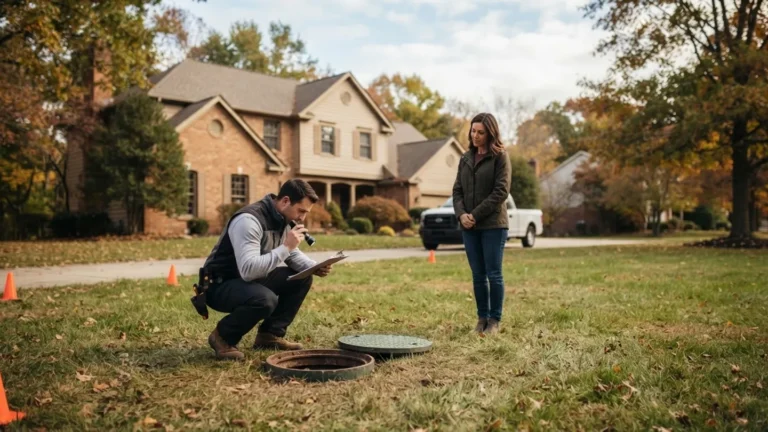
Start with maintenance, because records tell you how the system has been used. Ask for pump receipts from the most recent available years, permit copies, any repair invoices and a diagram of the tank and absorption area if the seller has one. If no paper exists, ask where the records are: county health office, local sewer district, septic installer or pump service.
Ask what the system is: a conventional gravity tank, a mound, an aerobic treatment unit or another permitted alternative. The type matters because some parts have service intervals, alarms or power requirements that a city sewer home does not have. A conventional gravity system is the simplest in most places.
Ask when it was last pumped and what came out of the tank. A pump receipt usually lists sludge depth, scum layer thickness and whether the tank had an outlet filter. Sludge is the heavier solid material that settles at the bottom. Scum is the lighter floating layer, often fats and greases. A large sludge volume, a blocked filter or a broken baffle can be a clue that the field is working harder than it should.
Ask about the baffle, the wall or tee at the tank outlet that helps keep solids in the tank. If it is missing or cracked, solids can move into the drain field too early. Ask whether the system has an effluent filter, a screen in the outlet that catches remaining particles. Some filters need regular cleaning; some systems do not have one.
Ask about symptoms, not just paperwork. Slow drains, gurgling pipes, an odor near the absorption area, standing water over the lines or grass that stays greener than the lawn can point to a problem. If the seller says these happen only after heavy rain, that may still matter because saturated soil limits absorption.
Ask how the house has been used. A full time family home, a rental, a second home, a guest cottage or a house with many fixtures can produce very different wastewater volumes. A system sized for a three bedroom home can be asked to handle a fifth bedroom, a new bathroom or a garbage disposal without the field ever being permitted or designed for it.
Ask what would be repaired by the seller before closing if the report finds a tank condition or a minor filter issue. Some fixes are quick; drain field work is rarely quick. That distinction helps you keep the negotiation proportionate.
Gather seller records
Ask for pump receipts, permits, repair invoices and any installer map. If none exist, ask whether the county or state environmental agency has records.
Check local rules
Find out who regulates septic at sale and whether an inspection, certificate or disclosure is required. The county health office or state environmental agency is a good place to ask.
Plan inspection access
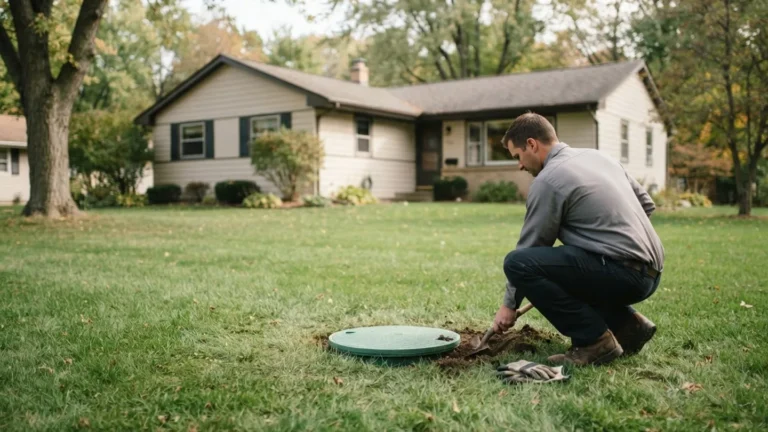
If the tank is not pumped, the inspector may still measure contents. If access is difficult, ask about pumping or risers. Deep lid depth and buried covers can change inspection time.
Get a clear report
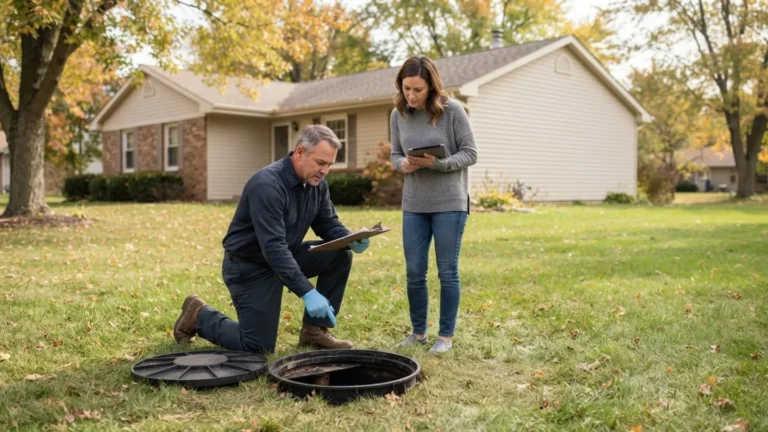
Choose an inspector who can explain the report in writing, including tank condition, baffles, outlet filter if present, distribution box and visible field signs.
Turn findings into terms
Use known repairs to request a price credit, a repair before closing or an escrow holdback for an unclear field condition. Ask for local quotes while the inspection contingency is open.
Compare the deal
Weigh the septic risk against the house price, the yard, the permit path and your tolerance for future maintenance. A problem you can price is usually manageable. A problem you cannot price deserves caution.

| System type | What the buyer should know | Maintenance signal | Deal risk |
|---|---|---|---|
| Conventional gravity tank | A tank separates solids; liquid effluent goes by gravity to lines in the soil. | Pumping schedule depends on household size and tank volume; service is usually low tech. | Low to moderate if records show care; higher if the field is old, compacted or undersized. |
| Mound system | Built where soil, bedrock or water table limits the field; a sand mound holds treatment lines and a pump may lift flow. | May need regular pump or valve checks; the mound needs soil protection. | Moderate; repair may involve pump, valve, sand bed or field access. |
| Aerobic system | Adds air to help treat wastewater to a higher quality, often with a blower, alarms and disinfection before soil. | Often requires routine service, parts replacement and alarm attention. | Moderate to high; mechanical parts mean a higher service burden. |
| Unknown or old unpermitted system | A permit, installer map or inspector view may be limited; age, modifications and field damage may not be documented. | Ask county records and a professional assessment; do not assume past use means present condition. | High; unknowns can become price, escrow or deal breakers. |
What to look for in the inspection report
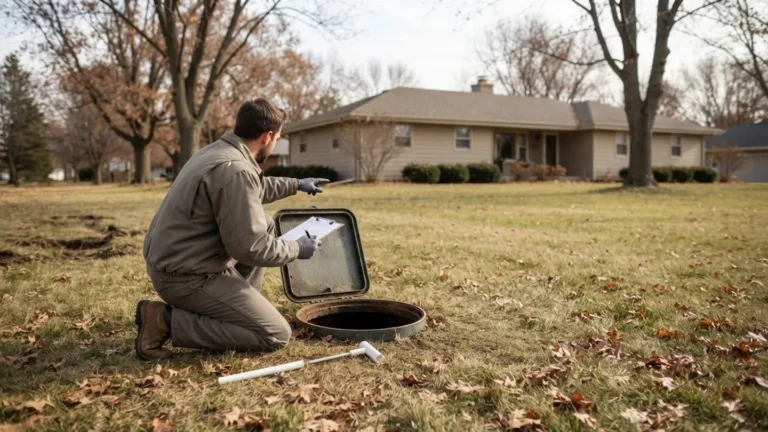
A good report explains what was opened, measured and observed. It should note tank age if visible, access covers, interior condition, inlet and outlet baffles, an effluent filter if present, scum depth, sludge depth and any signs of leakage or structural damage.
Look for the distribution box. It spreads flow to several lines in the absorption field. If it is cracked, tipped or has blocked lines, one line may get too much flow while another gets too little. That can shorten field life even if the tank looks normal.
The absorption field is the harder part to judge. A visual check can show standing water, saturated ground, unusually lush grass, odor or backup signs. A soil probe or dye test may be used, but many inspections are limited by access, weather and what the county requires.
The biomat, a natural layer under and around drain lines, is part of the system. Too much organic loading from garbage disposals, additives, grease or extra water use can make it thicker and slower. That is one reason the report may ask how the house is used, not only how the tank looks.
Ask what was not tested. If the drain field is inaccessible, a negative finding may not be possible. Ask whether the inspector saw the tank contents, whether water moved through the field, whether any part was under power or alarm and whether the report includes photos or dates.
Ask if local rules require a certificate, a repair period, a well distance or a soil permit condition. Some jurisdictions regulate septic at sale, some do not. Do not rely only on the seller word.
Keep the report with the closing file. If you later sell or need a permit renewal, those dates and observations save time.
Pros
- A seller credit lets you control the repair and choose a local contractor after closing.
- An escrow holdback keeps money available if the drain field proves worse than the tank looks.
- Repair before closing is simplest when the issue is obvious, such as a missing baffle or a broken access cover.
Cons
- A credit can make the buyer responsible for unknown field conditions after the seller moves out.
- Escrow terms can be complex and may need lender approval, so ask early.
- Seller repairs can stall the closing if permits, access or weather delay the work.
How to decide whether septic should change the offer
Do not let the word septic scare you, but do let it inform your offer. A system that is small, old, damaged or unpermitted can cost time, money and local approvals to fix. A system that is documented, accessible and used carefully may be no more than a routine maintenance responsibility.
Start by separating a known defect from an unknown risk. A cracked tank wall, missing baffle, broken access cover or failed pump on an aerobic unit is a known defect. A wet spot only after heavy rain, a missing installer map or an inaccessible field is an unknown risk. Different problems call for different money and different closing terms.
For a known defect, get a local quote for repair or replacement while the inspection contingency is still open. Ask whether the county requires a permit for the repair, how long the work may take and whether the yard can be restored. A drain field repair is often different from a tank repair because excavation, soil conditions and access are involved.
For an unknown risk, ask the lender and your agent about an escrow holdback, a repair credit or an extended contingency. The goal is not to avoid a house with septic. The goal is to avoid buying a problem you cannot price.
Think about future reserve. A septic system has a service life, but the life depends on use, soil, maintenance and water level. You should ask for a recommended pumping interval, a written service plan for aerobic or mound units and a budget line for future repair. This belongs in the same planning conversation as a roof, a furnace and a water heater.
Tank size should match permitted use. A three bedroom house may be associated with a tank around 1,000 gallons, but the permit record, number of fixtures, household size and daily water use matter more than the label on the tank. If the house has extra bathrooms, an apartment unit, a garbage disposal or heavy laundry use, ask how that load was approved.
If a failed field would require replacement, ask whether a perc test, or percolation test, has been done. It measures how quickly water soaks into soil. If the site is unsuitable, the system type may have to change, and that affects both price and timeline.
In the end, septic should change the offer only when the facts are unknown, the repair is major, the permit path is unclear or the cost of certainty is higher than your tolerance for risk. Otherwise, it may be simply a home maintenance calendar with dirt and plumbing parts.

Frequently asked questions
Is buying a house with a septic system a bad idea?
Not by itself. Homes on septic are common in many parts of the United States, especially outside city sewer service. The key is knowing which type you have, who services it and what the local rules require.
What if the seller says the tank was pumped before listing?
Ask for the receipt. It should show the date, tank size if known, whether solids were removed and whether an outlet filter was cleaned. A recent pump is helpful, but it is not proof that the drain field is healthy.
Can I negotiate repairs after the inspection?
Yes, if your offer includes an inspection contingency. Use the report to ask for specific repairs, a seller credit, an escrow holdback or a price adjustment. For uncertain field conditions, a written quote from a local septic contractor is better than a guess.
What does a marginal septic report mean?
It usually means the system is not clean, not failed and not fully explained. Ask exactly what is marginal: the tank, the pump, the distribution box, the field, the access or the records. Some marginal reports can be fixed, while others need more testing.
Should I worry about a smell in the yard?
Smell alone can come from recent pumping, wind, a dry drain trap or a venting issue. Standing water, slow drains, backup or a soggy area over the field is more concerning. Mention the pattern to the inspector rather than assuming it is normal.
What can I flush after I move in?
Treat the system like plumbing, not a trash can. Flush human waste and toilet paper. Do not flush wipes, even if labeled flushable. Keep grease, chemicals, paint thinners and large amounts of harsh cleaner out of the drain. On aerobic systems, follow the service manual. Most additives do not replace pumping.