Yeast in a Septic Tank: Does It Help?
Your neighbor swears that a packet of baker's yeast, flushed once a month, keeps the tank from filling up. It is a friendly tip, but it answers the wrong question. A working septic tank is already full of the microbes that break down household waste.
Yeast in a septic system can froth under some conditions, and it does not replace pumping. If your drains are slow, you notice a sewage smell, or the ground over the drain field is wet, skip the yeast and find the real cause.
The useful question is not, “Will this packet help?” It is, “What is the tank, the pipe, and the soil trying to do?”
At a glance
- Covers whether baker's yeast helps a septic tank, what it can do to tank contents, and the maintenance habits that matter more.
- Applies to conventional septic tanks with gravity drain fields, aerobic tanks with blowers or treatment units, and mound systems with pump chambers or dosing devices.
- Typical cost range: yeast itself is low cost. The meaningful cost is licensed pumping, inspection, and any repair, which varies by region, tank size, and access.
- Urgency: low if you are only considering yeast as routine care. High if you already have slow drains, sewage odor, wet ground, foam at the tank covers, or a backup. Stop using fixtures and call a licensed pumper, the company that empties the tank.
- Homeowner or pro job: homeowner can stop adding yeast, limit water use, and keep grease and wipes out of drains. A pro is the right person for tank cleaning, baffle inspection, drain field evaluation, and aerobic equipment service.
What your tank already does without yeast
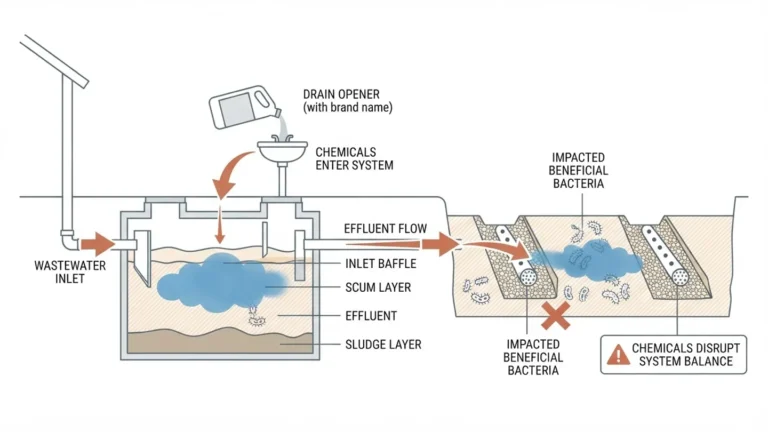
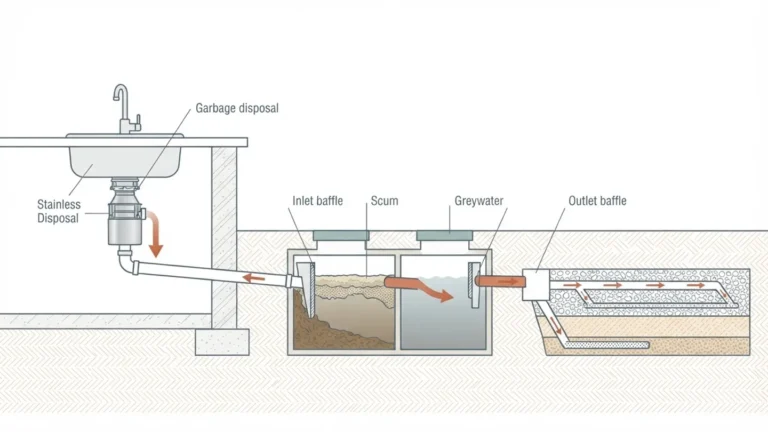
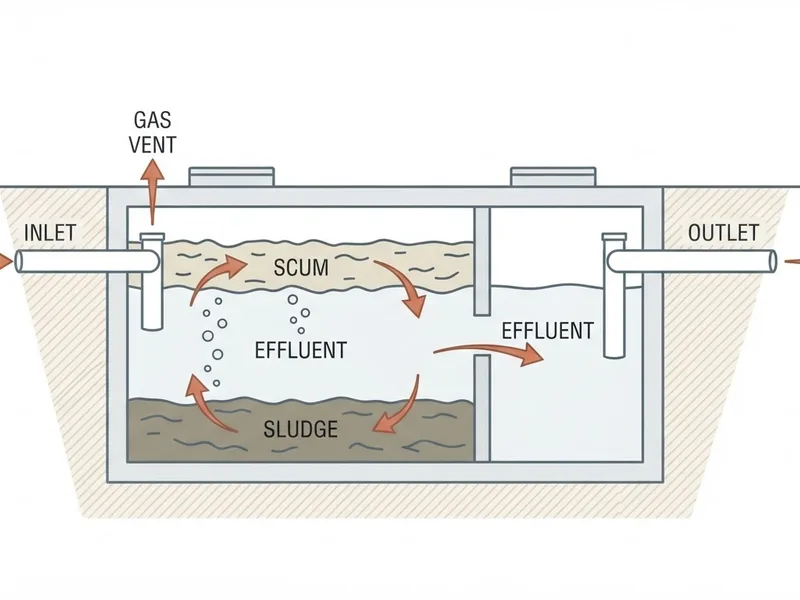
A septic tank is a settling box, not a mixer. Wastewater enters from the house. Heavy solids sink and form sludge, the gray, wet mass of partly digested waste. Grease and light material rise into a scum layer, the oily film on top of the liquid. Between them is clearer effluent, the liquid that leaves the tank.
A baffle at the outlet helps keep scum from flowing into the pipe that feeds the drain field. An effluent filter, if fitted at the outlet, slows solids before they leave. The liquid then goes to a distribution box, a fitting that splits the flow among the trench lines. Under the drain field, the soil and roots grow a biomat, a natural layer that slows and treats effluent before it reaches groundwater.
Most digestion happens with bacteria that live in the tank, in the household waste, and along the drain field. The tank usually runs with little oxygen, a state called anaerobic. Bacteria do not need a monthly yeast packet to start. They arrive every time water runs from a sink, shower, or washer.
A drain field depends on soil that drains. For a new home, a perc test, a soil test that measures how fast water soaks into the ground, helps decide field size and layout.
Problems start when too much solid moves out of the tank, the tank is not pumped in time, the house puts in more water than the system can accept, or equipment fails. Yeast does not fix those mechanical and design limits.
| Claim about yeast | What the tank actually needs | Better action |
|---|---|---|
| Monthly yeast adds bacteria | Household waste already carries bacteria and organic matter | Pump when sludge and scum reduce the space for separation. |
| Yeast digests sludge faster | Tank bacteria break down solids slowly; the tank needs quiet settling time | Spread out laundry, fix leaks, and avoid dumping grease and wet wipes. |
| Yeast clears scum | Scum needs to stay inside the tank until pumping | Ask the pumper to check the outlet baffle and effluent filter for blockage. |
| Yeast helps odors | Odor may come from a blocked vent, a dry trap, or effluent surfacing | Have a septic pro inspect the vent stack and drain field before buying a fixer. |
| Yeast prevents backups | A backup means the tank, baffle, line, or drain field is not receiving flow | Stop using water in the house and call a licensed pumper. |
Why foam and smell are not a win
Some yeast can ferment sugar and release gas. If the tank has recently received extra food waste, a packet of yeast may not clean anything but may agitate the scum layer. The foam can travel toward the outlet, where it may hit the baffle or filter. In a small tank, a lot of froth can reduce the quiet space that separates solids from liquid.
A smelly tank is not automatically better or worse. It may mean hydrogen sulfide, the gas from bacteria working with little oxygen. If the smell shows up inside the house, the vent stack or plumbing traps are likely the place to look. If the smell is outside over the drain field, the field may be too wet or failing.
That is why a yeast packet is a poor troubleshooting tool. It can make the tank appear active while leaving the plumbing, baffle, filter, or soil problem untouched.
Habits that keep a septic tank healthy
Know where the tank covers are and keep them accessible
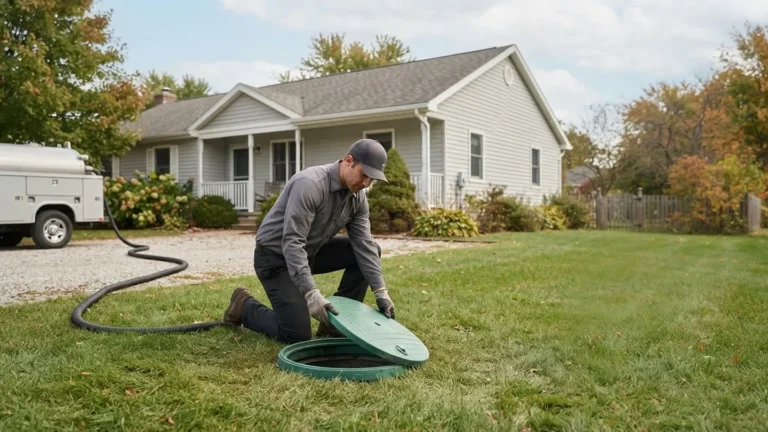
Locate both inlet and outlet covers if possible. Keep heavy parking, sheds, and garden soil away from the tank area and the drain field.
Watch water use, not only solids
Spread laundry over the week, repair running toilets, and keep roof drainage and sump water away from the drain field.
Limit what enters the tank
Screen laundry lint, avoid cooking grease, do not flush wipes, cotton swabs, or paper towels, and do not pour paint solvents or large volumes of harsh cleaners into drains.
Pump based on evidence, not calendar pressure
Ask the pumper to note sludge depth and scum depth, and check the outlet baffle and filter if present. Keep a simple maintenance record.
Call a pro when symptoms move
If you see soggy ground, foam, backup, or alarm lights on an aerobic unit, skip additives and schedule an inspection.
Common questions about yeast in a septic system
Will baker's yeast help a slow drain?
No. A slow drain can be a blockage, a full tank, or a drain field problem. Use a plumber for a house line clog, a licensed pumper for the tank, and do not add yeast while you wait.
Can yeast damage a drain field?
It may not damage the field directly, but foam and disturbed scum can carry solids toward the outlet, baffle, or filter. A field already near its capacity is more vulnerable.
What about yogurt, enzymes, or natural boosters?
The tank gets bacteria from household waste. Many products are not a substitute for pumping. Some may add fat, sugar, or chemicals that do not help. Check before using.
How do I know when to pump?
The interval depends on tank size, household water use, number of people, and how much solid enters the tank. A pumper can measure sludge and scum and advise based on local guidance.
Does yeast help an aerobic septic system?
Usually no. Aerobic systems rely on air supply, pumps, valves, treatment media, and disinfection. Follow the manufacturer schedule and call if the blower or alarms act up.
If I already flushed yeast, should I panic?
No. One package will not usually destroy a system. Stop adding more, watch drains, and book an inspection if symptoms appear.