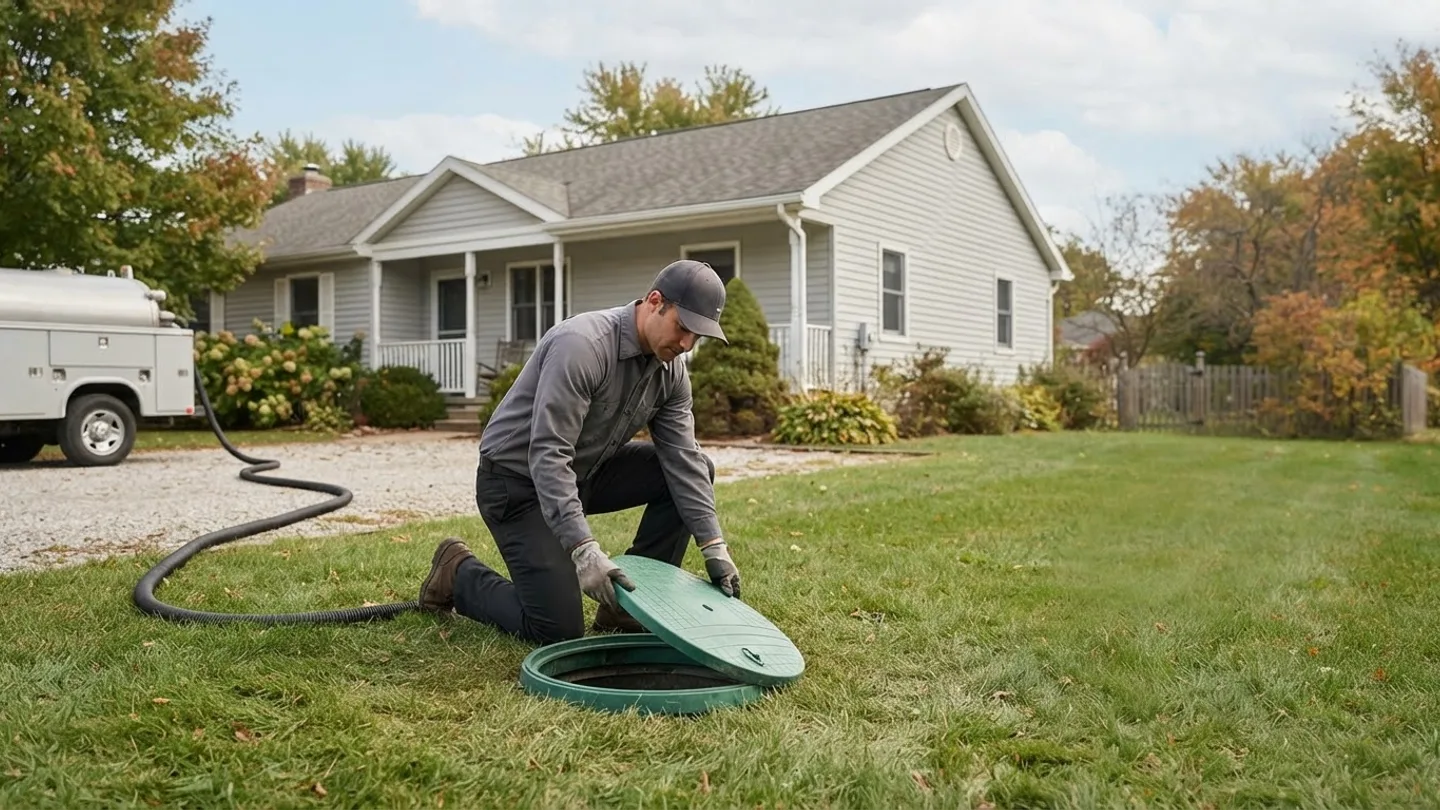
You just moved from city sewer. The first pump truck came and went, and now the next date is blank. How often to pump septic tank is a practical question, because the tank has to do its work before wastewater reaches the drain field.
The EPA guideline of every 3 to 5 years is the right starting point for most homes. Tank size, household size, garbage disposals, small tanks and aerobic treatment units then fine tune the date.
In this guide
At a glance
- Covers: EPA guidance, a tank and household table, disposal effects, small tank effects, ATU and mound systems.
- Systems: conventional septic systems, aerobic treatment units (ATUs), mound systems and other advanced systems.
- Cost note: pump prices vary by state, tank size, access distance and disposal fees, so a local quote is better than a national average.
- Urgency: routine. If you see a backup, yard odor, soggy grass over the drain field, or slow drains that do not clear, move up the schedule and call.
- Homeowner job: keep records, note lid locations, watch the yard. Pro job: pumping, measuring sludge and scum, checking baffles and effluent filters, and ATU servicing.
- Advice: additives are not a substitute for pumping. Most cheap additives are a waste of money.
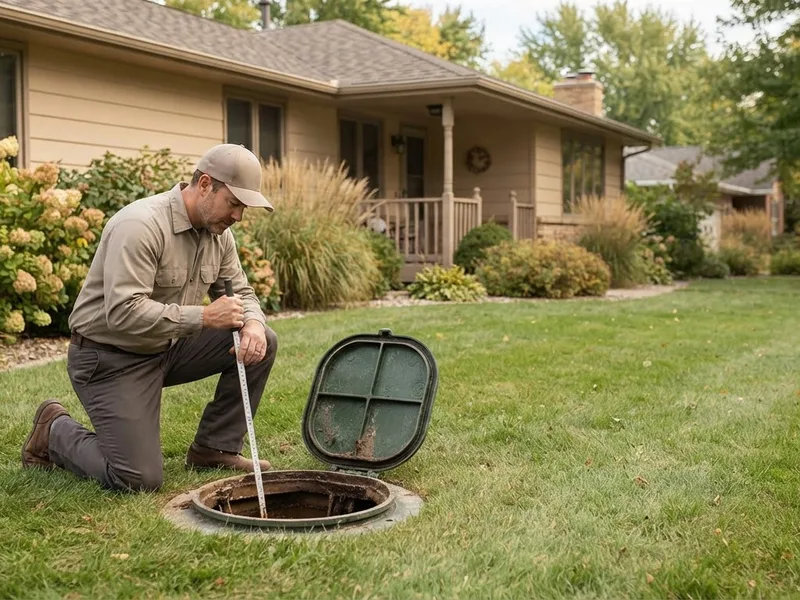
The EPA guideline and how often to pump septic tank
The U.S. Environmental Protection Agency (EPA) gives a simple planning range: inspect a septic tank every 3 years and pump it every 3 to 5 years. The exact range depends on tank volume, number of people, how much water goes down the drain, and the amount of solids and grease entering the tank.
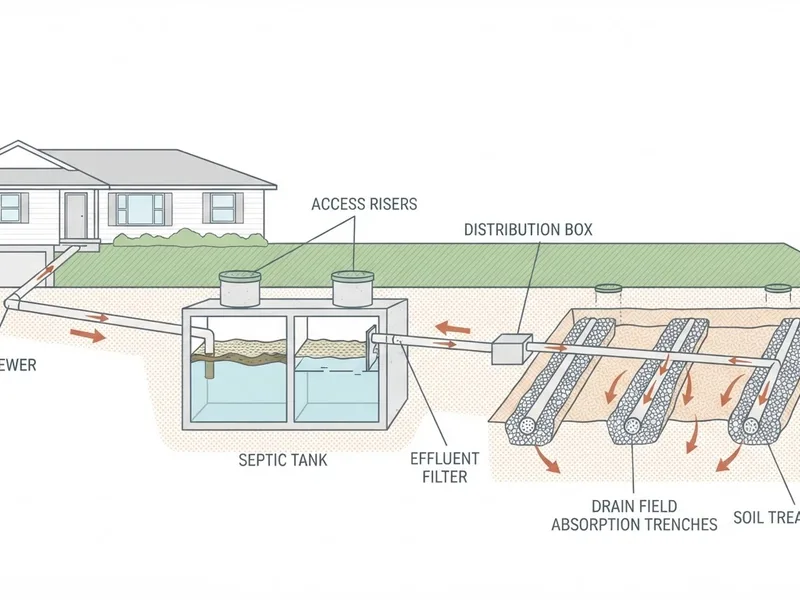
A tank is not a filter. It lets heavy solids sink into a sludge layer, which is settled material at the bottom. Lighter fats and floating debris form a scum layer at the top. The middle liquid, called effluent, flows out through a baffle, a tee or wall at the tank outlet, and through an effluent filter, a screen that catches small solids before they move on.
If sludge or scum gets too high, solids can escape into the drain field. That is where cost moves from pumping to repair. A pump out done at the right time is scheduled maintenance. A drain field repair done because the tank was ignored is a major job.
| Tank size | Household | Start interval | Lean shorter or inspect yearly if |
|---|---|---|---|
| 1,000 gallons | 4 or more people | 3 to 5 years | Lean toward 3 years. Inspect yearly if a disposal, heavy laundry, guest use, small tank age or ATU is involved. |
| 1,000 gallons | 2 to 3 people | 3 to 5 years | Lean toward 4 to 5 years. Inspect yearly if a disposal, weekend use, unknown tank age, or an ATU is involved. |
| 1,500 gallons | 4 or more people | 3 to 5 years | Lean toward 3 to 4 years. Keep an annual check if a disposal or advanced system is present. |
| 1,500 gallons | 2 to 3 people | 3 to 5 years | Lean toward 4 to 5 years. A larger tank gives you room, but heavy water use can still fill it. |
| 2,000 gallons or more | average use | 3 to 5 years | Start at 5 years if use is light. Still inspect when you can. |
| Very small or old tank | any household | 3 to 5 years | Start at 3 years and inspect yearly. Small tanks store less sludge, so the schedule can tighten. |
| ATU, mound or advanced system | any household | follow the manufacturer plan | Usually inspect yearly. Pumping may follow the plan, not only the tank size. |
Why disposals, small tanks and ATUs shorten the interval
A garbage disposal adds solids, fats and grease to the wastewater. Food scraps are one thing; cooking oil, coffee grounds and large amounts of food are another. A disposal does not automatically force pumping every 2 years, but it often pulls a family toward the shorter side of the EPA range.
Trash scraps in the compost bin, grease in the trash, and steady water use are simpler. If you still want to grind small amounts of food, plan for closer inspections and do not add additives to make up for it.
A small tank gives you less room. If the tank is older, unknown, or below the size your inspector expects, start at 3 years and check yearly. The tank can still work well, but there is less margin between a clean inspection and solids moving out.
An ATU, short for aerobic treatment unit, is a system with a blower or pump that adds air to help treat waste. Some ATUs also dose, disinfect, or send solids back to the first chamber. Because there are moving parts and a control system, ATUs need more scheduled attention than a simple tank. Annual inspection and service are common. Pumping still matters; a blower running does not mean solids are gone.
A mound system is a type of drain field raised above the native soil, often with sand and a dosing tank. It can be sensitive to water volume and solids. If the design or maintenance plan says check the pump, dosing and sludge annually, follow that schedule.
Write down what you know
Tank size in gallons, whether it is one chamber or two, lid locations, lid depths in inches if known, distance in feet from the road to the tank, and the last pump date. If you cannot find lid locations, ask the contractor to locate them or request the as built drawing from the county or installer.
Count people and water use
The number of people, guest weekends, laundry loads, disposal use, soaking tubs, and any sump or water softener discharge going into the septic system.
Name the system type
Conventional tank and drain field, aerobic treatment unit, mound system, pressure dosing or another advanced setup. Advanced systems may have a manufacturer maintenance schedule that comes first.
Choose the starting interval
Use the table above. For a conventional tank, start with 3 to 5 years. For a small tank or heavy disposal use, start nearer 3. For an ATU or mound system, inspect yearly and pump per the plan.
Set the next date and keep the receipt
Put the next pump or inspection date in your calendar. Keep the date, contractor name, gallons pumped if recorded, and any notes about high sludge or a damaged baffle. If you sell the house, this paperwork helps the buyer and the inspector.
Why pumping early wastes money and when to go sooner
Pumping a healthy tank every 2 years when the system could wait another year is not harming the tank. It is spending money for very little gain. The tank is built to hold solids between pumps, not to be scrubbed clean like a kitchen sink.
The real risk is the other end. If sludge gets too high, solids can leave through the outlet baffle or effluent filter. They can plug a distribution box, the fitting that splits wastewater into drain field lines, or damage the biomat, the natural layer that forms at the soil interface and filters wastewater. When that happens, the repair is no longer just a pump truck.
Go sooner if the house gives signs: slow drains that clear after a shower but return, a sewer-like smell near the tank or drain field, wet grass that stays soggy for days, standing water over the drain field lines, or wastewater backing into a low basement drain or shower.
If a low fixture is backing up, stop using water into that line, keep people away from the tank opening, and call a pumper or inspector before the next weekend. If the only sign is a slight odor after pumping, give the yard a day or two to dry and check the tank area before assuming a failed drain field.
For cost sanity, ask the contractor to tell you how many inches of sludge and scum they found, what lid access they used, whether the baffle or effluent filter looked sound, and what pump volume they removed. If a quote pushes drain field replacement without checking tank levels and water use, get a second opinion.
Common questions about septic pumping intervals
Does the EPA 3 to 5 year rule fit every home?
No. It fits many conventional homes, but ATUs, mound systems, very small tanks, homes with heavy water use, and homes with garbage disposals may need closer checks. Use 3 to 5 years as a starting point, not a promise.
Is it bad to pump early?
No. An early pump does not hurt the tank or drain field. It is mainly money. Do not let fear of cost make you ignore a tank that is full.
Can I skip pumping if the tank has an effluent filter?
No. A filter catches some solids but does not remove sludge and scum. You still need periodic pumping and filter cleaning.
Do yeast, enzymes, bacteria packets or septic additives replace pumping?
No. Most additives are a waste of money. They may change the mix in the tank, but they do not remove sludge. Some can harm the biomat or drain field.
How do I know the tank is full without opening the lid?
You usually cannot tell by looking at the yard alone. A contractor can measure sludge and scum. Visual clues such as odor, soggy ground, backup or very slow drains are warning signs, not exact gauges.
What should I record after each pump?
Record the date, gallons pumped, tank access, sludge and scum readings if given, any damaged baffles or filters, and the contractor contact. This helps you plan the next pump and answer questions when selling.
Leave a Reply