Can You Have a Garbage Disposal With a Septic Tank?
You just moved into a house with a septic tank, and the kitchen sink has a disposal switch that no one explained. The first time you push it, a question follows: can you have a garbage disposal with a septic tank, or are you asking for a slow drain in a few months?
Yes, most septic systems can live with one, but there are tradeoffs. A disposal sends extra food solids into a tank that already has to separate liquids, settled solids and floating grease. That can thicken the sludge layer, speed the need for pumping, and put more tiny particles near the drain field.
If you keep the load small, avoid bad scraps, and watch the tank, it can work. If you want the least maintenance, a compost pail and a trash can are usually safer.
At a glance
- A garbage disposal can work with a septic system, but it is not a free pass to treat the sink like a sewer.
- A 1,000-gallon tank serving a typical three-bedroom home has fixed space for solids and liquids.
- Food solids that settle are sludge. Grease and light bits that float are scum.
- Grease, coffee grounds, celery, corn husks, artichoke leaves and bones are poor choices.
- An effluent filter protects the drain field but needs more cleaning.
- A bigger tank may delay problems, not remove them.
- Composting scraps is often the lower-risk habit.
How a disposal changes the tank
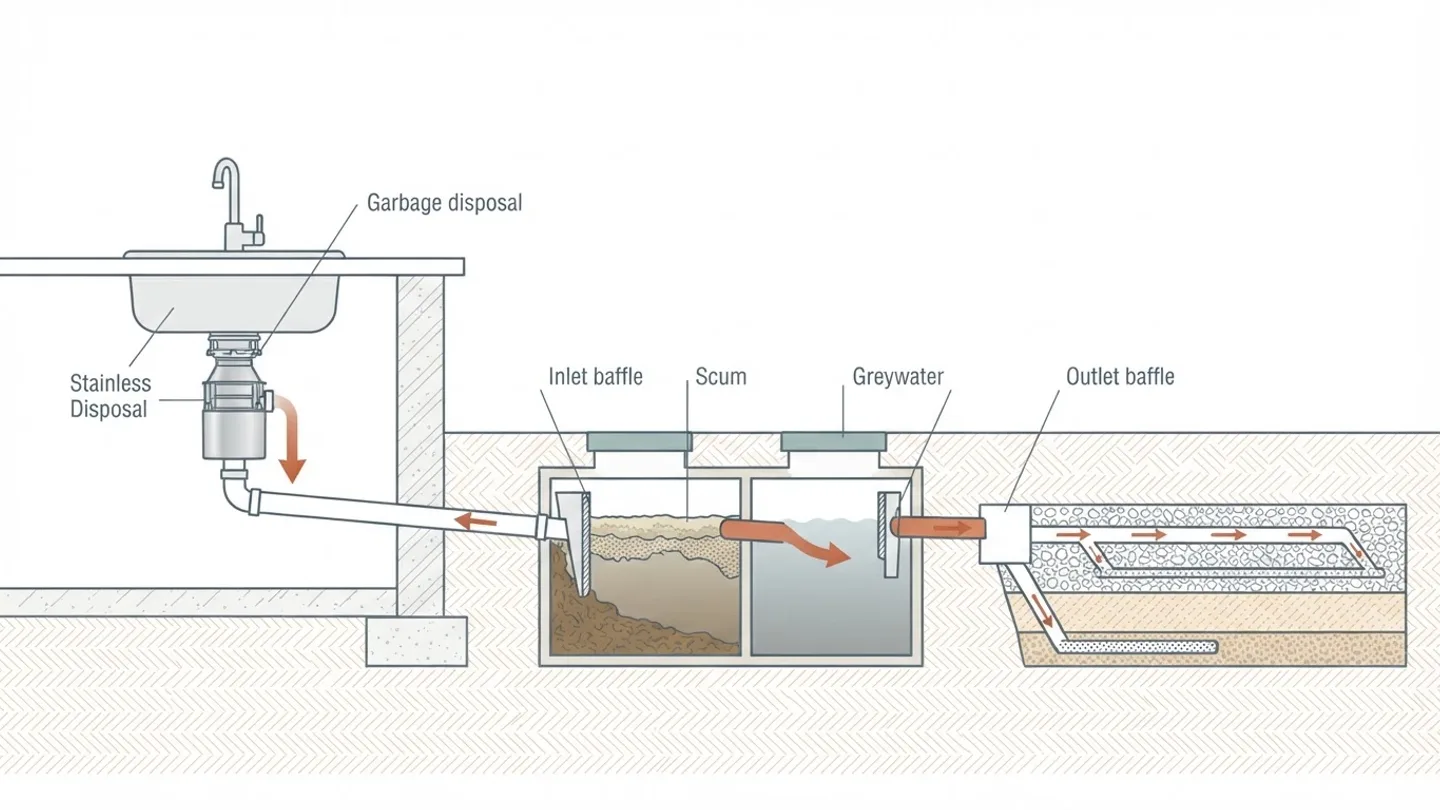
A disposal grinds scraps into tiny pieces, but it does not erase them. Those pieces go into the tank, where the first job is separation. Food solids that settle to the bottom are sludge, a soft layer of organic material. Grease and lighter solids float as scum, a thinner layer on top.
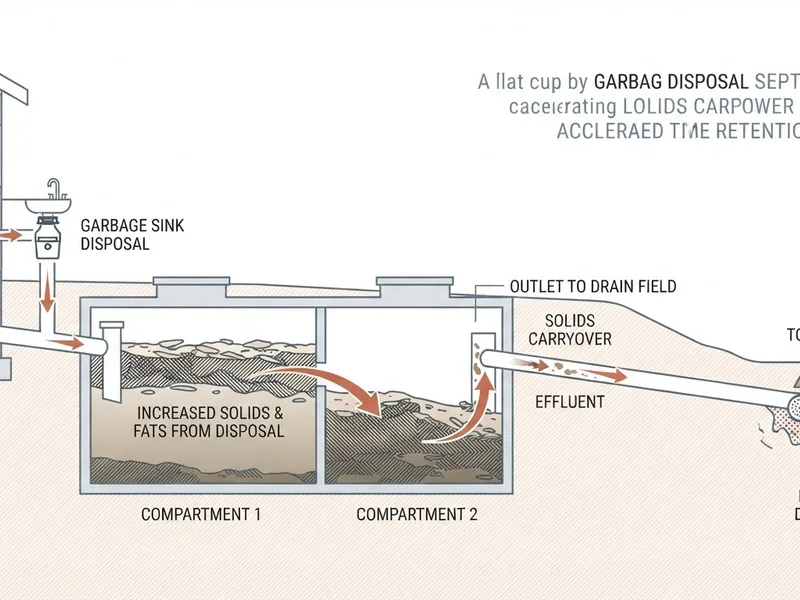
When you run a disposal often, more organic material enters the first compartment. That gives tank bacteria more work, but bacteria cannot digest everything fast enough. Coffee grounds, eggshell dust, fibrous plant matter and fats add bulk that does not simply vanish.
Liquid that leaves the tank is called effluent. A baffle, a wall or pipe at the inlet and outlet, helps keep the floating scum layer away from the outlet. If too many tiny solids leave the tank, they can travel to the distribution box, the part that splits liquid across the drain field, then into the soil.
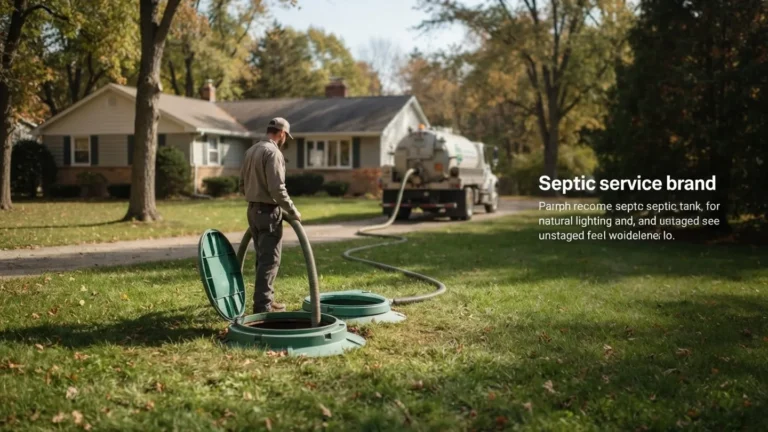
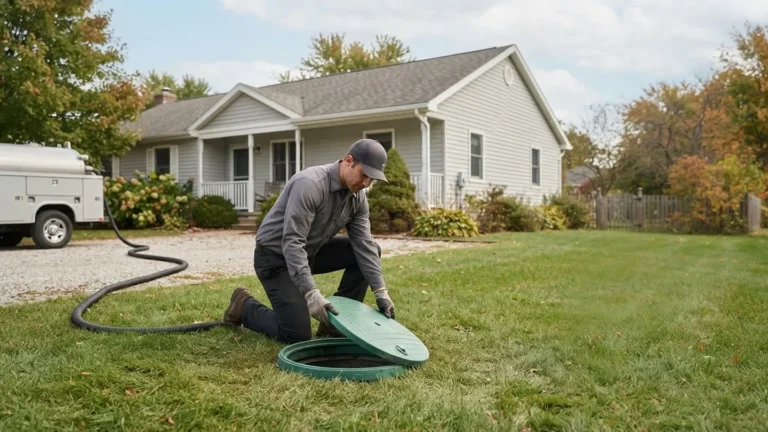
A septic service does not pump out liquid. It removes accumulated solids. More food solids means the solids space shrinks faster. So the real question is not only can you have a garbage disposal with a septic tank. It is whether your tank size, household water use and soil condition can handle the extra load.
For a new owner, the safe rule is to use the disposal sparingly. Treat every grinding run as a small addition that may bring the pump truck back sooner. If your service provider set a checking interval, ask for a review after a year of new habits.
| Factor | With a garbage disposal | With a compost bucket |
|---|---|---|
| Food solids | Adds more solids to the tank | Keeps scraps out of the tank |
| Water use | Uses sink water with each run | Little extra water |
| Tank maintenance | May bring pump dates forward | No added tank load |
| Odor and pests | Scraps can sit in the sink or drain | Compost pail needs a lid and regular emptying |
| Convenience | Fast cleanup from a plate | A few extra steps |
| Drain field risk | Higher with grease, fibers or big loads | Lower |
| Best for | Careful homes that can accept extra maintenance | First-time septic owners and older systems |
Foods never to grind
Never treat the disposal as a trash can for the whole kitchen. Some scraps break apart. Others clump, swell or pass through the tank as hard bits.
Grease, oils and fat should not go into a septic tank, with or without a disposal. They rise as scum and can coat pipes. Do not grind bacon drippings, butter, cooking oil, gravy or pan fat.
Coffee grounds are a common mistake. They can build a fine layer in the tank and may plug an outlet filter.
Fibrous vegetable matter is rough on a disposal and a septic tank. Celery strings, corn husks, onion skins, artichoke leaves and cabbage cores can wrap around parts or travel as chunks that resist digestion.
Eggshells, fruit pits, bones and shell fragments are hard on blades. They also add grit that does not disappear in a drain field.
Bread, rice and pasta can turn pasty in water. Large starchy loads can take up space and add to sludge.
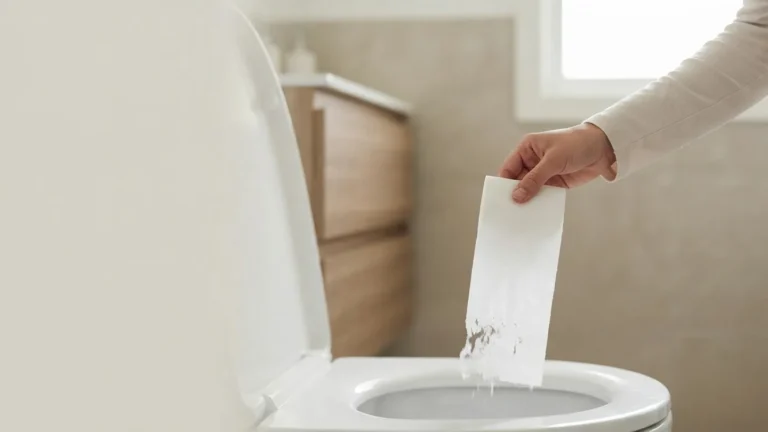
Non-food items are a hard no. Do not grind paper towels, dishcloths, cotton swabs, dental floss, bandages or wipes. Wipes can cause trouble in septic systems, so leave them out.
Small amounts of soft cooked vegetables may be okay. Still, a lid on a compost pail and a trash can keep more waste out of the tank.
Pros
- Quick plate cleanup with less bagged trash
- Small amounts of soft cooked food do not need to sit near the kitchen
- Can be convenient for a household that already has a healthy system
- Works if you run water and keep loads light
- Does not require a new install if your tank and field are in good shape
Cons
- Adds organic solids that take up fixed tank space
- Can shorten the time between pumping visits
- Increases cleaning needs for an effluent filter
- Risk of slow drains if grease or fibers enter the system
- A bigger tank may only delay symptoms
- Poor choice for rentals or houses with a weak field
When a bigger tank or filter matters
If you want to use a disposal with less risk, two hardware choices may come up: tank size and an effluent filter.
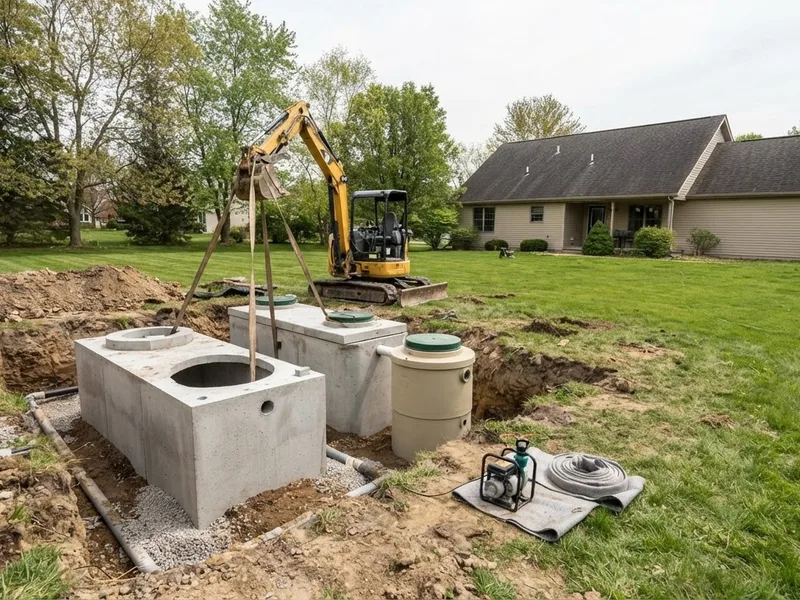
A bigger tank does not make food disappear. It gives more retention time and more space between the bottom sludge and the outlet. That can help a small household or a system with short pipe runs, but it does not create unlimited capacity.
Tank size rules vary by state and county. Some health offices set minimum tank sizes based on number of bedrooms or daily water use. If you plan to add a disposal during a renovation, ask the local health office or your installer about the current tank. Do not assume it is allowed just because the previous owner had one.
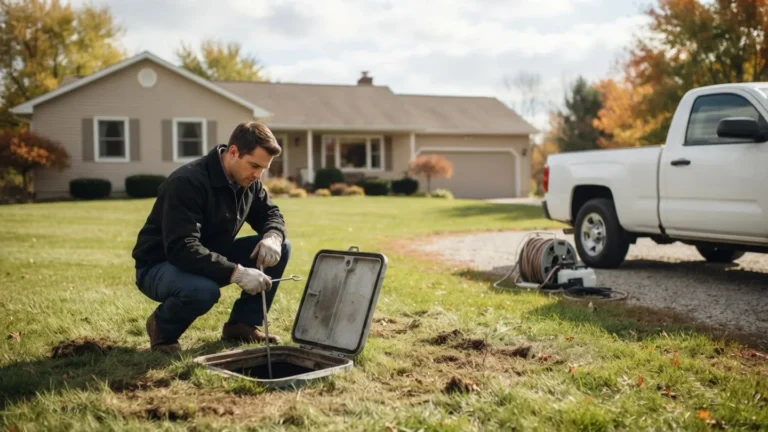
An effluent filter sits at the tank outlet and catches particles before they enter the distribution box. A filter is a good defense for the drain field, but it increases maintenance. Expect to inspect and clean it more often, especially if you use the disposal.
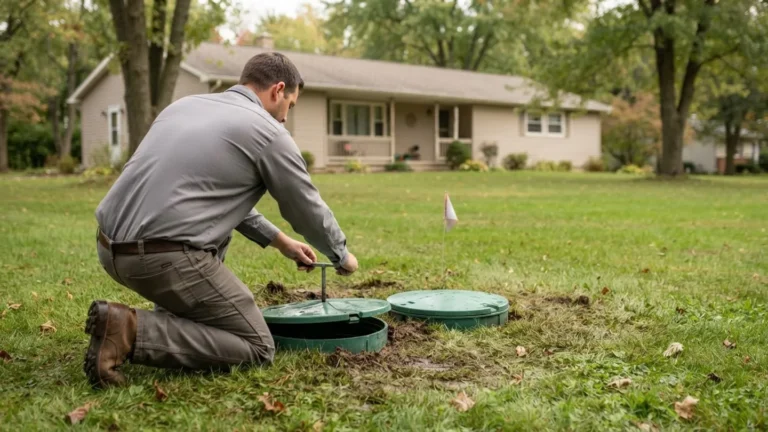
A filter is not a substitute for pumping. It is a screen at the end of the tank. If you skip cleaning, it can back liquid up toward the house and show as slow drains or a smell near the tank.
Use an effluent filter if your service provider recommends it, if your drain field has failed before, or if your soil is slow to accept water. If you do not want extra tank visits, keep disposal use light or skip it.
Frequently asked questions
Can a garbage disposal damage a septic system right away?
A healthy tank usually does not fail from one good use. Problems show over time if you add too many solids, too much grease or too much fiber. Slow sinks, gurgling pipes or wet grass over the drain field are signs to stop grinding and call for a check.
Do I need a bigger septic tank?
Sometimes. If the current tank is small for the household, if daily water use is high, or if local rules require a minimum, a larger tank may make sense. A larger tank gives more space for solids, but it does not remove food solids.
Are effluent filters worth it?
They can protect the drain field by catching particles at the tank outlet. They are worth it if you are willing to clean them. If you grind often and avoid filter cleaning, the risk moves from the tank to the field.
Can I grind coffee grounds?
It is better not to. Coffee grounds can build a fine layer and may plug a filter. Compost them instead.
What foods are most likely to cause trouble?
Grease, oils, fat, coffee grounds, eggshells, bones, fruit pits, celery, corn husks, onion skins, artichoke leaves and large starchy amounts are common problems.
Does an aerobic system change the answer?
Yes. Aerobic systems have added treatment and often more sensitive parts. A disposal can increase solids and maintenance load. Follow your installer or service provider, and do not assume a standard gravity tank rule applies.
Can I keep a disposal in a rental house?
You can, but set clear rules for tenants. Do not let renters grind grease, wipes or large scraps. Check tank solids during routine maintenance, and keep a trash can nearby for bad habits.
What should a home inspection cover if the seller had a disposal?
Ask the inspector to note tank size, filter condition, sludge and scum depth, baffle condition, water use habits and signs of field overload. A disposal by itself is not an automatic fail. A saturated field or repeated backups is a real concern.