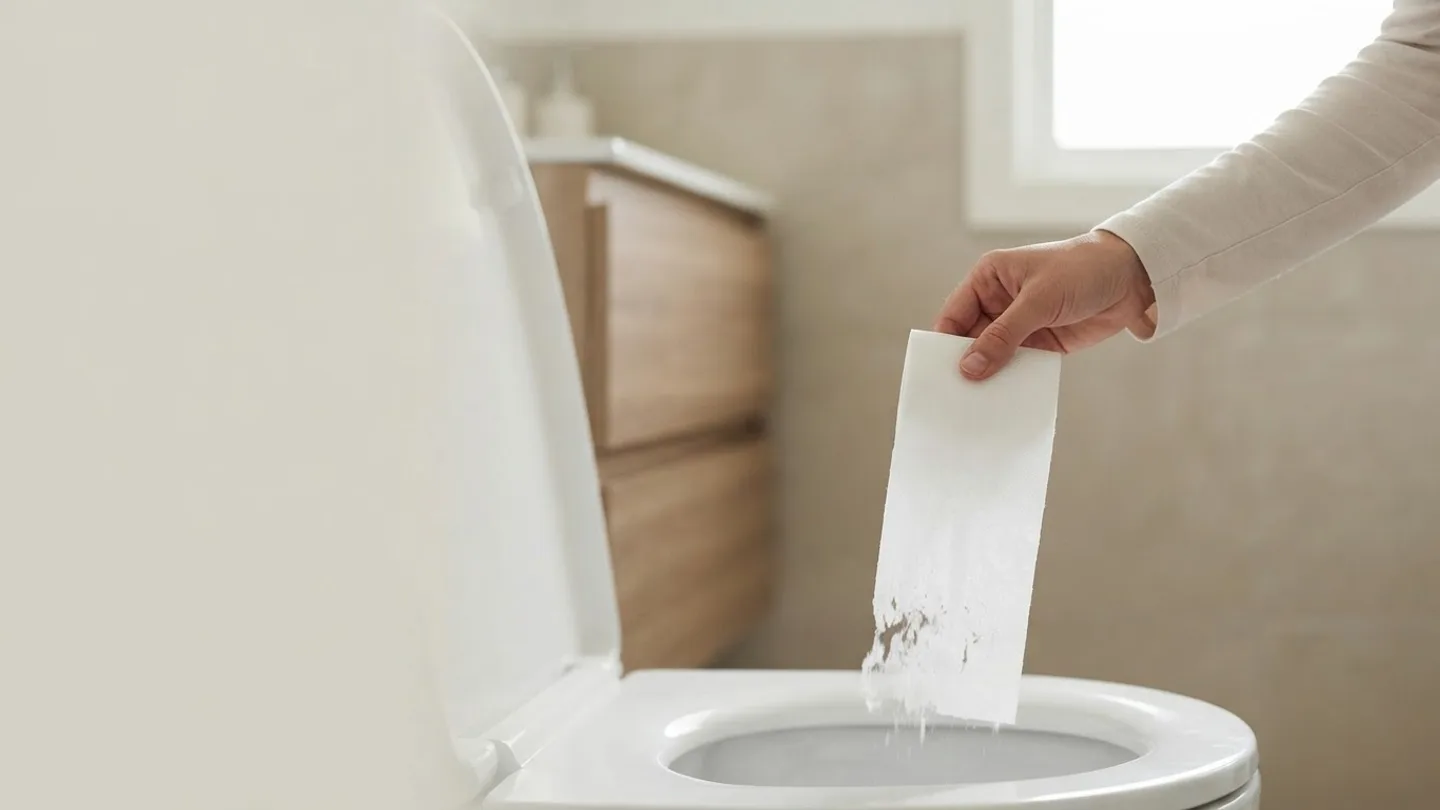
A bathroom paper backup does not start with a dramatic flood. It starts with two sheets sitting in the bowl, a slow drain, and a pumper visit. If your house runs on septic instead of city sewer, toilet paper choice matters less for the label and more for what happens inside the tank.
Most paper softens in water. The real question is whether it breaks apart before solids and fibers move toward the tank outlet, the baffle, and the drain field. A thick, plush sheet can look high end and still cause trouble if you flush too much of it at once.
This guide compares one-ply, two-ply, recycled, and bamboo paper. It also gives you a jar shake test, because the best toilet paper for septic tank systems is paper that you can flush in normal amounts and can verify in your kitchen sink.
What this guide covers
Key takeaways
- Systems covered: conventional tanks, mound systems, and most aerobic systems. Check manufacturer rules if your unit has specific paper guidance.
- What this guide covers: how fast paper breaks apart, a jar shake test, one-ply, two-ply, recycled, bamboo, and why amount matters more than brand.
- Cost range: prices vary by store and pack, but expect to pay more per sheet for plush paper than for basic paper. Price does not predict septic performance.
- Urgency: choose paper calmly now. If you have a backup, gurgling pipes, or wet soil over the drain field, stop flushing and arrange a septic check.
- Homeowner job: run the jar test, watch flush size, and avoid wipes, paper towels, and facial tissues.
- Pro job: a drain that stays slow after you fix the load, a smell in the house or yard, or standing water over the field.
- Bottom line: the best toilet paper for septic tank systems is paper that breaks into fibers quickly and that you can flush in normal amounts.
What septic tank paper has to do
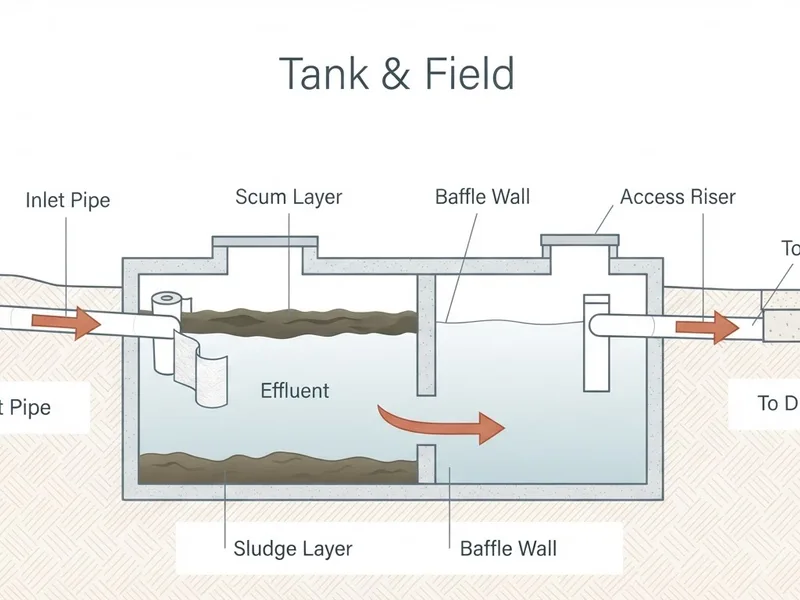
A septic tank is a holding and settling vessel. Water and small particles flow in, heavier material sinks as sludge, lighter floating material forms scum, and liquid called effluent leaves from the outlet.
The baffle at the outlet keeps much of that floating and settled material in the tank. On many modern tanks, an effluent filter, a screen at the outlet, catches small fibers before they travel farther.
Toilet paper is not the main thing a tank is designed to remove, but it is one of the few daily solids you control. The paper should loosen into small fibers before it reaches the filter, then the distribution box, which is the part that shares liquid among drain field lines.
In a mound system, where a raised drain field sits on imported sand because native soil is poor or shallow, a fiber buildup can cause trouble sooner than a homeowner might expect.
In an aerobic system, air keeps bacteria active, and some units have pumps, sensors, or filters that clog more easily. The paper does not have to be perfect, but it should not leave long, tough pieces that catch on moving parts.
So the goal is not a special toilet paper. The goal is normal paper that breaks down fast enough for your habits and your system.
| Type | How it behaves in a septic tank | Good for | Watch for |
|---|---|---|---|
| One-ply | Usually breaks apart fastest and is often easy to flush in normal amounts. | Households with older tanks, slow drains, or heavy paper use. | It can feel thin and may tear during cleanup. |
| Two-ply | Many two-ply options still break down, but some stay in long pieces. | Good balance for homes with no known paper issues. | Avoid if the sheet stays waxy or intact after the jar test. |
| Recycled | Often made without new wood fiber and can break down well, depending on how it is bound. | Budget-conscious households with septic. | Some recycled sheets are rough or linty, which may irritate plumbing gaskets. |
| Bamboo | Can be strong when dry, but may hold together longer when wet. | Households attracted to bamboo paper. | Do not assume bamboo is better for septic without a jar test. |
| Labeled septic friendly | The label is useful only when it explains how the paper breaks apart. | A starting point, not proof. | Do not treat the label as proof; price and brand may matter less than amount and behavior. |
| Plush multi-ply | Thick sheets may absorb water slowly and remain in large pieces. | Comfort if you use very little. | Watch for large flushes and sheets that stay intact in the jar. |
How to run the jar shake test
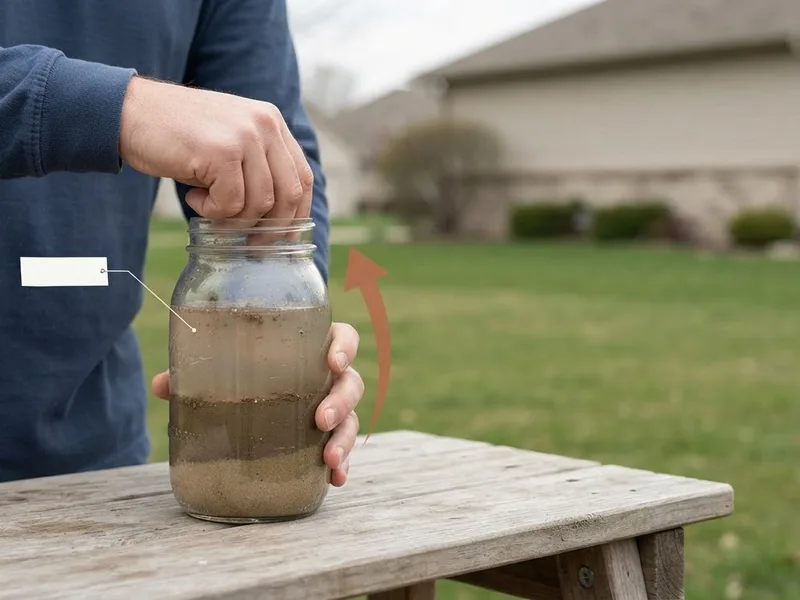
Fill a clean quart-size jar almost full with room temperature water. Add four squares of one brand, enough to fill the bottom without packing it tight.
Shake gently for 30 seconds, like the movement from a toilet flush. Let it sit for five minutes.
Look at the water and the paper. Good paper turns into a soft cloud of tiny fibers, and the water looks cloudy. Problem paper stays in big pieces, leaves a slippery lump, or keeps its sheet shape with only the edges loosening.
Do the same test for the brand you use and the brand you are considering. If you want a second check, shake the jar again after the paper has sat overnight.
What the jar test shows
The jar test is not a laboratory standard. It is a simple way to compare how paper behaves in water before it sits in your tank. Use the same amount, same water level, and same shake time for each brand you test.
The result tells you whether the paper is likely to loosen before it reaches the tank outlet and drain field. It does not replace pumping, inspection, or professional repair when a system is already failing.
- Breaks into tiny fibers within 5 minutes
- Likely okay for normal use.
- Breaks into small fibers after 20 minutes
- May be okay if you use fewer sheets.
- Still one or two large sheets after 30 minutes
- Avoid, or flush in much smaller amounts.
- Leaves a slick film that does not cloud the water
- Watch for buildup in older systems.
- Best proof before buying
- No label, price, or scent replaces the test.
Amount matters more than brand
Even fast paper can cause a clog if the load is too large. If you usually flush several sheets at once, try one or two squares at a time and keep the load loose.
If you use extra paper for a runny nose or cleanup, keep wipes, paper towels, and facial tissues out of the toilet. Even a wipe marked flushable can take longer than paper to separate.
Additives are not a fix for the wrong amount of paper. For routine toilet paper performance, many additives are a waste of money.
The same thinking applies to garbage disposals. Food solids add pressure to sludge, so paper choice matters when the tank gets more solids than a normal toilet and sink routine.
A simple habit saves more than a premium brand. Flush less paper at once, keep the tank lid or the riser, the extension that brings the lid closer to the lawn surface, accessible for inspection, and note what you see in the jar before buying a case.
A slow drain, gurgling pipe, or wet soil over the drain field is not always paper. It can be a tank nearing its pump interval, a filter fouled by solids, or a drain field that needs a professional inspection.
Frequently asked questions
Do I need special septic toilet paper?
No. You need paper that breaks into fibers quickly enough for your system and your habits. The label helps only when it matches the jar test.
Is one-ply always better?
No. Many two-ply papers pass. One-ply is often a safe starting point if drains are slow or the tank is older.
Does bamboo paper work?
Sometimes. Bamboo paper can be soft when dry and tough when wet. Run the jar test before you assume it is safe for septic.
How much paper is too much?
Enough that it clumps, slows the bowl, or leaves long pieces in the jar. Flush smaller loads and keep wipes, paper towels, and tissues out of the toilet.
Leave a Reply