Signs of Drain Field Failure and What Comes Next
At a glance: This article covers the signs of drain field failure, how an inspector confirms them, and the usual next steps, from resting the field to replacement. It applies to conventional gravity fields, pressure dosed fields, mound systems, and aerobic systems that send treated liquid to a soil absorption field. The cost range is not a single number. Minor cleaning, resting, and distribution repairs are usually lower than a field rebuild. Replacement depends on region, permits, soil depth, water table, access, tank condition, and landscaping. Urgency is high when liquid surfaces, odor is strong, or drains back up into the house. Some checks are homeowner jobs, such as reducing water use and gathering records. Diagnosis, pumping, repair, and replacement are pro jobs.
Do this now: If you see wet, dark grass, spongy ground, or liquid near the drain field, stop adding water to the house. Do not run showers, laundry, or the dishwasher. Keep cars, children, and animals off the area. If slow drains or gurgling continue after a recent pump, call a licensed septic pumper or inspector today. If a lowest fixture, such as a basement shower or floor drain, is backing up, stop using plumbing and get professional help before you spend on repairs. Do not pour additives, grease, or chemicals into the system to fix the problem. Additives do not open clogged soil.
A drain field fails when the soil no longer accepts treated liquid from the tank at a normal rate. The cause can sit at the field, the distribution box, the outlet of the tank, or the tank itself. The signs in the yard can point you toward a drain field problem, but they do not prove that the whole field must be dug up. Read the next sections to see what the signs mean, what an inspector checks, and what usually comes after confirmation.
Warning signs in the yard and house
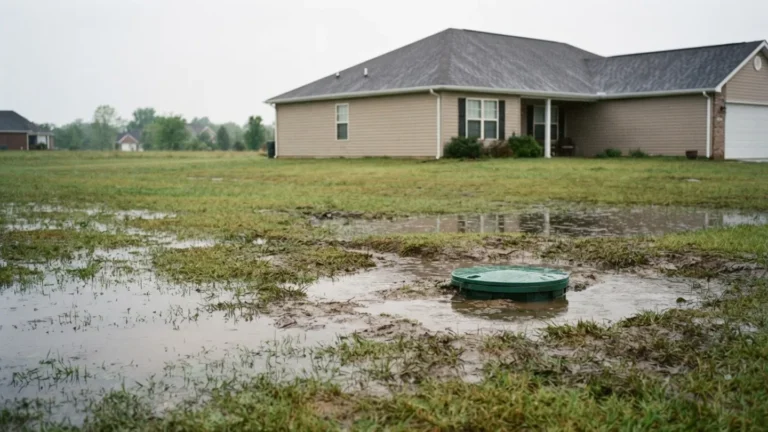
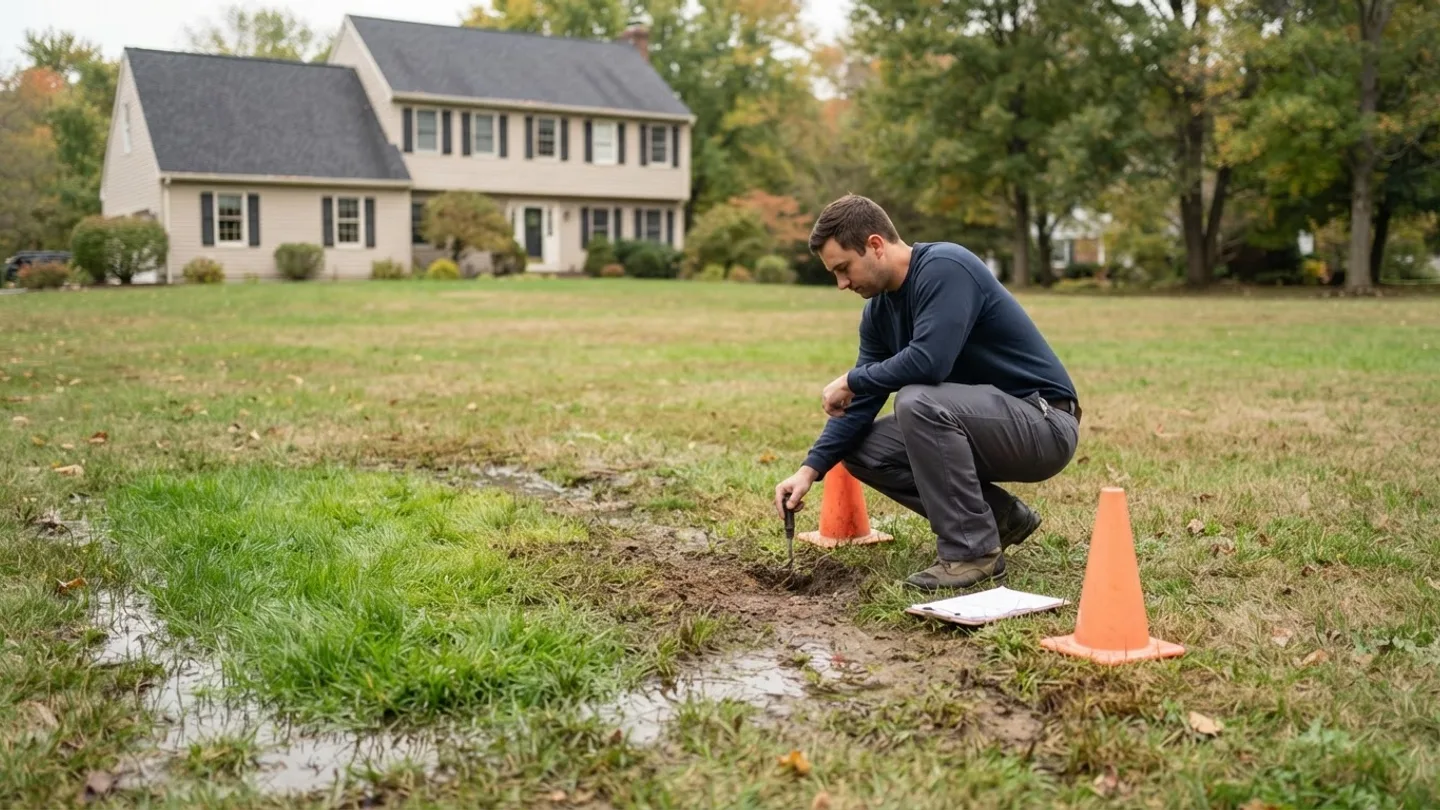
The clearest sign is a wet strip over the drain field. Grass may turn green while the rest of the lawn dries out, the soil feels spongy underfoot, and the ground may hold footprints or tire marks. This can mean the system is sending more water than the soil can absorb.
Effluent is the treated liquid leaving the septic tank. If it pools on the surface, leaves a dark or grayish stain, or makes the ground look and smell wet, the field is not accepting it as designed. Surfacing effluent is a strong sign and should be treated as urgent.
Odors near the field can point to trouble, but smell alone is weak proof. A blocked lateral line, a leaking distribution box, compacted soil, or a saturated field can release odor. If you also see wet grass or slow drains, the pattern becomes more telling.
Slow drains can come from household plumbing, but if the tank was pumped recently and the sinks still empty slowly, pipes gurgle, or a toilet rises and falls, the restriction may be downstream. A broken baffle, a clogged effluent filter, or a saturated field can create that pattern. A baffle is a wall or tee inside the tank that keeps solids in the tank. An effluent filter is a screen on the outlet that catches larger particles before they leave the tank.
Indoor backup is the most serious sign. When the lowest fixture in the house backs up, the plumbing cannot dispose of wastewater. Do not keep running water to see if it clears. Shut off the water to that fixture if you can, avoid using drains, and call a professional.
Do not rely on a single sign. A failed field often shows a pattern over time: a recently pumped tank, rising water use, wetter ground, odor, then slow drains or backup. If you have records, gather pump dates, repair notes, and any permit paperwork before the inspector arrives.
How an inspector confirms failure
Map the yard and house
The inspector looks for wet areas, odors, recent water use, and past pumping. They note the tank location, lid or riser access, and the general direction of the drain field.
Open the tank safely
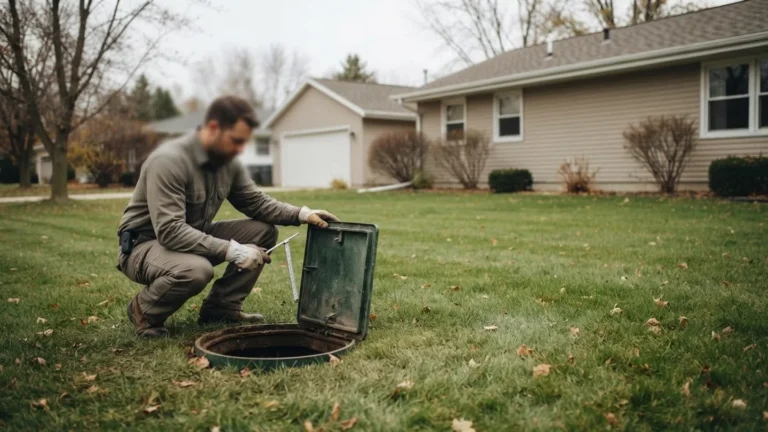
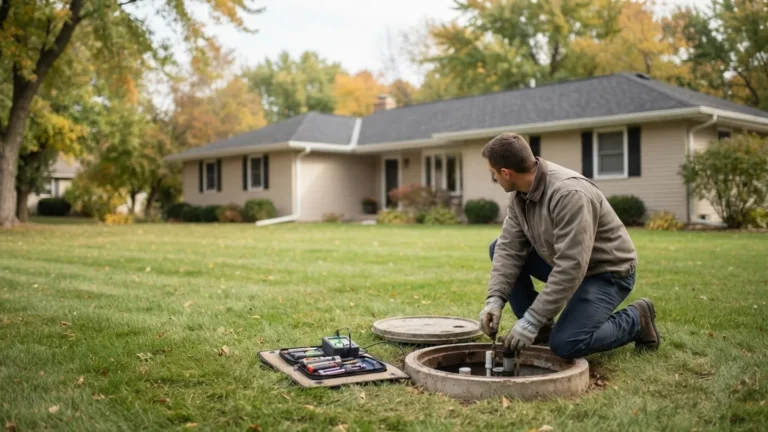
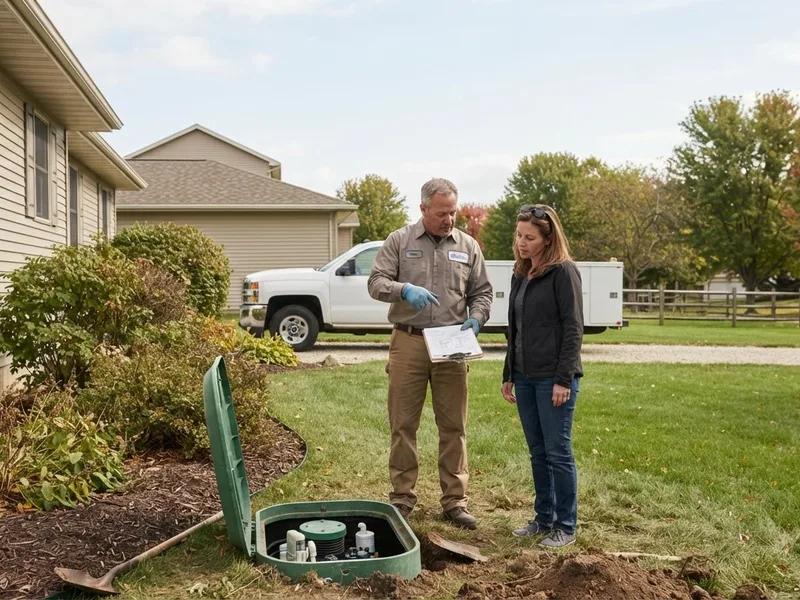
A licensed pumper or inspector opens the tank, then checks the baffle and the effluent filter. The baffle keeps solids in the tank. The filter is a screen on the outlet that slows large particles before liquid leaves.
Measure the solids
Scum is the floating layer of fats and solids near the top. Sludge is the settled layer of solids at the bottom. The inspector measures both and checks the tank level against the outlet pipe. A tank that fills again quickly can point to a downstream blockage.
Test the flow
Water is run into the tank while the outlet is watched. If water backs up into the house, the problem may be between the house and tank, or at the tank outlet. If water leaves the tank but stays in the field, the soil or laterals are struggling.
Probe the field and check records
The inspector may probe soil near the distribution box, which splits flow to lateral lines. They check for the biomat, a natural layer of microorganisms and organic material that forms under the field. A thin biomat helps treat liquid, but a thick one can block pores.
Decide if failure is proven
A drain field failure should be based on a pattern, not one wet spot. The inspector may combine visual signs, tank flow, soil moisture, age, water use, and permit review before recommending repair or replacement.
| Option | When to consider | What it involves | Cost signal | Main risk |
|---|---|---|---|---|
| Rest the field | When the inspector suspects an overload and confirms the tank is not nearly full of solids | Reduce water use for days or weeks as directed, delay laundry, spread out showers, hold off on the garbage disposal, and avoid watering the lawn | Lower than repair or replacement | Resting may not rebuild soil pores if the field is permanently damaged |
| Clean or fix outlet components | When the effluent filter or baffle is blocked, or the tank outlet is plugged | Clean the filter, replace a broken baffle or tee, and clear the outlet pipe | Lower than field work | If the soil is already blocked, tank fixes may not restore flow |
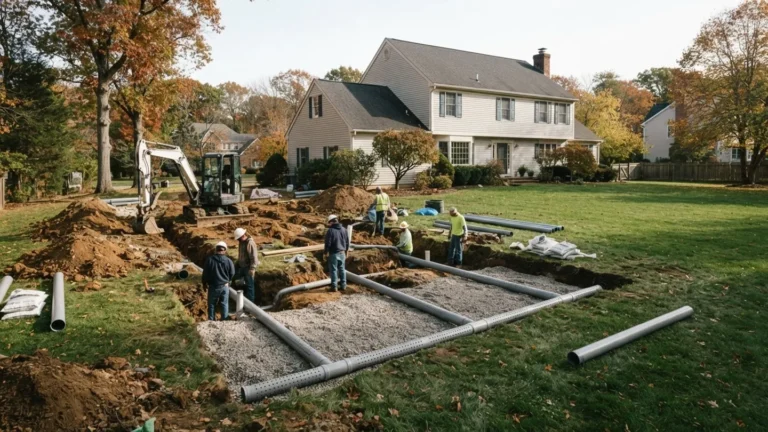
| Repair distribution lines | When one lateral line is wet while neighboring lines are dry, or the distribution box has shifted | Open the field, repair or replace damaged laterals, and reset or replace the distribution box, with lateral lines carrying liquid into the gravel bed | Moderate | Hidden soil compaction or older pipe damage can remain |
| Replace drain field | When the inspector confirms broad failure, repeated surfacing, or failure after reasonable repairs | Excavate the failed area, install new lateral lines and gravel, then cover with sand or approved soil | Higher | Requires permits, access, landscaping, and may not fit on a small or rocky lot |
| Build a mound or raised bed | When native soil is too shallow, the water table is too high, or a standard field cannot meet design depth | Build a prepared sand bed, place gravel and pipes, and dose the field with measured amounts of liquid | Often higher than conventional replacement | Needs space, a good permit path, and ongoing attention |
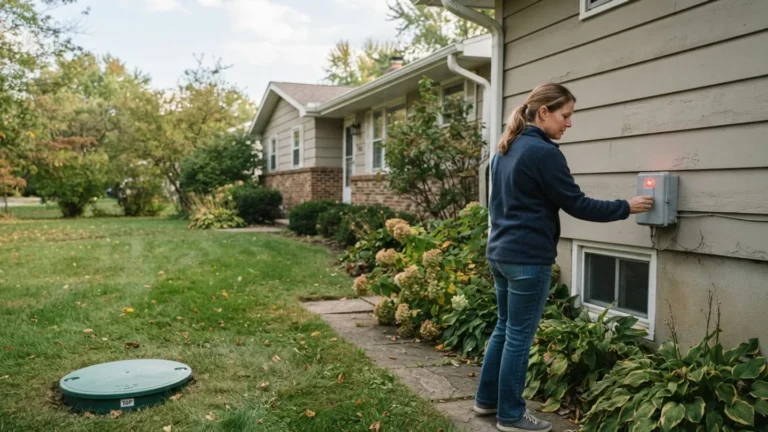
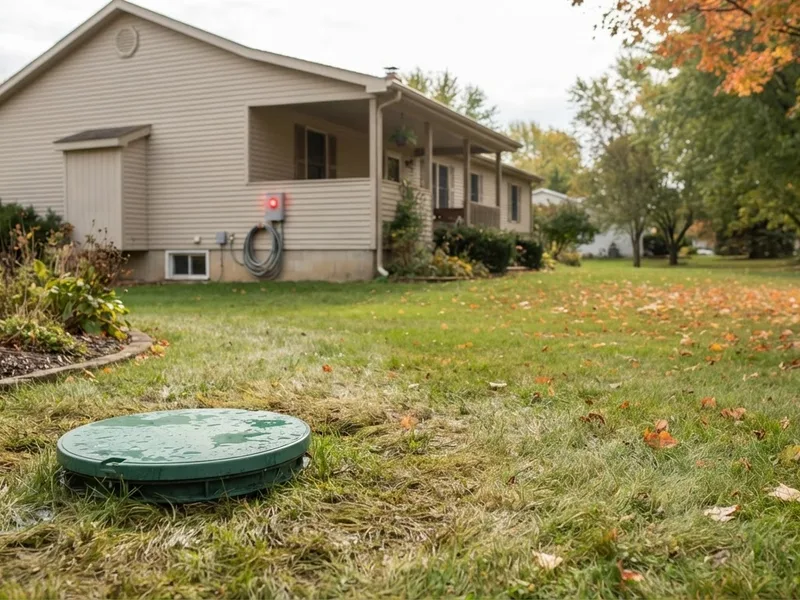
| Upgrade to an aerobic system | When a failing conventional system needs stronger pretreatment before the soil field | Add an aerated treatment unit with a blower, pump, and alarm, then direct treated liquid to a new soil field or dosing area | Higher upfront and ongoing | Mechanical parts, power supply, and maintenance become part of ownership |
When a replacement quote deserves a second opinion
A fair quote should say what failed, where it failed, and how the inspector proved it. Ask for a written system layout, tank measurements, outlet component condition, distribution box status, soil observations, and permit notes.
If a company sees wet grass and only mentions replacement, pause. Ask whether the tank was pumped or checked, the effluent filter inspected, the baffle examined, and the flow tested from tank to field.
Ask whether resting, cleaning, or a spot repair could solve the issue. A mild overload after a busy weekend, a clogged filter, or one blocked lateral line can look much worse than it is.
Ask for a second opinion from a licensed pumper or another qualified inspector. A replacement may be the honest answer after failure is confirmed, but you should know why the field cannot be restored first.
Also ask who obtains permits, who restores landscaping, how soon the system can be inspected, and what maintenance the new design requires. These details can change the practical cost of the job.
Common questions about drain field failure
What are the first signs of drain field failure?
Look for a spongy green strip over the drain field, surfacing liquid, odor, and slow drains that continue even after the tank is pumped. Wet grass may be the first visible clue, but it should be checked against tank levels, outlet condition, and flow tests before you accept a serious diagnosis.
Can a drain field be repaired without replacement?
Yes, when the problem is an overload, a blocked effluent filter, a broken baffle, or one failed distribution line. Replacement becomes the likely answer when the field repeatedly surfaces liquid, does not accept flow after reasonable repairs, or fails a permit required design.
How long can I wait if I have slow drains and wet grass?
Do not wait long. If you only have a slight wet spot and low water use, reduce water immediately and schedule an inspection. If liquid is surfacing, odor is strong, or a lowest fixture is backing up, stop using water in the house and call a professional the same day if needed.
Does resting a drain field really work?
It can help when the field is overloaded and the soil has not been permanently damaged. Resting reduces the amount of liquid pushed into the field so it can drain. It is not a cure for a thick biomat, a failed line, a crushed distribution box, or a field that no longer accepts water.
Should I buy septic additives to clear the problem?
Usually no. Many additives are a waste of money for a failing drain field. They do not rebuild soil pores, clear a blocked baffle, or fix a saturated field. If a product claims to replace pumping or repair a failed drain field, treat the claim with skepticism.
Will a new drain field always fit on my land?
Not always. A new field may require a perc test, a test that measures how fast water soaks into the soil. Permit rules, lot size, soil depth, water table, trees, driveways, and required setbacks can all limit options.
How do I know what a fair repair price looks like?
Ask for an itemized quote that lists inspection, pumping, parts, excavation, gravel, sand, pipe, permits, landscaping, and any temporary system costs. Get a second opinion before you agree to a major repair, and make sure the scope matches the failure that was confirmed.