Septic Troubleshooting: Match the Symptom to the Cause
When a kitchen sink backs up or the lawn feels soft, troubleshooting a septic system works best as a step-by-step check. The smell, the water and the alarm tell you where to look. You do not need to open the tank to decide what to do.
This guide gives a short symptom table for troubleshooting septic system problems. It applies to slow drains, gurgling, indoor and outdoor odors, wet spots, alarms and backups. Use it to narrow the cause before you call for service.
At a glance
- What this covers: a symptom table for troubleshooting septic system problems, from slow drains to backups.
- Systems covered: conventional tank and drain field, aerobic systems, and mound systems.
- Cost range: not fixed here. Routine pumping is a normal service cost. Drain field repair or replacement is a major job, and pricing depends on system type, access, soil and local rates.
- Urgency: check slow drains or a single odor today. Call now if sewage backs up, liquid appears at the soil surface, or an aerobic or mound alarm fails.
- Homeowner or pro: you can stop water use, check the alarm panel, note wet spots and call for service. A licensed septic pumper or septic service should inspect the tank, pump if needed and diagnose drain field failure.
Do this now for a backup, alarm or wet yard
Stop adding water
Do not run the washing machine, dishwasher or extra showers. If a fixture is already draining, let it finish, then stop.
Check the power and alarm panel
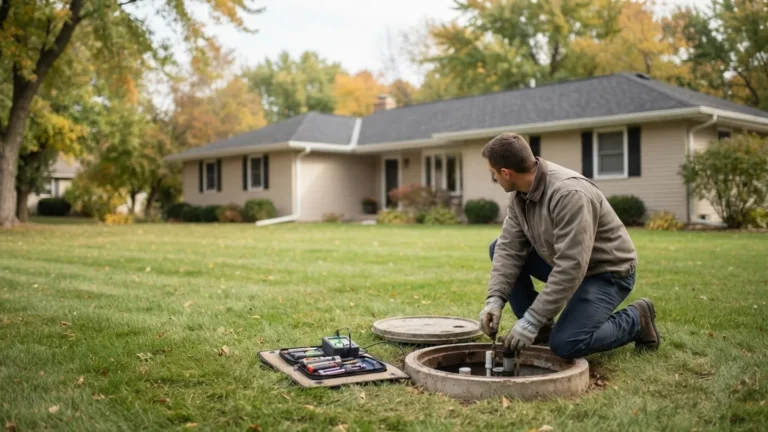
If an aerobic or mound system has an alarm, look for a red light, audible alarm, or stopped pump. Do not open the electrical cabinet beyond the door.
Look outside
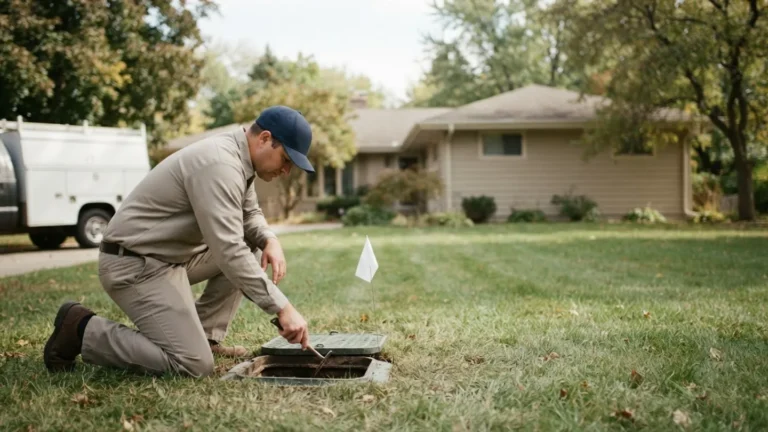
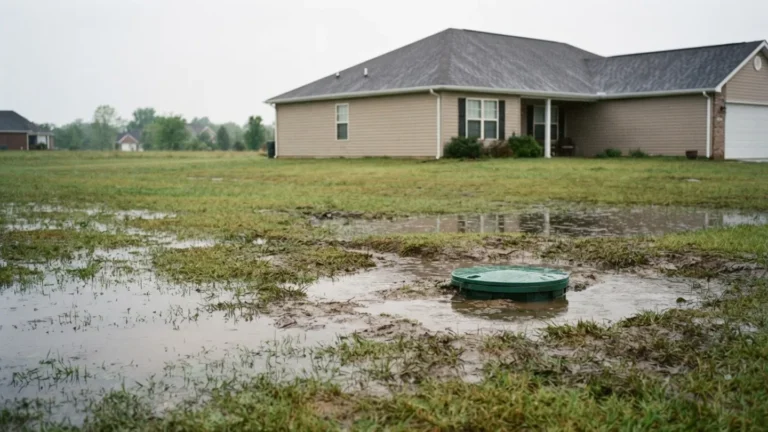
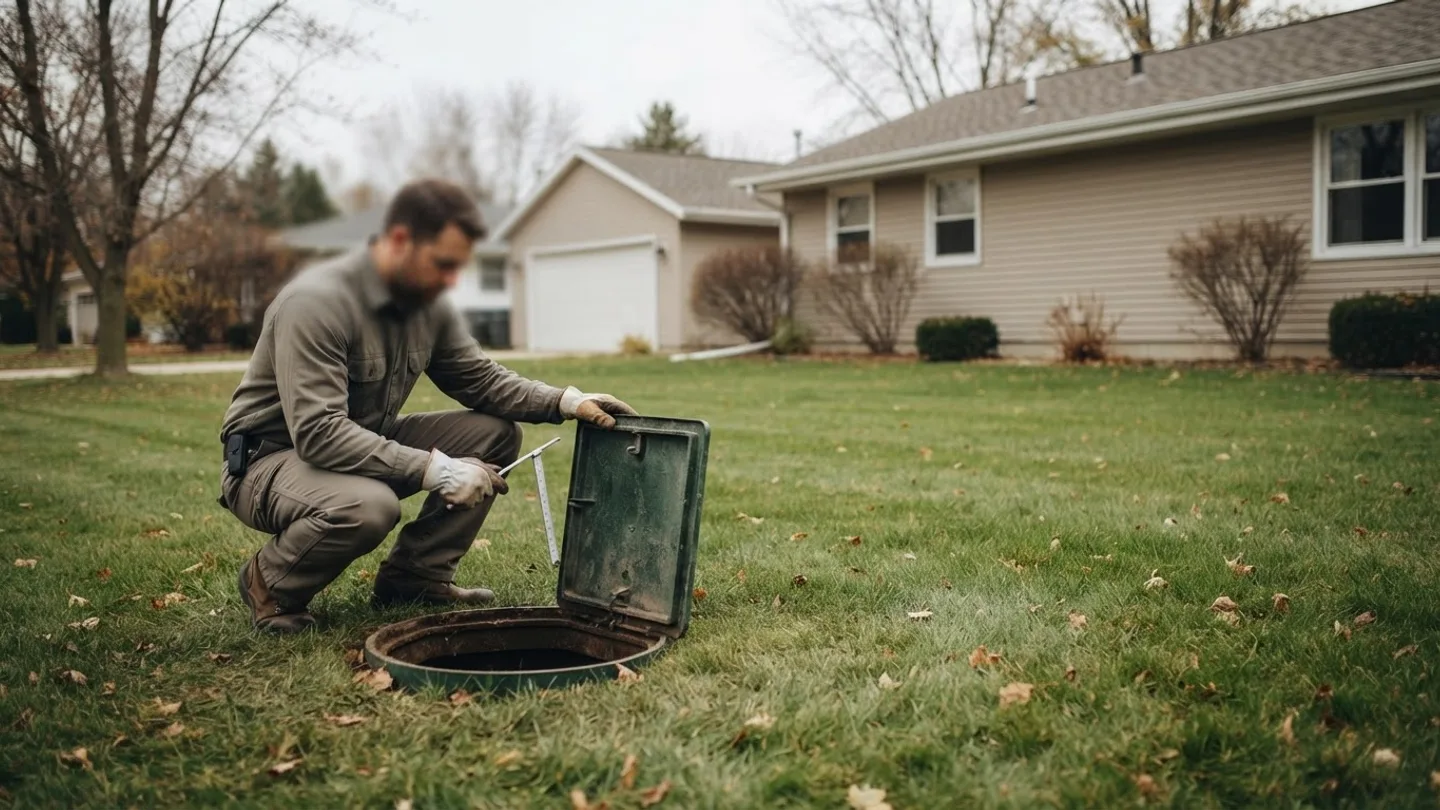
Check the tank area, pipe risers, and drain field for wet soil, a dark green patch, pooling water, or a foul smell.
Do not enter the tank
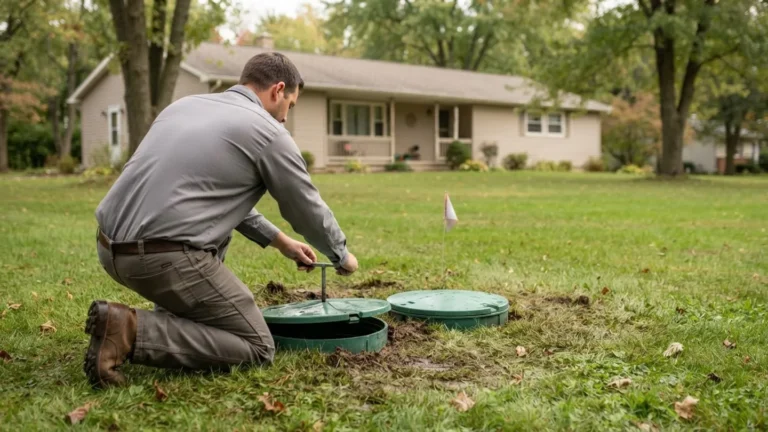
Tank gases can harm you. A licensed septic pumper should lift the cover and inspect the layers.
Call for the right service
Use a licensed septic pumper or septic service. If sewage is rising in the house, say so and ask for an urgent visit.
Keep notes
Write the time you stopped water, the fixtures used, the alarm state and the yard condition. This helps the service avoid repeat checks.
| Symptom | Likely cause | Urgency | Who to call |
|---|---|---|---|
| All main drains run slow, kitchen, bath and laundry | Tank may be full, outlet filter clogged, or drain field not accepting water | Call same day if drains stop or smell gets worse | Licensed septic pumper or septic service |
| One toilet or sink drains slowly, other fixtures normal | Clog in that fixture or nearby drain line | Try no more water. Call if still blocked | Plumber, then septic service if main line is involved |
| Gurgling in toilet, shower or tub | Air moving past a blockage, full tank, or blocked vent | Call if paired with slow drains or odor | Plumber for one fixture, septic service for whole house |
| Sewage odor indoors, especially near floor drains | Backup, dry trap, blocked vent, or gas entering home | Call same day, faster if water backs up | Plumber and septic service |
| Foul smell near tank, lid or riser | Full tank, cracked lid, missing seal, or vent block | Check soon. Call now if liquid appears | Septic pumper |
| Odor over the drain field after dry weather | Tank liquid reaching soil, clogged line, or failed drain field | Call soon. Call today with wet spot | Septic service |
| Soggy grass, dark green patch or puddle above drain field | Drain field saturated, distribution box clogged, or biomat too thick | Call soon. Call today if odor, slow drains or backup | Septic service |
| Alarm in aerobic or mound system | Pump, blower, float switch, power supply or drain path failure | Call same day. Stop water use | System installer or service company listed on panel |
| Sewage or gray water backup in basement shower or lowest drain | Full tank, blocked outlet baffle, or drain field cannot accept water | Call now. Treat as urgent | Licensed septic pumper or septic service |
| Toilet runs, bubbles, then drains | Local clog, vent issue, or tank nearing full | Check today. Call if multiple fixtures show it | Plumber first, septic service if whole-house symptoms |
Before you call: gather these facts
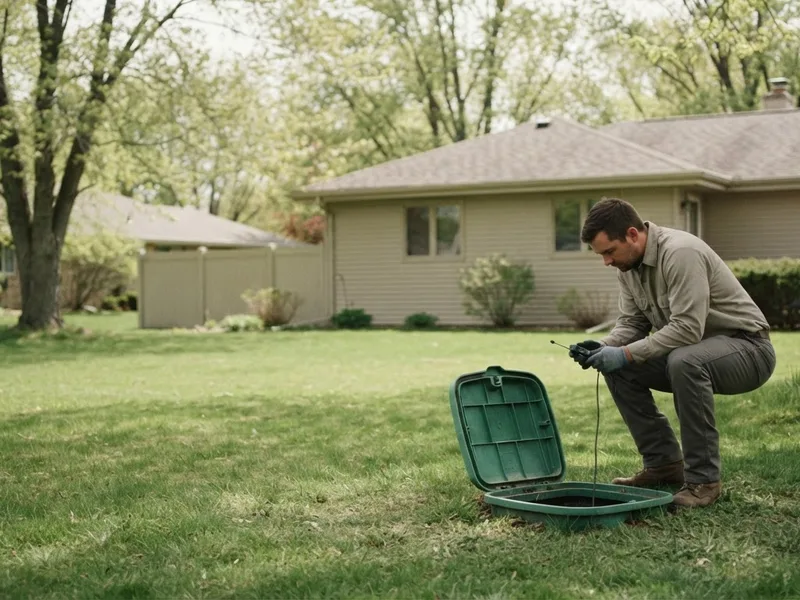
When you call for troubleshooting septic system service, give facts, not guesses. Say whether you have a conventional tank and drain field, an aerobic system, or a mound system. If you are not sure, say so.
Give the indoor picture. Tell them which fixtures are slow, if gurgling is in one bathroom or across the house, and if sewage is backing up. Note the number of bathrooms, not the lot size.
Find the last pump-out receipt. If you cannot find it, say the service date is unknown. If you remember the approximate date, give that instead of guessing.
Note the alarm panel. For an aerobic or mound system, describe the lights, the sound and the time the alarm started. Say if the pump or blower appears stopped.
Describe the yard. Tell them where the smell, wet grass, pooling water or lid issue is. Distance in feet from the house helps, but you do not need a survey to call.
System type changes the answer
Conventional gravity system
A tank collects solids and scum. The clearer liquid, called effluent, leaves through an outlet pipe and gravity feeds a drain field.
Symptoms usually point to tank fullness, a clogged outlet filter, a broken baffle, or a drain field that is not soaking water away.
Pumping is routine work. Drain field repair is a pro job.
Aerobic system
Aerobic systems use air to speed treatment. They often have a pump, blower and control panel.
An alarm is a real stop signal. Do not wait for the smell to become obvious if the alarm sounds after heavy water use.
Use the installer or a service company familiar with that model. Manufacturer knowledge matters here.
Mound system
A mound system is built above native soil when the soil drains slowly or the water table is high. A pump doses water into the sand mound.
Wet spots, odor and alarm failures are urgent because the system is dosed, not purely gravity fed.
Do not dig, grade or add soil over the mound. That is a licensed septic design and install question.
Drain field terms, explained for homeowners
A full tank can show different layers. Scum is the floating grease and oil layer. Sludge is solids that settle to the bottom. The middle layer is the clearer water that should leave the tank as effluent, the treated liquid that flows to the drain field.
A baffle is a wall at the tank outlet. It keeps floating scum from pouring straight into the pipes. A missing or cracked baffle can send solids to the drain field.
An effluent filter sits on the outlet side of the tank. It catches small solids before water leaves. Some filters are easy for a homeowner to rinse, others need a pro.
A distribution box splits flow into several drain field lines. If it is clogged, tilted or broken, one line can overload while others do little work.
A biomat is a living layer that forms under the soil in a working drain field. In a healthy system, it helps clean the water. If it becomes too thick, water stops soaking away and the surface gets wet.
A perc test is a soil test done before install or repair. It measures how fast water soaks through the soil. Homeowners do not run it themselves.
Honest advice: additives rarely fix symptoms. If a tank is full, pump it. If a baffle, filter, box or soil is the problem, an additive will not repair the plumbing or change soil behavior.
If a quoted drain field replacement seems sudden, ask for a second opinion from a licensed septic service or local health department inspector. A wet spot can mean several things, and replacement is a large job.
FAQ for septic troubleshooting
Can I fix septic slow drains with an additive?
No. If the tank is full, pump it. If a baffle, filter, distribution box or soil is the problem, an additive will not repair plumbing or change soil behavior. Save the money for a licensed service.
Do I need to pump the tank if the alarm goes off?
Maybe not, if the symptom is a pump, blower or float switch. Check the panel and stop water use. If the service company suspects a full tank or drain field issue, they can pump first and then evaluate what remains.
Should I use chemical drain cleaner for a septic backup?
No. Chemical cleaners can damage plumbing, and they do not clear a full tank or a blocked drain field. If sewage is backing up, stop water and call a licensed septic pumper or septic service.
What if the smell is only near one bathroom drain?
A dry trap or a local clog is possible. Try running a little water into a floor drain that rarely sees use. If the smell stays, or other drains are slow, treat it as a possible main line or septic issue.
When can I do this myself?
You can stop water use, check the alarm panel from outside, note wet spots and call for service. Do not enter a tank, open a manhole you are unsure about, or repair a drain field.

What to ask before you hire a septic pro
Before the truck leaves, ask what was found in the tank. The service should tell you the level of scum on top, sludge at the bottom, and whether the outlet filter or baffle is blocked.
Ask whether pumping alone will fix the symptom. If water still drains poorly after a pump-out, the next issue is usually the tank outlet, distribution box, or drain field.
Ask what the scope is if repair is proposed. A drain field replacement can be a large job. Get the work written out, including tank work, piping, distribution, soil, excavation and restoration.
If a second visit is needed, ask what it will test. Some checks are visual. Others need dye testing, water loading or a soil evaluation, and you should know before you pay.