Septic Alarm Going Off? What It Means and What to Do
A dishwasher finishes, the kitchen sink drains, then a buzzer starts. A septic system alarm going off usually means water is building up faster than the system can move it away. It is a warning, not proof that the system has failed, but you should treat it as a signal to slow the water down.
Most alarms watch the water level above the tank or pump chamber. Some systems, including an aerobic treatment unit, often called an ATU, use air and pumps, so the same buzzer can point to a different problem. The next step is the same either way: stop adding water and find out what the panel is seeing.
At a glance
- What this covers: tank alarms, pump tank alarms and ATU alarms.
- Homeowner first: silence the panel, cut water use, check the breaker and know when to call.
- Pro work: dead pump, wet electrical repair, stuck float in a sealed tank, drain field trouble, mound system service.
- Urgency: high if there is backup, pooling, smell indoors or a breaker that trips again. Moderate if the alarm only came on after heavy use.
- Cost: alarm repair, pumping and field work vary by region, so get written estimates and ask what was tested.
Do this now
Silence the buzzer
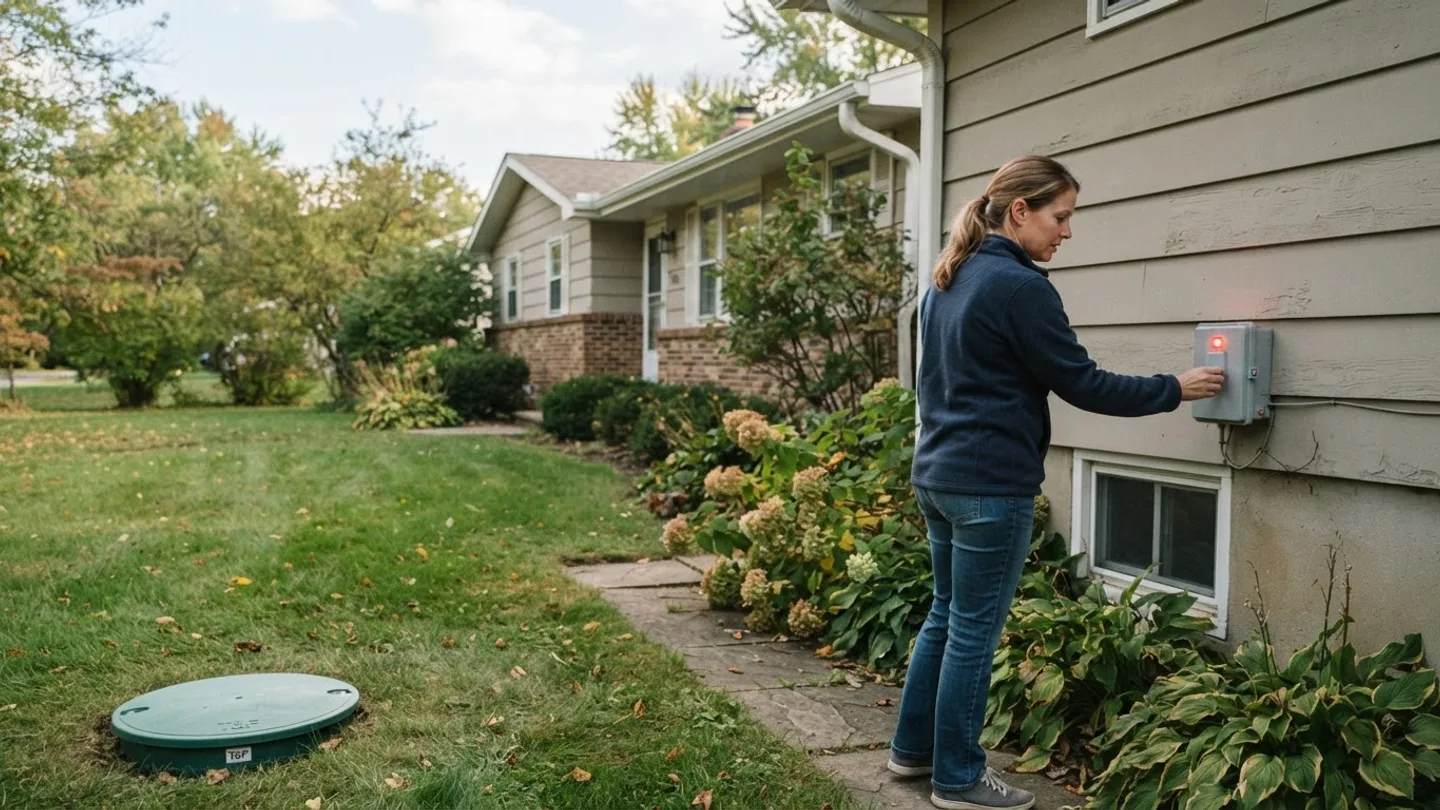
If the alarm panel has a test or reset button, use it to stop the noise only. Treat silence as time to look, not a repair.
Cut water use
Stop laundry, dishes, showers and baths until you know what tripped the alarm. If water keeps entering a system that cannot move it out, the level will keep rising.
Check the breaker
If the alarm is silent and a pump is not running, look at the breaker for a trip. Resetting once may be safe if the panel is dry. If it trips again, leave it off and call.
Call the right pro
Call today for indoor backup, water surfacing over the drain field, a strong smell indoors, or a pump that will not start. If the alarm only ran after heavy water use and the drains still work, schedule a pump or repair visit soon.

What the alarm is watching for
Most septic alarms watch water level. A float is a switch that rises or sinks with the water. When the water passes a high level point, the float sends power to the alarm panel. The buzzer is saying that a chamber is too full.
A standard tank may be 1,000 gallons for a typical three bedroom home. A pump tank may be smaller, because it holds water only until the pump sends it out. If the pump cannot keep up, the pump chamber fills, the float rises, and the alarm sounds.
An aerobic septic system may alarm for other reasons. The tank may still be at the right level, but an air pump may be weak, a blower may have failed, or a control panel float may be stuck. That is why the same buzzer can mean a water problem on one property and an air problem on another.
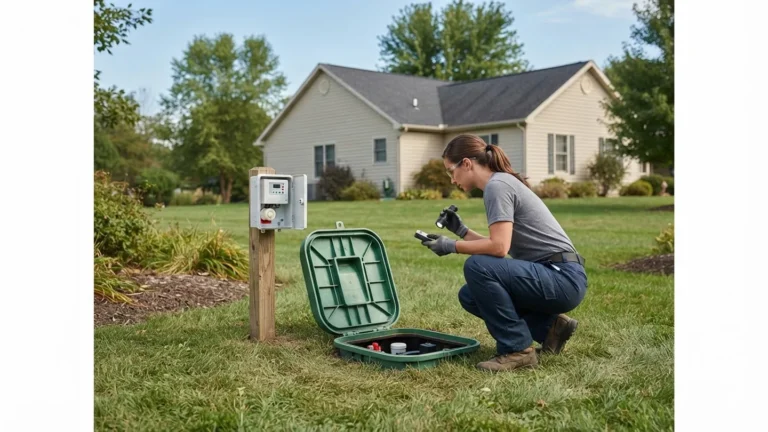
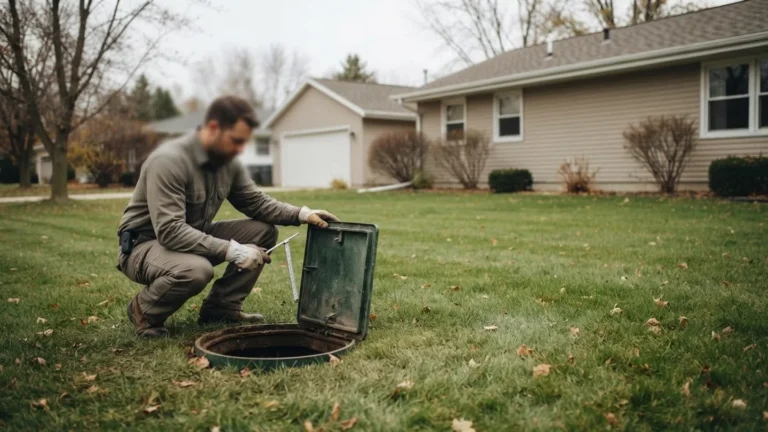
Where your tank lids are can also matter. Lids may be just below lawn level or deeper. If you cannot open them safely, do not dig. Mark the lids on a simple sketch, note when the tank was last pumped, and tell the pro.
| Alarm clue | Pump tank or gravity system | Aerobic treatment unit |
|---|---|---|
| High water alarm | The pump chamber or outlet path is filling faster than it can clear. | The liquid level may be high, but the alarm can also point to air, blower or float trouble. |
| Pump not running | Check power, breaker, pump, float and control box. | Check both the pump circuit and the air blower circuit. Some panels show faults on a separate control light. |
| Alarm after laundry or heavy use | Water use may be too much for the field, or an outlet screen may be clogged. | Heavy water use can overload the unit before treated water reaches the field. |
| Alarm while indoor drains still run | Indoors can drain while the chamber outside keeps rising. | Indoors can drain while the outside treatment chamber keeps rising. |
| Smell near the tank | Check tank access, vent condition, recent service and any pooling. | Check blower operation, air flow and whether solids have moved to the wrong stage. |
Dead pump, stuck float, blocked effluent filter and drain field trouble
A dead pump is one of the common hard failures. If the pump does not start when the water level rises, the chamber fills and the alarm sounds. A dead pump may be caused by power loss, a failed pump motor, a control relay, or wiring that has been exposed to moisture. You can check the breaker and look for obvious wet electrical damage. Do not open a wet electrical box.
A stuck float is a quiet trouble maker. Floats sense level and tell the pump when to start and stop. A float can hang on roots, grease buildup, a tank wall, corrosion or debris. If the float is stuck low, the pump may never start. If it is stuck high, the alarm may sound or the pump may run at the wrong time.
A blocked effluent filter can make a tank look healthy while the field receives too little water or too much solid material. The effluent filter is a screen at the tank outlet that keeps solids from leaving the tank. Cleaning it is often a maintenance task for the pro who pumps the tank.
Drain field trouble is the more expensive problem. A baffle is a wall or tee at the tank outlet that helps keep solids and scum in the tank. A biomat is a natural layer under the drain field that can slow water absorption. In a gravity system, the field may slow if water is used too fast or if solids have moved out. In a pump system, a failed pump can push too little water out, making the problem look like a field failure when it is really a pump issue.
A mound system adds more parts. A mound is built above natural soil when the native soil drains slowly. It may have a pump, a dosing chamber, a distribution area and an air pump or blower. Alarm causes overlap, but mound repairs can be more expensive because access, permits and design work may be needed.
When you can wait until morning
No backup inside
If indoor drains work, toilets flush normally and the alarm is the only sign, you may have a short window. Still, stop extra water use.
No water pooling outside
If you do not see water surfacing on the lawn, and the ground over the field is not soggy, waiting one night is usually safer.
No electrical danger
If the breaker has not tripped and the alarm panel is dry, waiting is more reasonable. If a breaker trips, the alarm is silent and a pump is not running, do not wait.
No repeat alarm after the test
Many panels have a test button or status lights. If the alarm stays off after a panel test and water use was paused, note what happened and schedule a check.
Call sooner if the house will keep adding water
If guests are staying, laundry is queued, or no one can watch the system, call a pro today. A small alarm can turn into a backup with one more shower.

What to ask before you hire, and why a drain field quote deserves a second opinion
Ask whether the service includes a pump and float check, not just an empty. If a pumper says a new drain field is needed, ask what part of the test pointed to the field and what parts pointed away from it.
Ask for the tank size, the water level before and after service, and the condition of the effluent filter, if your tank has one. A simple written note helps you compare estimates.
Ask whether the pump is hard wired or plugged in, whether the float switches are in the tank or in a control box, and whether the panel shows any air system faults on an ATU. If a repair needs electrical work or pump replacement, ask whether a licensed septic installer or repair pro will do it, not just a pump truck operator.
Ask what to do while you wait. Some homes can get by with a few hours of water control. Others cannot, especially if the level keeps rising, a breaker trips or the yard over the drain field is wet.
Common septic alarm questions
What does a septic system alarm going off mean?
It usually means water is too high in a tank, pump chamber or ATU chamber, or that a pump, float, air system or electrical part has failed.
Should I turn the alarm off and forget about it?
No. Silence the buzzer if you need quiet, but do not treat the reset button as a fix. The cause still needs checking.
Can I keep using water after the alarm goes off?
Cut water use now. Avoid laundry, dishes, long showers and any drain that can add more water until you know what happened.
What if the alarm is silent but drains are slow?
That can still be a problem. The float, panel or alarm light may not be working. If drains are slow, do not assume the system is safe.
How long can a septic alarm wait until morning?
If there is no indoor backup, no pooling, no smell indoors and no electrical fault, waiting one night may be reasonable. If any of those signs are present, call today.
Do I need a new drain field?
Not necessarily. Pump, float, filter and outlet problems can look like drain field problems. Get the pump and tank checked first, and get a second opinion before agreeing to a field replacement.