Septic Smell in the House: Causes and Fixes
If you notice a septic system smell in house drains, toilets, a basement floor or a cleanout, stop and find the location. A septic tank under the yard normally holds gases inside the tank and sends them out through vent pipes on the roof. When the smell is indoors, the path has changed.
If the odor is strong, ventilate first. Do not rely on deodorizers, matches or additives. This guide traces indoor odors to dry traps, failed wax rings, blocked roof vents, cracked pipes or a backing up tank, and it marks which checks need a licensed plumber or septic pro.
In this guide
Do this now if the smell is strong
Open windows on opposite sides of the house and run bathroom exhaust fans. Keep people away from low spots such as basement floors and open tanks. Septic gases may contain methane and hydrogen sulfide. If the smell is strong, leave the area, do not light candles or smoke, and call a licensed septic pro.
If wastewater comes up in a basement drain, floor drain, tub or shower, stop running water, showers, laundry and toilets. Do not pour septic additives, bleach or drain cleaners into the system to mask the odor. Those can make a diagnosis harder and may harm the tank or drain field.
Key takeaways
- What it covers: indoor septic smells, quick safety checks and which fixes need a pro.
- Applies to: conventional gravity, aerobic and mound systems, plus the plumbing inside the house.
- Typical cost: tank pumping, plumbing repairs, wax ring replacement and vent work vary by region, access, tank size and severity. Ask for a written quote before digging or replacing components.
- Urgency: strong indoor odor, wet drains, gurgling, sewage backup or odor near the tank lid is a same-day call.
- Homeowner job: pour water in unused drains, note where the odor changes and stop water use if a backup appears.
- Pro job: roof vent work, wax rings, tank openings, piping, baffles, distribution boxes, filters and drain field issues.
- Honest advice: additives and bleach are not a reliable fix for a septic system smell in house.
| Smell location | Likely cause | Homeowner check | Pro fix needed? |
|---|---|---|---|
| A rarely used sink, tub or floor drain | Dry trap | Pour a pitcher of water into the drain and check for 30 minutes | Only if odor returns, or if the trap is cracked |
| Toilet base | Failed wax ring | Check if the toilet rocks or water stains appear at the base | Yes, replace the seal and set the toilet properly |
| One sink or tub when another drain runs | Blocked vent stack | Listen for gurgling and note slow drainage | Yes, if you need roof access, a ladder beyond safe reach or snaking |
| Basement floor drain or cleanout | Cracked pipe, house drain backup or tank backup | Stop water use and compare the indoor odor to the tank area | Yes, same day for backup or wet drains |
| Yard near tank lid, manhole or riser | Tank vent, full tank, scum or sludge problem | Note when the odor started, after pumping, heavy rain or added water use | Yes, a septic pro can inspect the tank and drain field |
Work from simple to serious
Find the strongest spot
Sniff near rarely used drains, toilet bases, the basement cleanout, a shower trap and the tank lid. Mark the spot where the septic system smell in house is strongest.
Run the trap test
Pour water into a floor drain, guest bath drain and kitchen sink. If the odor fades, the trap was dry.
Stop water use if there is backup
If wastewater or sewage smells come from low fixtures, keep toilets, laundry, dishwasher and sinks dry until a pro inspects.
Check the tank area from a distance
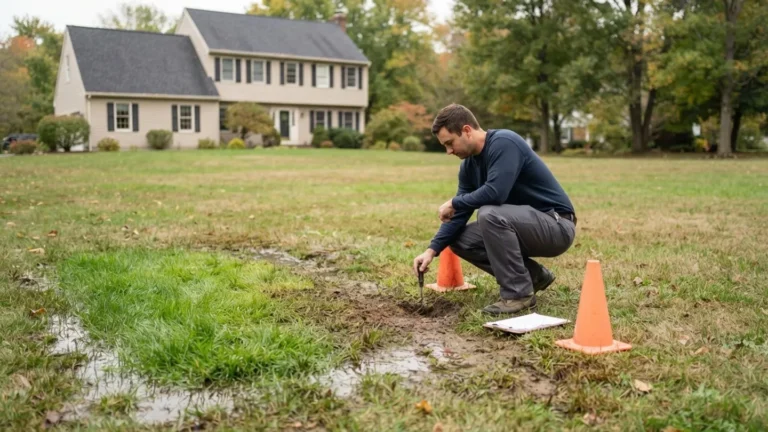
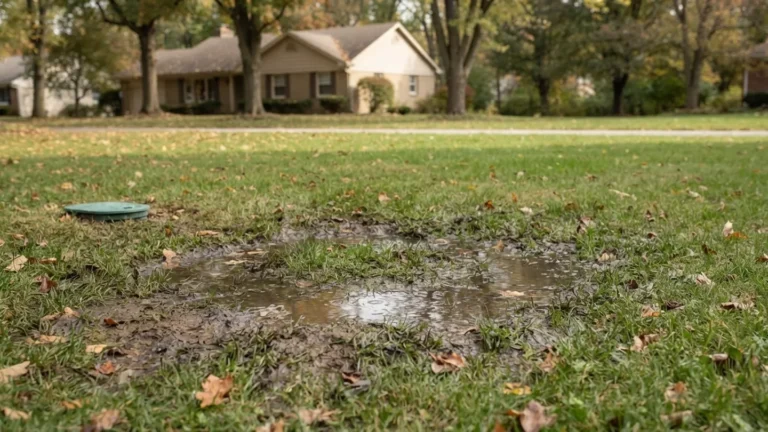
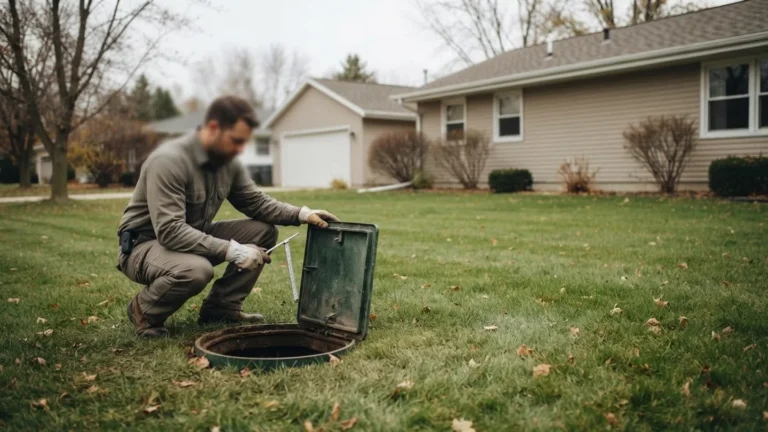
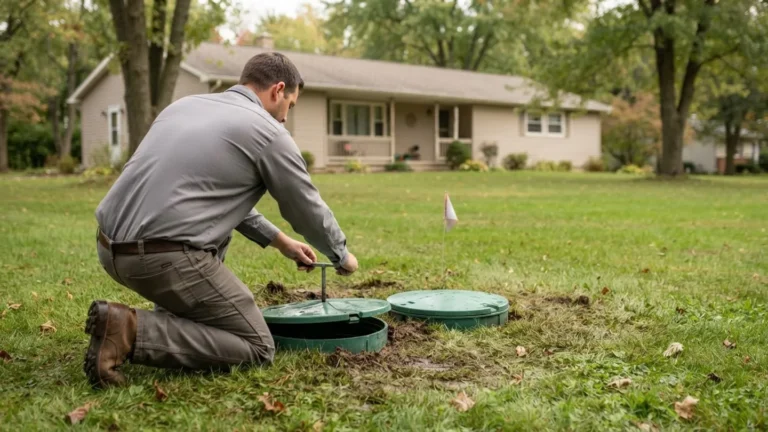
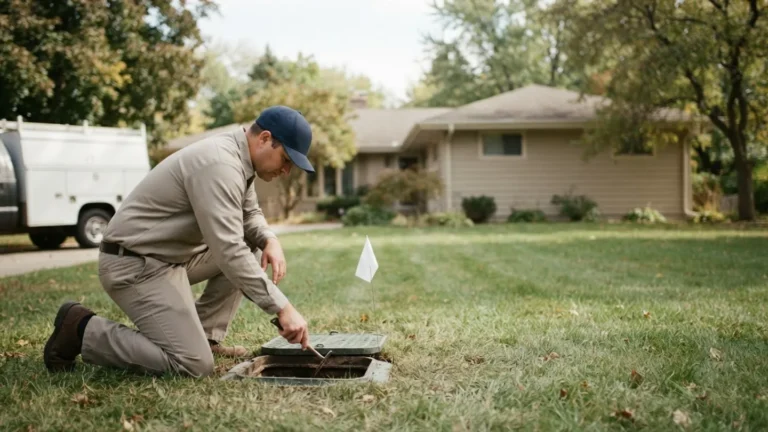
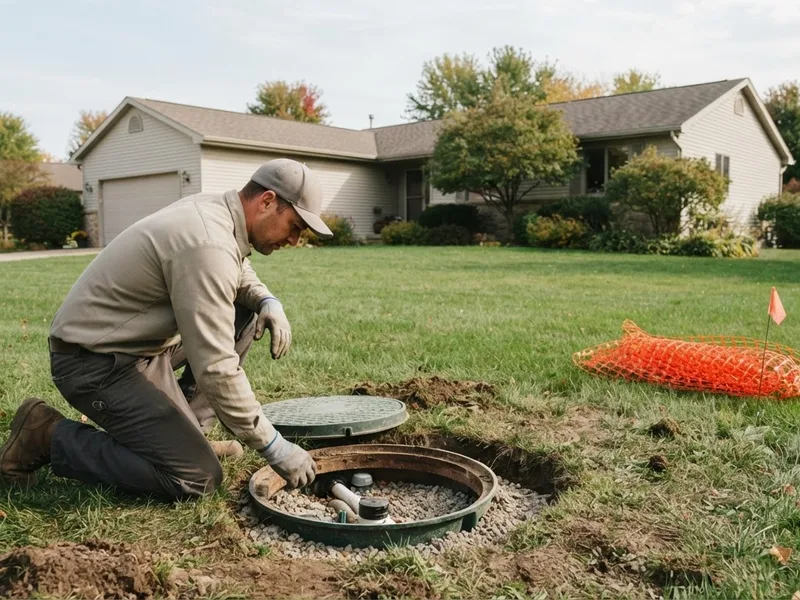
Do not open a tank lid. Note wet soil, grass color, standing water or odor at the lid, riser or manhole.
Call the right pro
Use a plumber for indoor traps, wax rings and drain clogs. Use a septic pump and inspection contractor for tank, pipe or drain field issues.
Start the search at the drain, not the tank
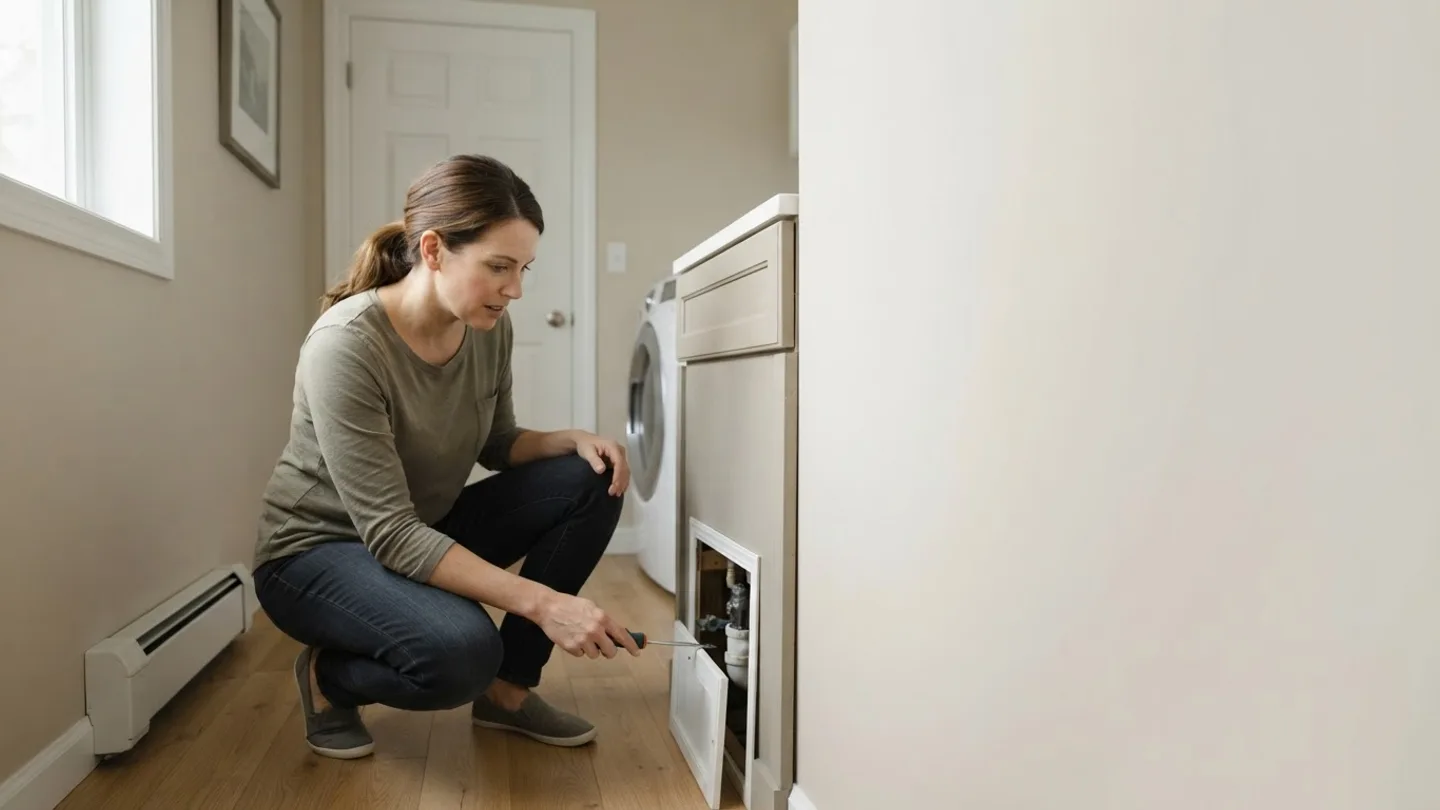
Indoor odors often start in the house plumbing, not the buried tank. A P trap is the curved pipe under a sink or tub that holds water and blocks sewer gas from entering. When a trap dries out, the gas path is open. Unused guest bathrooms, basement laundry sinks and rarely used floor drains are common spots.
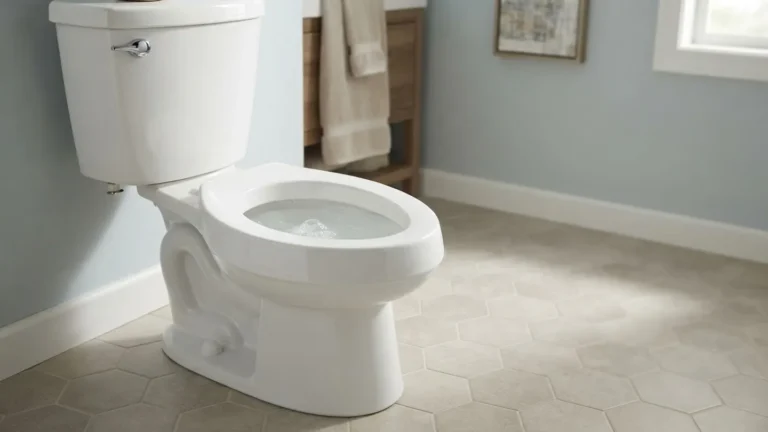
A failed wax ring can also put a septic smell near the toilet. The wax ring is the seal between the toilet base and the drain pipe in the floor. If it compresses, shifts or gets damaged, waste can escape into the subfloor even when the toilet looks normal.
The odor may also follow the drain line to the basement cleanout. If a drain is slow, gurgles or smells at the cleanout, the blockage may be inside the house pipe, not the tank. A plumber can clear the line and decide whether to refer you to a septic contractor.
Check by system type
Conventional gravity system
Most septic systems are simple: a tank holds solids, then liquid flows to a drain field. The tank separates floating scum, settled sludge and clearer liquid. A baffle is a pipe or divider at the inlet and outlet that keeps solids inside the tank. If a baffle is cracked, tilted or missing, solids can leave the tank and clog the drain field.
Many tanks have an effluent filter at the outlet, a mesh screen that catches small solids. A clogged filter can cause odors, slow drainage or backup. Pumping and inspection should include the filter condition.
Aerobic system
Aerobic systems add air to the tank and use pumps or blowers. They often have an alarm, disinfection and a separate pump tank. If a blower fails, the odor can change from a mild earthy smell to a strong rotten egg smell. Check the electrical panel and alarm indicator from outside the tank, then call a pro if the blower is not running. Do not enter the tank.
Mound system
A mound system is a raised drain field built where native soil is shallow or drains poorly. It uses sand, gravel and sometimes a pump. Smell from a mound can mean a dosing pump issue, clogged distribution lines or a failed biomat. A distribution box splits liquid into the distribution lines. The biomat is the slim biological layer at the soil interface that can restrict flow if the system is overloaded or poorly maintained.

When the fix needs a plumber or septic pro
Dry traps and wax rings are often small repairs, but a plumber should set the toilet and check for a loose toilet. A blocked roof vent also needs a pro if you cannot safely see the vent stack. Do not climb onto a wet or steep roof.
If the septic system smell in house appears with wet drains, gurgling, slow toilets or a basement backup, call for service the same day. The issue may be a cracked pipe, a collapsed drain line, a tank that is backing up, or a blocked outlet. A septic contractor can locate the tank, measure sludge and scum depths, inspect baffles and pump the tank if needed. Sludge is the settled solids, and scum is the floating grease layer.
Tank pumping alone may not fix an indoor odor. If the odor came from dry traps, pumping will not help. If solids are moving into the drain field, pumping may be only part of the repair. Ask for photos, the tank water level and the condition of the inlet, outlet, baffles and filter.
Common questions
Why does my house smell like septic after showering?
Most often it is a dry trap, a slow drain or a blocked vent. Pour water into any drain that is not used often. If the odor starts with the shower, the trap may be partially dry or the vent may not be working.
Can septic gases come into the house?
Yes. Plumbing traps and vents normally keep gases inside the system. When a trap dries, a seal fails, a vent blocks or a pipe cracks, gases may enter.
Is a septic smell always from the tank?
No. Many indoor septic smells come from the house side of the plumbing. Check drains and toilet bases before blaming the tank.
Should I pour bleach into a drain to kill the smell?
No. Bleach can harm the biology of a septic system and mask a problem. It is not a fix for a dry trap, failed wax ring or tank issue.
How often should I pump my septic tank?
Pumping intervals depend on household size, tank size, water use and system condition. A typical 1,000 gallon tank serving a three bedroom household may need pumping every 3 to 5 years, but a local inspection should set the schedule.
What is the fastest way to tell if the smell is from the drain field?
Compare indoor odor to outdoor odor. A strong smell near the lid, riser or manhole, wet soil over the drain field, or a backup at a low fixture suggests tank or drain field problems. A plumber or septic pro should inspect.