
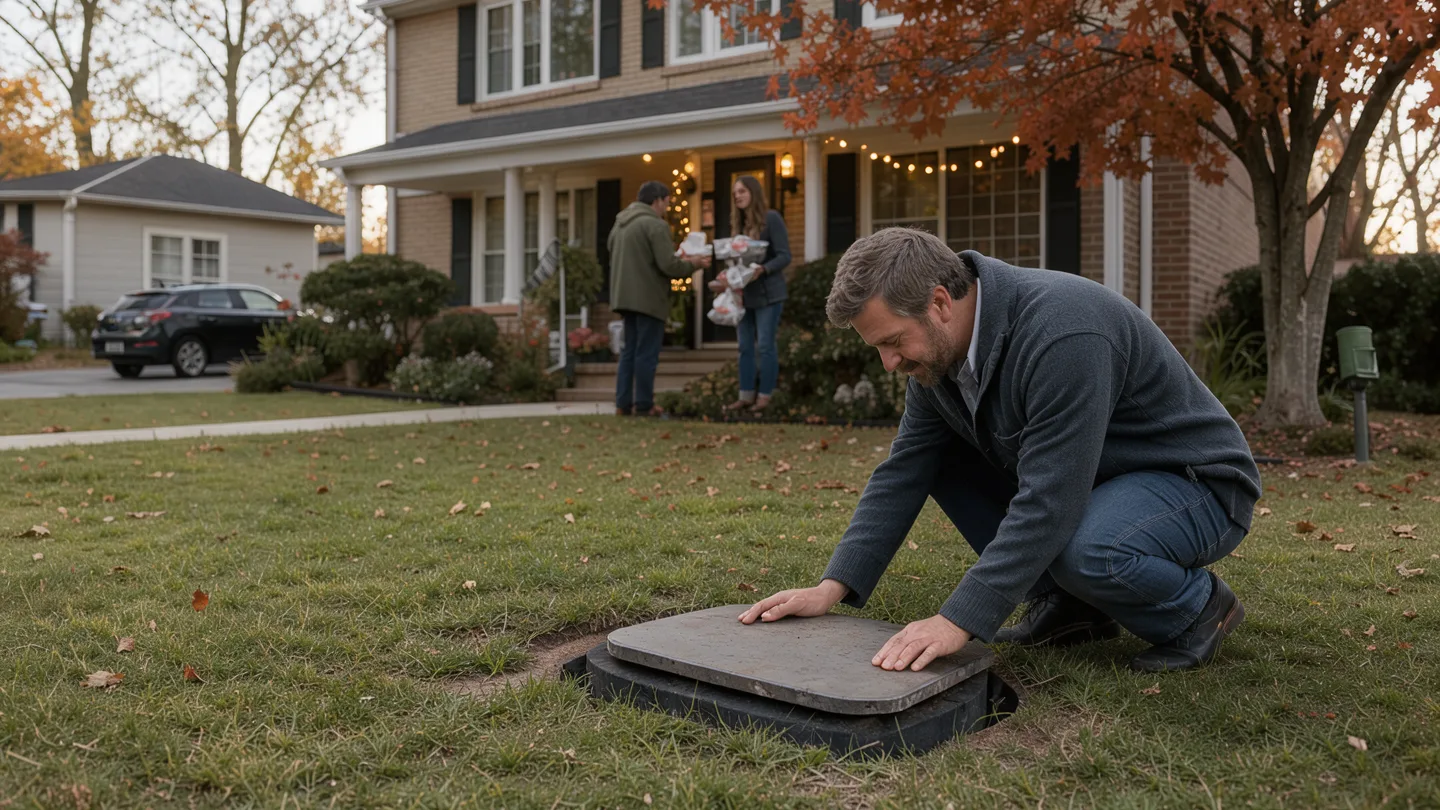
Hosting Holiday Guests on a Septic System
Thanksgiving dinner at your house means six extra people, three extra showers, a full dishwasher running twice, and a kitchen sink that has not stopped since morning. Your septic system was sized for your household, not for a crowd. A typical 1,000-gallon tank serving a three-bedroom home handles about 300 to 400 gallons of wastewater a day. Add a dozen guests and you can push that number past 600 in a single day.
The tank itself rarely overflows. The real pressure lands on the drain field, the underground network of perforated pipes where liquid soaks into the soil. Too much water too fast can flood the soil before it has time to absorb it, and the first sign is usually a soggy patch of grass or a slow drain that does not clear by morning.
This guide walks you through what to do in the week before the holidays, what to watch for during the meal, and what warning signs mean you should call a pumper before the next gathering.
At a glance
- A septic system sized for four people can handle six or eight guests for a day or two, but not a full week of heavy use without a break.
- Spread laundry and dishwasher loads across several days instead of running everything on Thanksgiving morning.
- Grease, large amounts of food scraps, and non-flushable wipes are the biggest holiday threats to a septic drain field.
- If your tank is overdue for pumping, book it two to three weeks before the holidays so the system starts the week with room to spare.
- Soggy grass, gurgling pipes, or a sewage smell in the yard in the days after a gathering are signs the drain field is saturated and may need attention.
The mechanics
Why extra guests stress a septic system
A septic tank does two jobs at once. It holds solids so bacteria can break them down, and it lets liquid (called effluent) flow out to the drain field. The tank has a fixed volume. If you send more water through it than it can process, solids get pushed out into the drain field before they have settled.
The drain field is where the real bottleneck lives. Effluent trickles out of perforated pipes into gravel and soil. A healthy soil layer called the biomat, a thin film of bacteria and organic matter at the soil-pipe interface, filters the liquid as it soaks in. But soil can only absorb so much water per hour. When you run three showers back to back, fill the dishwasher twice, and do two loads of laundry on the same morning, you are sending a surge of water into soil that was designed for a steady trickle.
Think of it like a sponge. A dry sponge absorbs quickly. A sponge that is already wet absorbs slowly or not at all. A drain field that has been getting heavy use all week has less capacity to handle your holiday surge.
The good news: a healthy system with a recently pumped tank can usually handle one big day without trouble. The trouble starts when the system is already under strain, the tank is overdue, or the holiday stretch runs from Thanksgiving through New Year's with guests in and out.
Water management
Spread the water load across the week
The single most effective thing you can do is spread water use over several days instead of concentrating it into one or two. Here is what that looks like in practice.
Laundry: If you have guests staying the week, do not run all their towels and sheets on the same day. Two loads spread over Tuesday, Thursday, and Saturday is easier on the drain field than four loads on Thanksgiving morning.
Dishes: A modern dishwasher uses about 3 to 5 gallons per cycle. Hand-washing a full Thanksgiving dinner can use 20 to 40 gallons. Run the dishwasher once on Wednesday and once on Friday rather than twice on the day itself.
Showers: If guests are staying overnight, stagger shower times. Three showers in the same hour sends roughly 60 to 90 gallons into the system at once. Spread them across the morning and you give the soil time to absorb each batch.
Toilets: A standard toilet uses 1.6 gallons per flush. A dozen guests flushing multiple times adds up, but it is the water volume that matters most, not the number of flushes. If you have a second bathroom, use it to spread the load.
The goal is not to make guests feel like they are rationing water. It is to avoid sending a single massive surge into a system that was sized for your normal household.
A week-before plan for holiday hosting
Check your pump schedule
If your tank is more than a year past its last pumping (or more than three years for a large household), book a pumper now. You want the tank starting the holiday week with full capacity. See [how often to pump](how-often-pump-septic-tank) for intervals by household size.
Mark your drain field
Walk the area where your drain field sits. Note any spots that are already soft or smell faintly. If you find a wet patch before the holidays, you already know the system is under strain and you should call a professional before adding guest load.
Reduce garbage disposal use
If you have a [garbage disposal](garbage-disposal-septic), plan to compost food scraps instead of grinding them during the holiday week. A disposal adds solids that your tank has to process, and a big meal adds a lot of them at once.
Stock up on septic-safe toilet paper
Holiday guests use more toilet paper than usual. Keep [septic-safe paper](best-toilet-paper-for-septic) in every bathroom so nobody reaches for a thick, slow-dissolving roll.
Brief your guests gently
If you have a guest bathroom, a small note that says "please do not flush wipes, paper towels, or feminine products" is not rude. It is practical. Most guests do not know what a septic system can handle.
What not to flush or pour down the drain
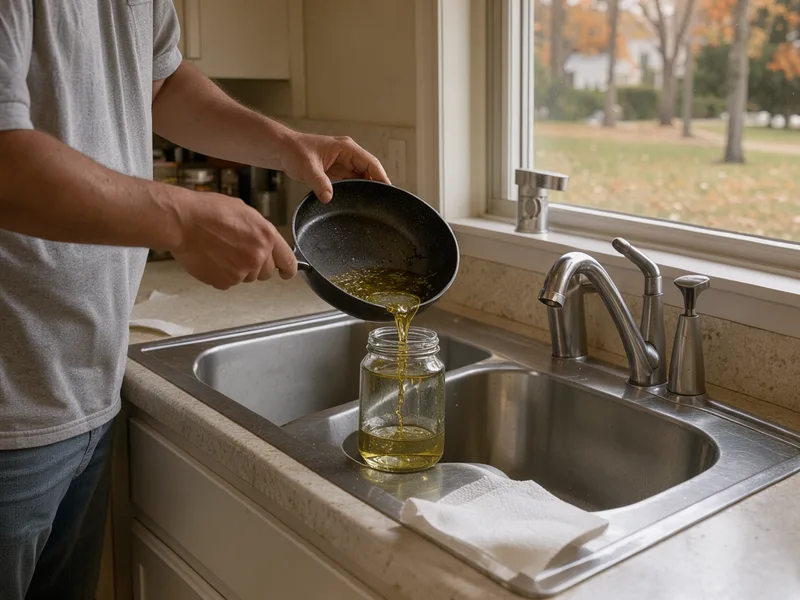
Holiday cooking creates specific hazards for septic systems. Grease is the biggest one. A pan of turkey drippings poured down the kitchen sink will solidify in your pipes and in the tank, coating the walls and reducing the volume available for wastewater. Over time it contributes to clogs in the drain field pipes.
Food scraps are the second problem. A disposal grinds them into small pieces, but those pieces still settle as sludge in the tank. A big holiday meal can add a week's worth of solids in a single afternoon. Compost the scraps instead.
Non-flushable items are the third. Holiday wrapping often includes tape, ribbon, and tissue paper. Guests may use paper towels at the bathroom sink. Wipes marketed as "flushable" are not flushable on septic. See what not to flush for the full list.
The rule for the holiday week: if it did not come out of your body, it does not go in the toilet. If it is grease or a large amount of food, it goes in the trash or compost, not the drain.
| Safe to use | Risky or avoid |
|---|---|
| Septic-safe toilet paper | Paper towels, napkins, tissues in the toilet |
| Dishwasher (one load per day) | Hand-washing all dishes in one sitting |
| Composting food scraps | Pouring grease or drippings down the sink |
| Flushing human waste and toilet paper only | Wipes, feminine products, dental floss |
| Spreading laundry over 3 to 4 days | Four loads in one morning |
| Moderate water use per shower | Running three showers back to back |
| Using a second bathroom to spread load | All guests using one bathroom in sequence |
When to book a pumping before the holidays
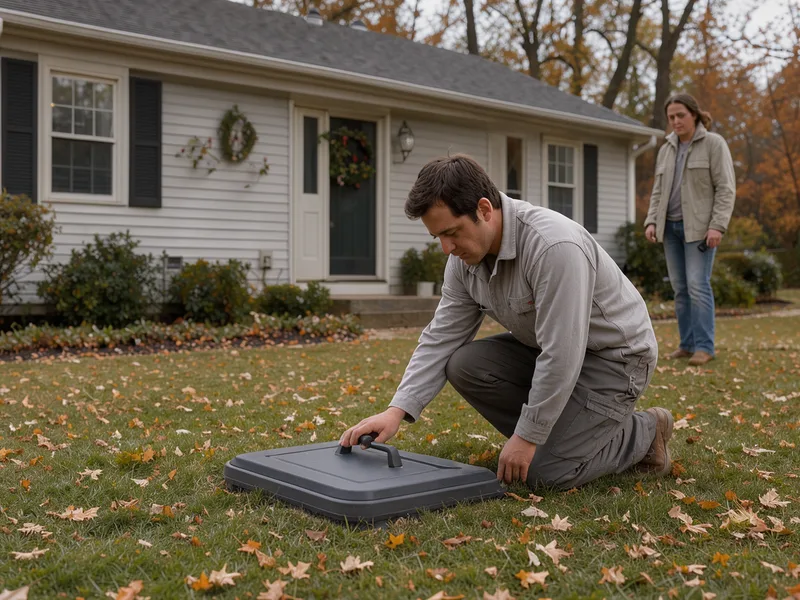
The best time to pump is two to three weeks before the holiday rush. That gives the tank time to settle and the drain field time to recover from the pumping process itself (the soil around the field gets a little disturbed when the truck pulls up).
You should pump before the holidays if any of these apply: your tank is overdue by its normal interval, you have had slow drains or gurgling in the past month, you have a large household (five or more people) and the tank is more than two years since last pumped, or you are hosting guests for more than two or three nights.
If your tank is on schedule and the system has been running fine, you probably do not need to pump just because of a holiday. A single big day is within the margin of a healthy system. A week of heavy use with guests staying is a different story.
Do not use additives as a substitute for pumping. They do not add capacity to the tank and they do not help the drain field absorb more water. See septic tank additives for what the evidence actually shows.
After the gathering
Warning signs in the days after the holidays
The day after a big gathering, walk your yard. Look at the area over the drain field. If the grass is noticeably soggier than usual, or if you see standing water or a dark wet patch, the soil is saturated. This does not always mean the system has failed. It may mean the soil needs a few days of dry weather and reduced water use to recover.
Gurgling sounds in your plumbing, especially in a tub or basement drain, mean air is being pushed back through the pipes because the system is under pressure. Slow drains that do not clear within a day or two are another sign.
A sewage smell in the yard, particularly near the drain field or the tank lid, is a sign that effluent is surfacing rather than soaking in. If you see this, stop running water through the system and call a septic professional.
If the signs clear within two or three days of reduced water use, your system likely just got overloaded temporarily. If they persist, you may have a drain field problem that needs a professional assessment. Do not wait for the next holiday to find out.
Common questions
Can my septic system handle a Thanksgiving dinner with 12 guests?
A healthy system with a recently pumped tank can usually handle one big day. The risk is not the single day but the stretch of heavy use that often comes with holiday hosting: guests staying multiple nights, repeated laundry, and a kitchen running all week. Spread the water and you are usually fine.
Should I pump my tank every year before the holidays?
No. Pump on your normal schedule. If your schedule puts the next pump within a month or two of the holidays, move it up so the tank starts the week with room. If your tank was pumped six months ago and the system is running well, you do not need an extra pump just for guests.
What if a guest flushes something they should not?
A single wipe or paper towel will not ruin a system. A pattern of them will. If you notice slow drains after a gathering where guests used the bathroom frequently, have the tank inspected. The solids may have moved toward the outlet baffle and restricted flow to the drain field.
Does a garbage disposal make holiday hosting harder on septic?
Yes. A disposal adds solids to the tank with every use, and a big meal means more grinding. If you have a disposal, plan to compost scraps during the holiday week rather than running the disposal after every course. This is one of the few cases where a disposal genuinely makes septic maintenance harder.
How long does a saturated drain field take to recover?
In dry weather with reduced water use, a temporarily saturated drain field can recover in two to five days. If the soil is still wet after a week, or if you see effluent at the surface, the problem is likely not temporary and you should call a professional.